Distinguished Critique: The Warlord: The Savage Empire Review
A few convenient dramatics aside, these issues place a strong protagonist in circumstances unique unto a familiar genre
—by Nathan on September 5, 2026—
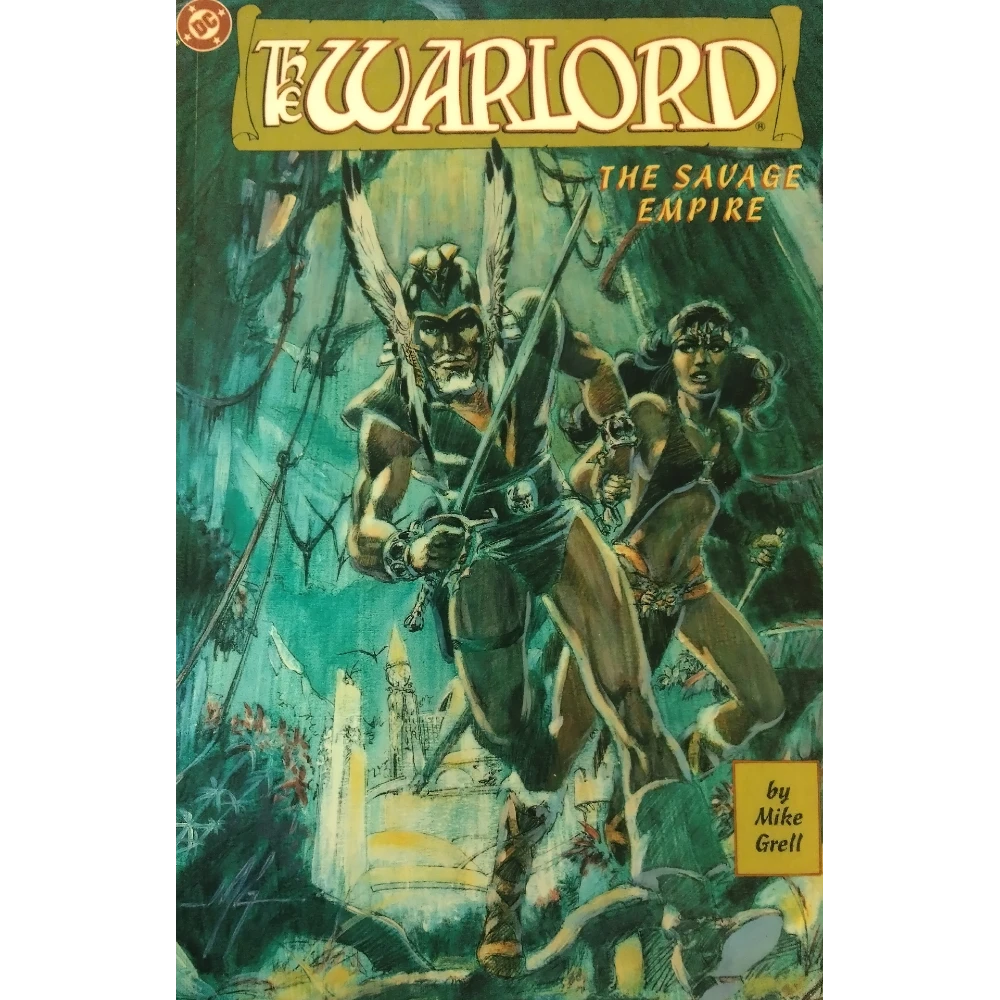
We are all here today because of Mike Grell.
"Here," as in, "on this website, reading this blog." Not "here," as in, "on this planet, wherever we may be." Unless Grell has children? I have no idea.
No, the reason why I wrote and am publishing this review today is because of Mike Grell, and the reason you're reading this review today is likely because of Mike Grell. A short while back, I reviewed the second volume in his Jon Sable, Freelance series and thought it high time to give some of his DC output another read. Not Green Arrow, though I am slowly working my way through that run as well. I mean The Warlord, the 1970s sword-and-sorcery title based wholly on Grell's own ideas.
In 1976, DC was expanding their line of comics and the genres they dabbled in; like Marvel around the same time, they were looking to diversify their publication portfolios in case superhero comics ever cashed in their chips. Fifty years later, I'm grateful the capes-and-cowls set is still going strong, but the diversification enabled several new, original titles to blossom.
Not that all were successful.
Grell, with some experience under his belt for DC, was drawn back to the Distinguished Competition after initially pitching his fantasy series (originally titled "Savage Empire") to a different company. Despite DC's relative lack of success with sword-and-sorcery titles, Grell was given the go-ahead, and after initially appearing in DC's 1st Issue Special "try-out" book, Grell's "Warlord" was gifted his own series. The title's first stint ran for 133 issues.
We're reviewing only 11.
Warlord has not been widely collected, its initial series limited to the volume we're reviewing today and an omnibus collecting an additional 39 issues (though a DC Finest collection has been announced for publication in 2027). I picked up today's volume far before the omnibus was released and the DC Finest collection announced, even though I'm getting to the review now. Though this is a very truncated reading experience compared to the series' scope, I'm hoping we'll come to a strong sense of Grell's intentions with this first handful of issues.
The Warlord: The Savage Empire
Writer: Mike Grell
Penciler: Mike Grell
Inker: Mike Grell
Colorist: Carl Gafford and Elizabeth Safian (otherwise uncredited)
Letterers: Ben Oda (otherwise uncredited)
Issues: The Warlord #1-10, #12
Publication Dates: February 1976, April 1976, November 1976, January 1977, March 1977, May 1977, July 1977, September 1977, November 1977, January 1978, May 1978
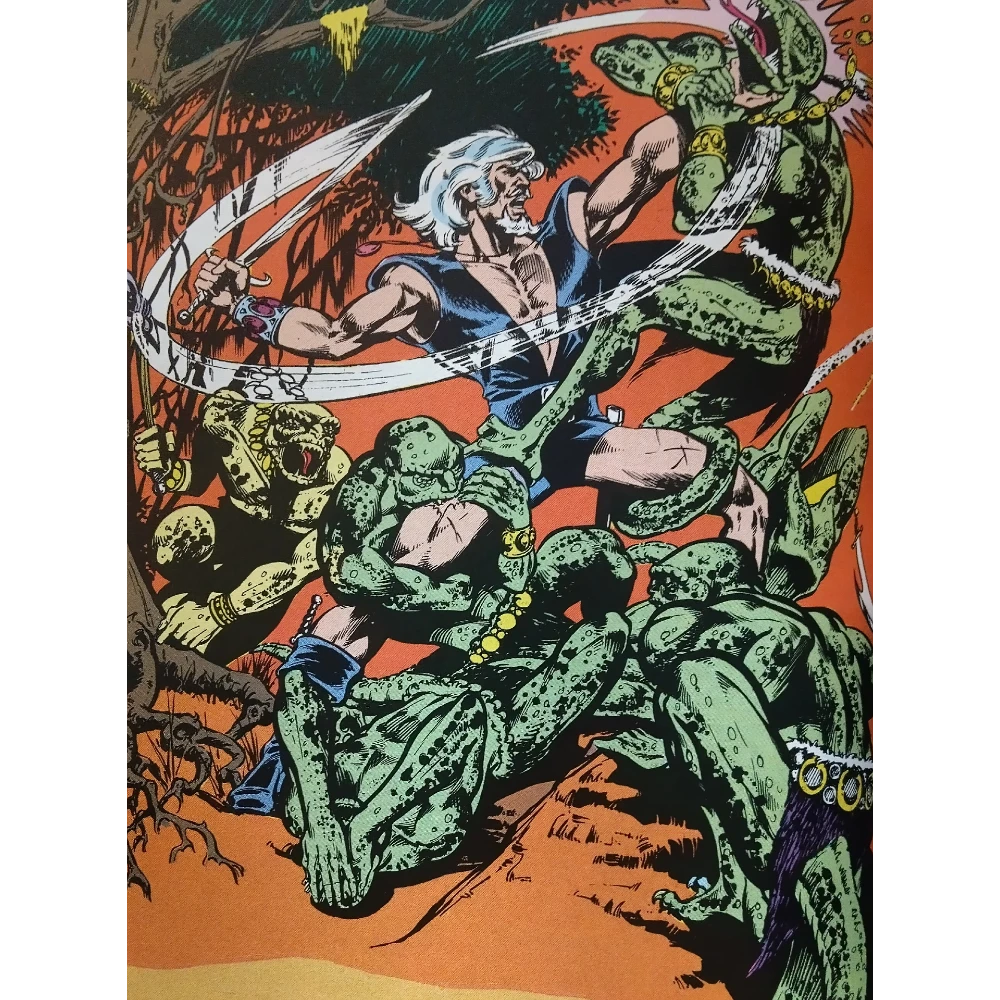
You run the risk, when you read an author's later material first, of encountering earlier stories which don't hold up as well, regardless of your love for the creator. It may not mean those stories are poor–for example, Alan Moore's work on Captain Britain can't hold a candle to Watchmen, but it's a darn fun story with palpable tension and stakes–but there may be some rough edges that a writer and/or artist learns to smooth over with time and experience. Warlord, as I understand it, was Grell's first-ever stint as a writer as well as artist, and though it's done well, you can tell Grell would hone his voice for later narratives such as Green Arrow: The Longbow Hunters and Jon Sable.
Grell's greatest sin in these issues is his over-reliance on captions, which wouldn't be quite a knock if he were more poetic with his language. But he isn't Chris Claremont or Don McGregor, whose "purple prose" still reads well to my ears (purely a subjective opinion) despite its occasionally lengthy verbiage. Grell falls into the same trap as other contemporaries, often using exposition to discuss action or perhaps shed a bright spotlight on a character's motivations where glimmers would be more beneficial. When his art does the talking, Grell excels at storytelling, letting the details sink in for the reader. But he's still learning his craft at this stage. For a first-time comic writer, his reliance on oversharing is understandable.
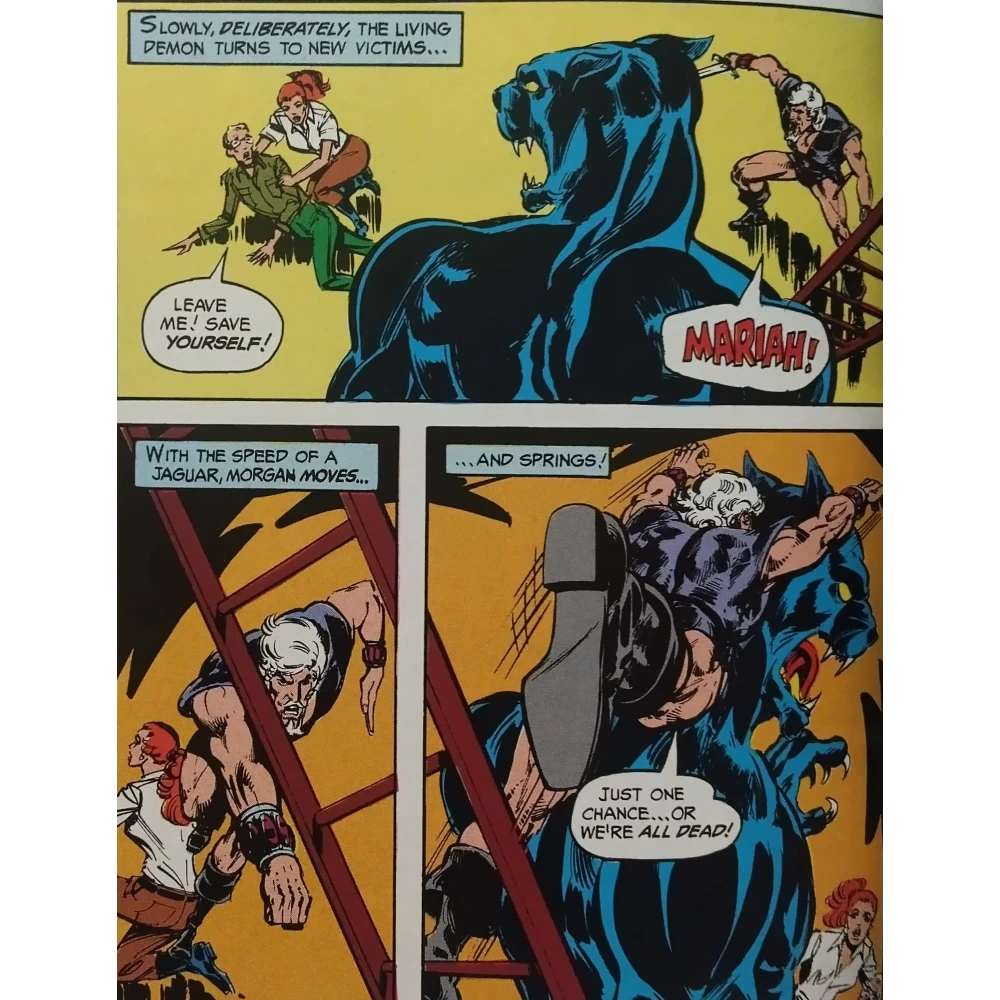
What makes some of the excess wordiness more palpable is the story Grell develops; even in these 11 issues, we're given a strong concept, a strong opening, and strong central characters. Travis Morgan, pilot for the United States Air Force, winds up flying into a "hollow Earth" after taking enemy fire. Here, he discovers a land lost to time, not unlike Marvel's Savage Land, where dinosaurs stride, barbarian warriors clash, and the sun never sets. "Skartaris," the locals call this world within a world, and as Travis becomes attuned to their language and customs, he develops a symbiotic relationship with this land and its people: as Skartaris changes him, Morgan changes Skartaris.
You could choose, if you so wish, to apply the "white savior" concept to Morgan's adventures, as the more sophisticated, technologically experienced Western hero coming and changing a more primitive society. Grell is never disparaging of the Skartarians or their way of life; Morgan isn't here to offer a theology or change in government. He comes and notices wrongdoing–slavery, oppression–and takes it upon himself to rouse others to break their chains. Grell never doubles down on the fact Morgan is a white American man dispensing his view of freedom, but you recognize this is where Morgan likely exists philosophically. Reliant on others for their aid in traversing this new world, Morgan grows from a stranger into a warrior, battling all manner of evil in a quest for purpose. Grell never makes it Morgan's mission to leave Skartaris, instead choosing to have the airman-turned-adventurer establish himself as an outsider learning to appreciate this new place…and its people.
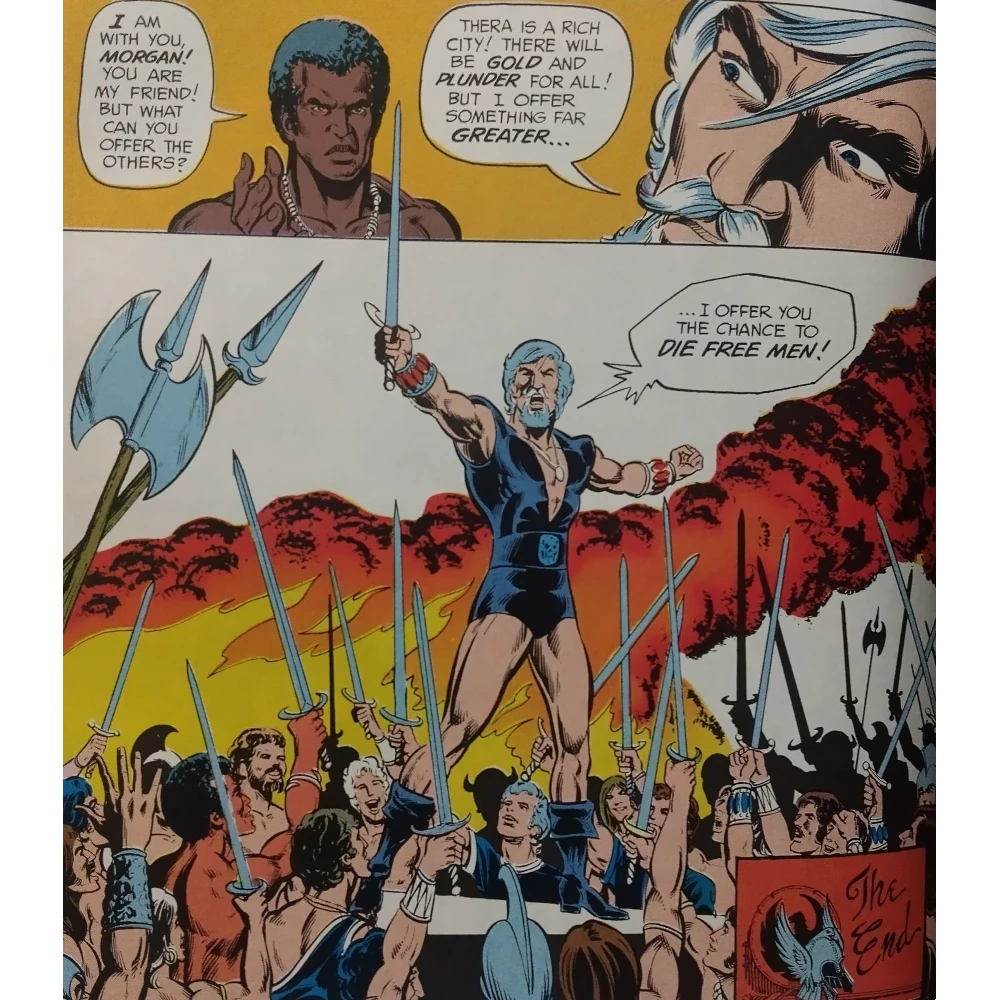
Admittedly, 11 issues don't fully attest to Grell's overarching story (meaning I may have to pick up that DC Finest collection someday). We're given something of a holding pattern for Morgan, as he moves into this role of revolutionary. There's no ultimate quest or destination outside of securing freedom for others. Even in these issues, however, Grell is careful to fashion an internal narrative for Morgan as the former pilot further integrates himself into Skartarian society. As he becomes more comfortable with society, and as he fixes his attentions on a burgeoning relationship with his female companion Tara, Morgan becomes deeply entranced with his warrior nature. When confronted by a friend over his dogged determination to lead a war for freedom, Morgan admits his true nature. "I love this" he tells the friend, holding his sword before him. The eternal soldier has found a new war, just with swords and spears instead of guns and grenades.
"Not completely instead of," I should say. Morgan has brought with him a bit of technology, his plane stashed with a few guns and explosives. Our pilot may not proselytize any Western ways of life, but he provides a certain level of ordnance Skartaris has not yet seen…sorta. Back to that in a bit. Grell seems to find the most fun in the series when determining how best to incorporate Morgan's weaponry or military prowess into his issues. He shoots dinosaurs with bullets, sends an ejecting plane seat through the head of a massive serpent, teaches his army how to construct siege towers. A blend of the old and new make Warlord a series nicely different from contemporaries such as Conan. It's not all swords-and-sorcery, with those modern elements creeping in to provide an additional flavor (usually the bite of steel).
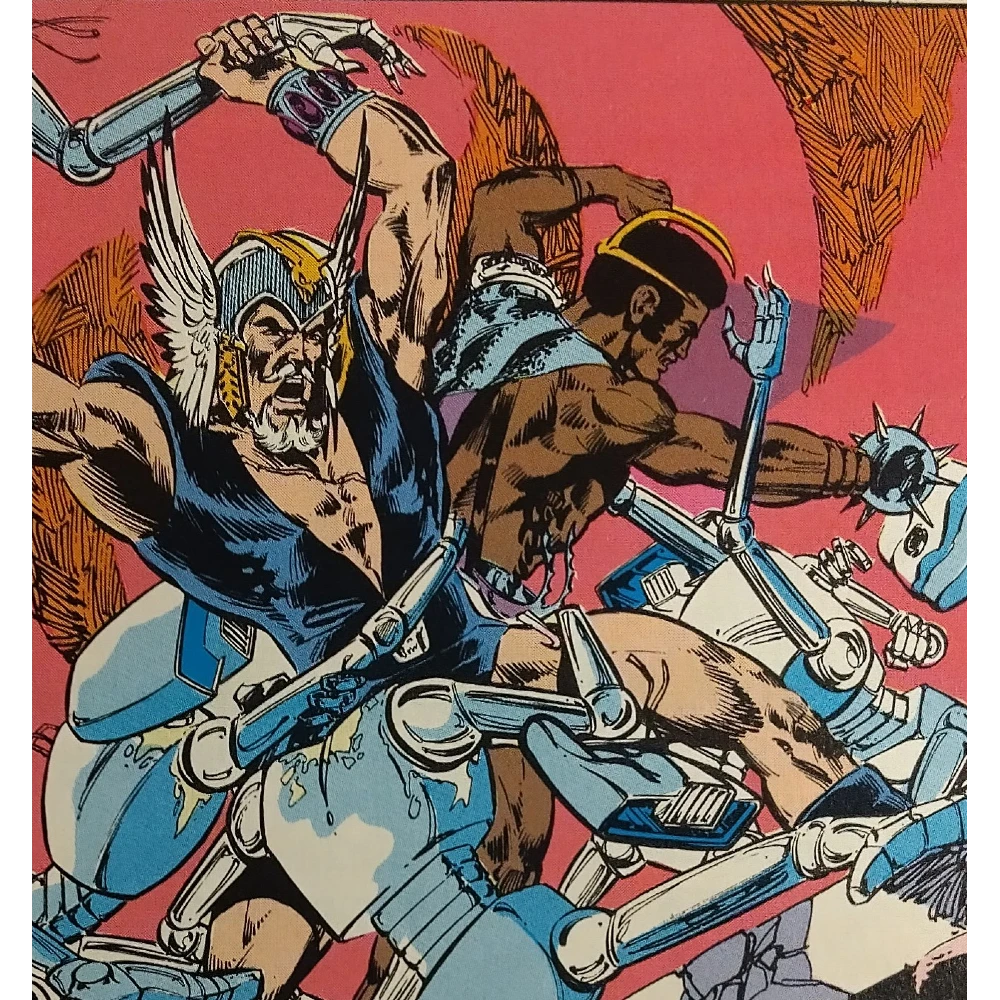
Technology neatly bolsters one other element Grell weaves into these issues, creating a dramatic background narrative that further separates Warlord from its contemporaries. Morgan, so it seems, is not the first person to introduce modern technology to Skartaris. Grell plants fun images and concepts throughout–an abandoned room Morgan passes by that is equipped with modern circuitry, a floating city staffed primarily by robots, a conjurer's magic spellbook that's actually a computer manual–that generate the sense that, for one reason or another, this world's history has paralleled or exceeded our Earth's in some ways while remaining antiquarian from a societal perspective. It could just be that Grell really wanted to create a world populated by dinosaurs and robots both, with all manner of fantasy tropes in-between, and if that's all he wanted to do, I can't fault him for not developing deeper narrative reasons. The blend of ancient societies with modern or futuristic technology works, even just on a "senses" level. Seeing both concepts inhabit the page fairly seamlessly is purely entertaining, though Grell does apply some story reasons to help explain the "why."
A few elements here and there aren't quite as natural. Grell often resorts to braining poor Morgan to add tension, rendering the guy unconscious no less than six times in eleven issues (twice in one issue) to then have him dramatically wake up in a cave, in a cell, or on a slave ship. You recognize why–Grell is adding tension to Morgan's circumstances, a method of moving him from one dramatic scenario to the next, having him wake up in unfamiliar circumstances to assess his next best move. After a while, the idea becomes a tad cheap, a quick and easy solution to negatively wrap up a conflict where Morgan isn't hurt too badly (no one assesses him for a concussion, at least, though Sakarian medical science is likely at the stage where Morgan could be asked if he remembers his name). Flattening Morgan is more sensible in earlier issues, as the warrior finds his footing in this new world, but resorting to the method time and again puts a slight damper on Morgan's warrior prowess. You just think he'd learn to watch his six more consistently.
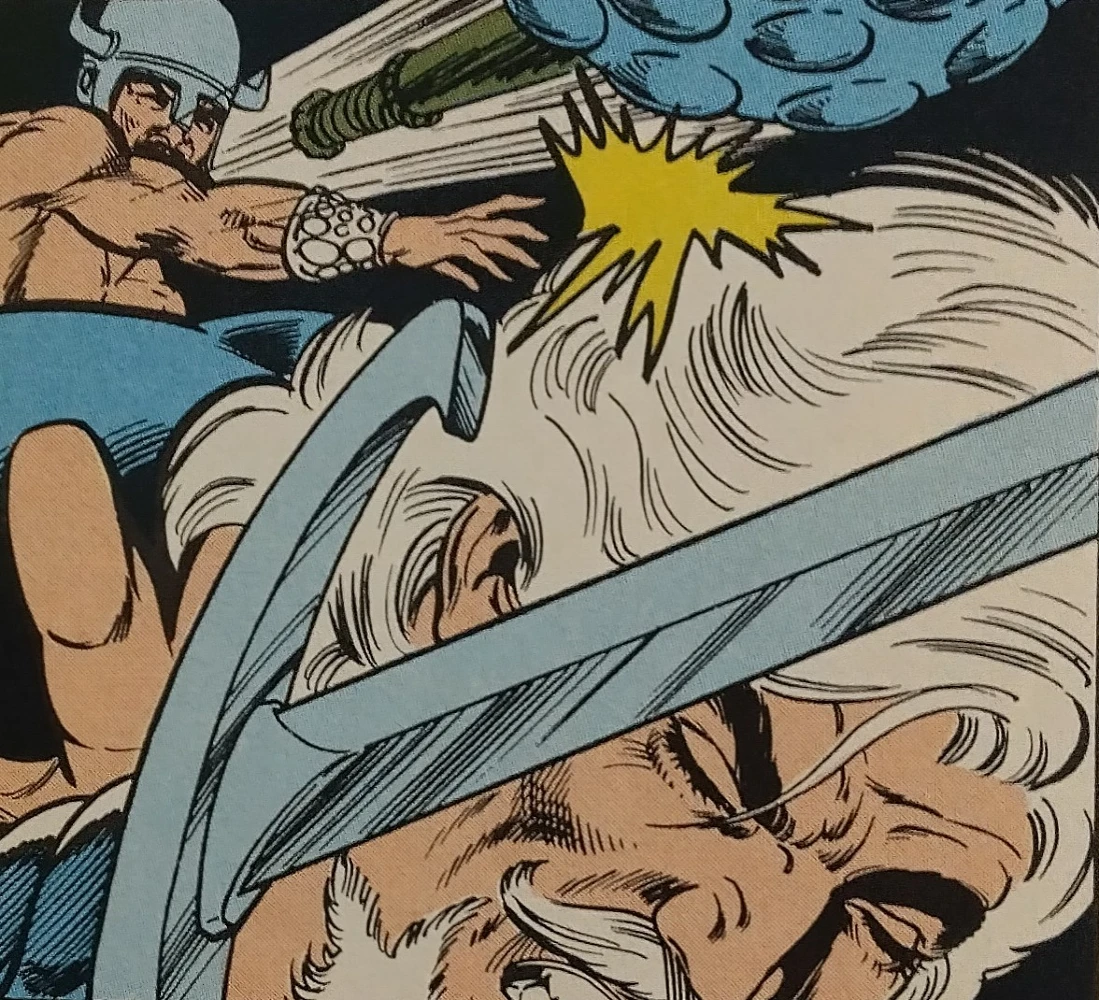
These opening issues of The Warlord are fairly solid, an engaging premise constructed with strong characters, Morgan specifically. "Modern man finds himself in a fantasy world" is a premise science-fiction writers have turned to time and again, with Grell, in an introduction, citing Jules Verne and Edgar Rice Burroughs as influences. A world within a world. The "giant saurians," as Grell refers to the dinosaurs. The tribal divisions between peoples armed with swords and shields. Grell does take the tropes a step further by intentionally introducing a different sci-fi angle, incorporating modern technology to develop a slight mystery. I'm sure additional issues explored Grell's grafting of fantasy and science fiction further. These issues provide a taste of that union, of a world unique even unto other fantasy realms, of a protagonist destined to move from piloting a plane to piloting the destinies of people. Just so long as he protects his head better.