Random Reviews: The Complete Jon Sable, Freelance (vol. 2)
Mike Grell balances action with an exploration of identity in these bombastic issues
—by Nathan on August 24, 2026—
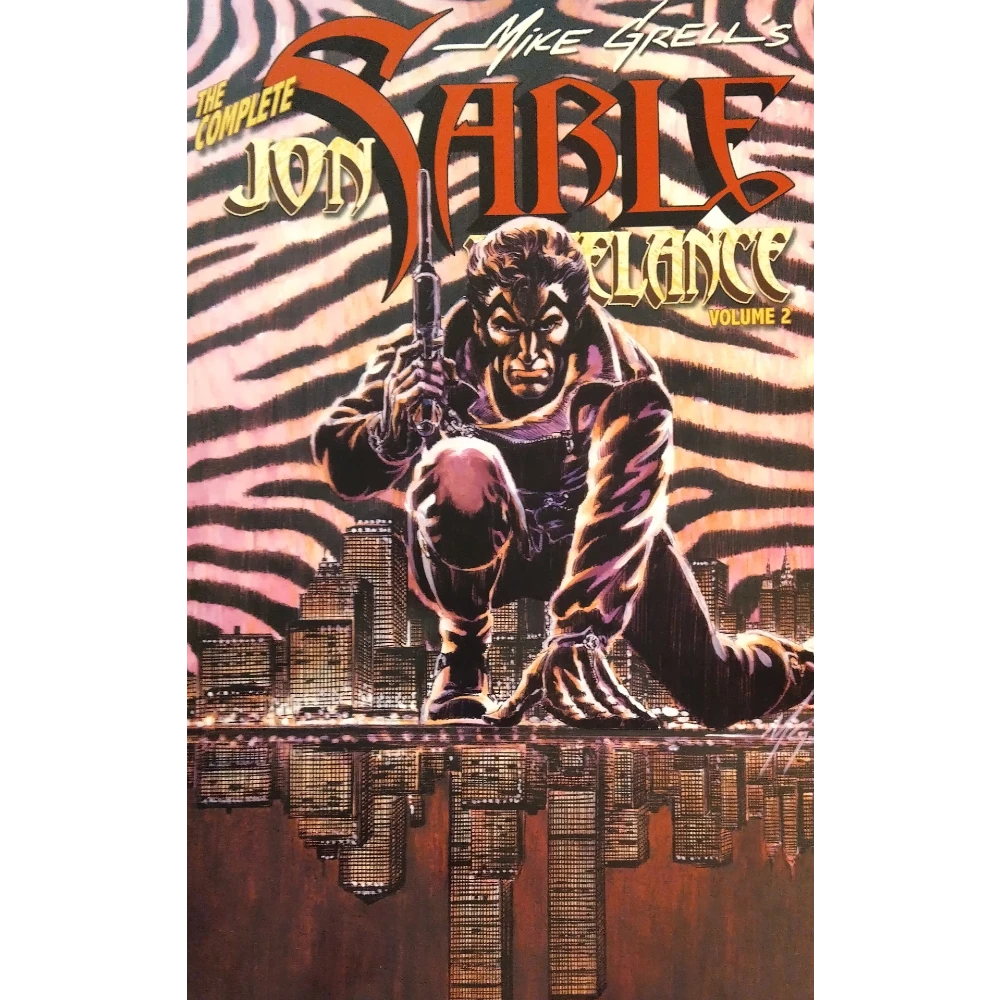
A few of my reviews lately have been follow-ups to past posts, tackling second volumes building on the earliest collections of titles such as Saga of the Swamp Thing and New Teen Titans. We're continuing that "volume two" trend today with a title whose inaugural issues I reviewed last year: Jon Sable, Freelance.
In that review, I joked that Mike Grell's titular mercenary wasn't too dissimilar to the "freelancers" my employer contracts, though our freelancers aren't in the bounty hunting business. They tend to engage with literature, which, funnily enough, is similar to Sable's alter ego, B.B. Flemm, and his own particular line of work. More on him later.
As my recent readthrough of Archie Goodwin and Walt Simonson's classic "Manhunter" arc touched on another "big-game-hunter-becomes-vigilante-with-Mauser" protagonist, I wanted to see how this second batch of issues continued the adventures of Grell's face-painted vigilante. Having used his earliest issues to establish Sable's origin and the impact his family's deaths had on both halves of his life, personal and professional, Grell can continue building on just who this dude is. He often stacks with bullets, giving us a magazine's worth (and I don't mean the print edition) of material to blaze through in this collection.
The Complete Jon Sable, Freelance (vol. 2)
Writer: Mike Grell
Penciler: Mike Grell
Inker: Mike Grell
Colorist: Janice Cohen
Letterers: Peter Iro and Ken Bruzenak
Issues: Jon Sable, Freelance #7-11
Volume Publication Date: July 2005
Issue Publication Dates: December 1983-April 1984
Publisher: First Comics (original issues), IDW (volume)
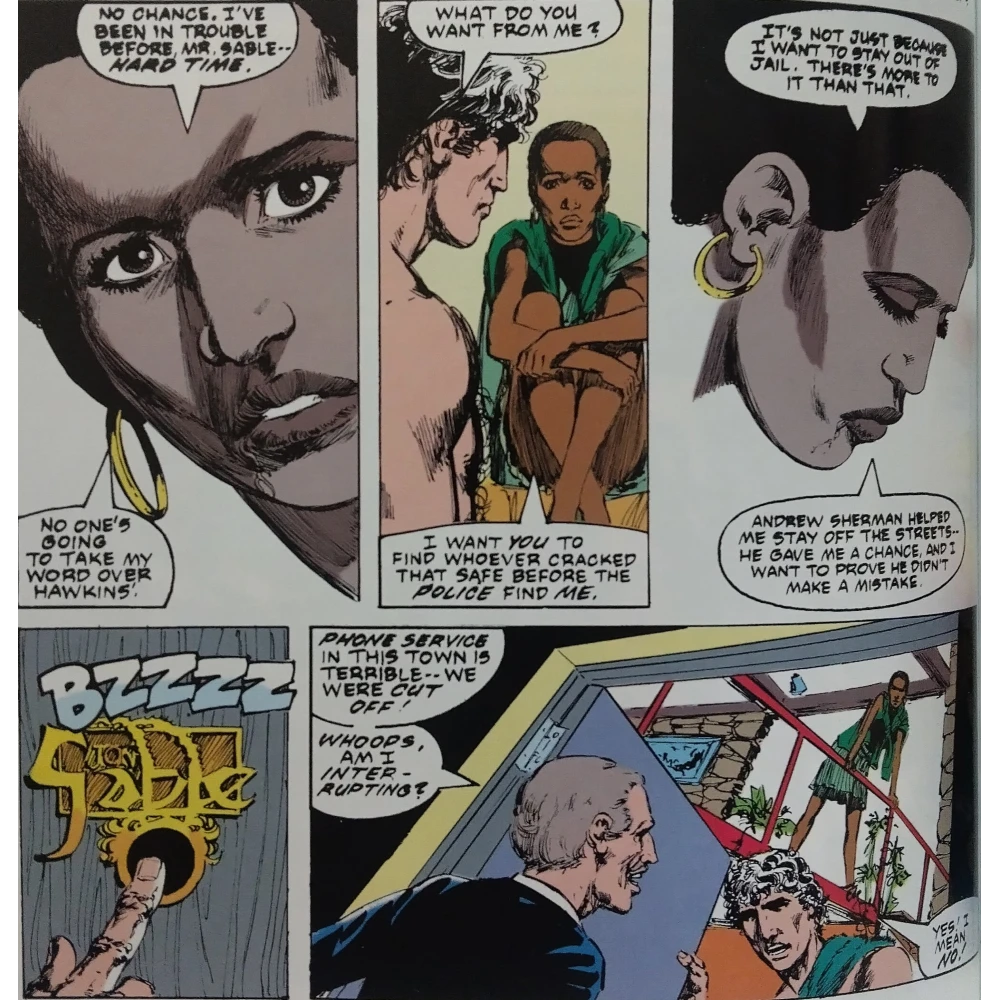
The series title, if you haven't gathered already, is a play on words, "freelance" taking a double meaning. Author by day, mercenary by night, Jon Sable is willing to be hired out by all manner of folk requesting his help–an important witness needing protection, a woman accused of theft needing redemption, an auction house needing security–for the right price. It's a way to make a living…when he isn't going a bit above and beyond the law on his own terms, that is.
As I noted, Grell's first issues established the character, with a good chunk of the first volume detailing an origin story involving the loss of Sable's wife and children. Like any good action hero, Sable is marred by tragedy, twisting the former Olympic-level athlete and big game hunter into a man cashing in on the misfortune of others. He's not cruel about the way he funds his lifestyle, but he isn't quiet about it either, as evidenced by the ornate doorbell labeled by, not his authorial alter ego, but "Jon Sable." Oh, and at least two people manage to sneak into his house, fully knowing he lives there, so yeah, no hiding anything, this guy.
Sloppy as it may seem to be a renowned mercenary and allow people to slip into your home unawares, Sable is nevertheless forthright in this aspect of his identity, a notion Grell stresses intentionally across these issues. Some may read these issues and make the snappiest comparison to DC's Batman (for more than one reason, as I'll note later), particularly for the way in which Sable handles his own dual identity. B.B. Flemm, children's author, is the cover, ruling the day-to-day operations Sable must handle to keep a taper on his nocturnal activities (though, like every good vigilante, he has a few folks in his corner aware of the subterfuge). I referred to this in my first review, but Grell makes it absolutely clear that Sable is the skin in which our protagonist is most comfortable.
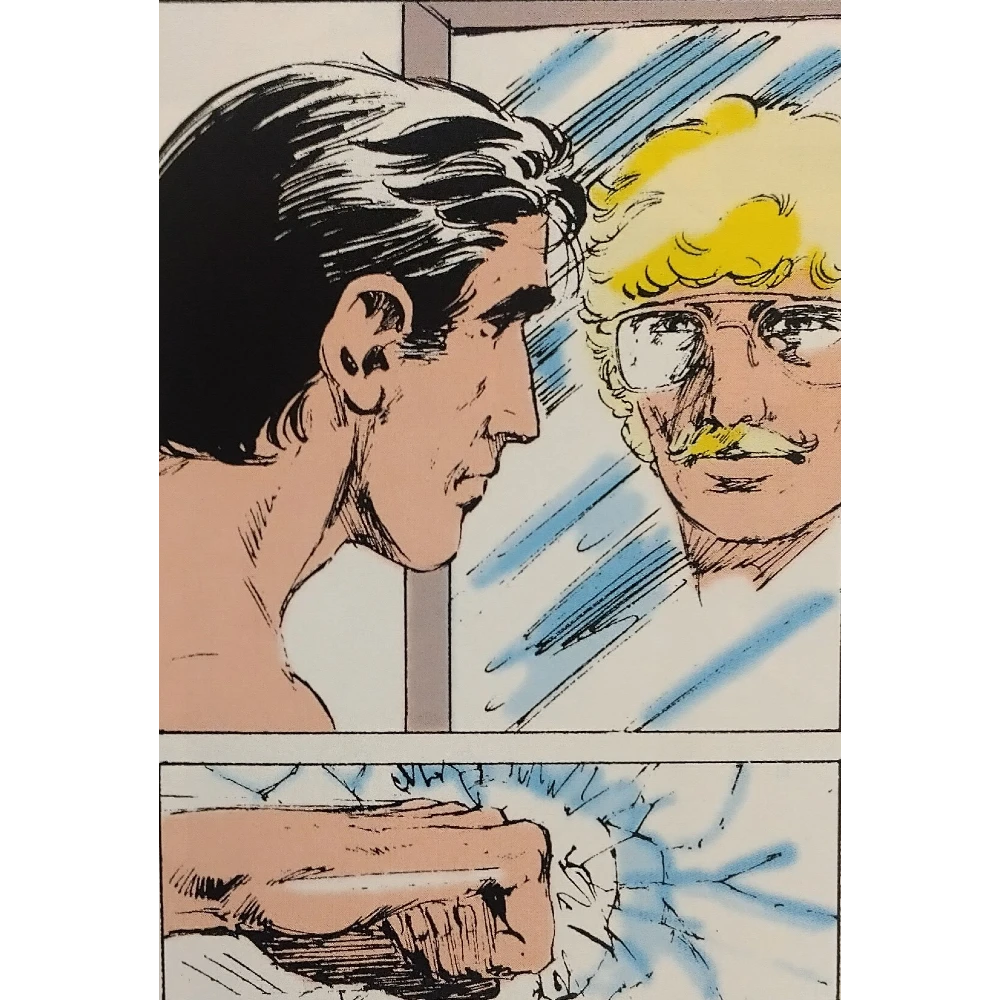
The Batman comparison is fun and lingers around the character, but I think it could be argued that Grell, writing a few years prior to Frank Miller's work on the Dark Knight Detective, toys with the identity dichotomy before the psychological aspect to Batman really took hold. Sure, the schism between Bruce Wayne and Batman had long been there–look no further than Steve Englehart and Marshall Rogers' Detective Comics run for fun examples of the idea–but Grell deftly hones on the sheer impact of the divide. This isn't "Oh, no, Bruce flaked on his date to fight Two-Face." This is Jon Sable protesting an interview as Flemm and then falling asleep during said interview due to sheer boredom; this is Sable visualizing his reflection as Flemm in a mirror and then punching said mirror because he can't stand the image.
With DC's premier detective, you never really get the sense that Batman hates Bruce. Here, you come to believe Sable, though inspired by his children's memory to transpose bedtime stories to kids' books, has come to despise this side of himself. It's necessary, and it brings in some extra cash, but the true face is Sable's own, whether obscured by facepaint or not, and our titular protagonist would much rather live completely in that identity rather than assume this second skin. There are benefits to this fairly normal alter ego he assumes–one issue sees Flemm show up at the house of a police detective to read to his children, a way of showing his respect for the officer–but the facade grates on the mercenary.
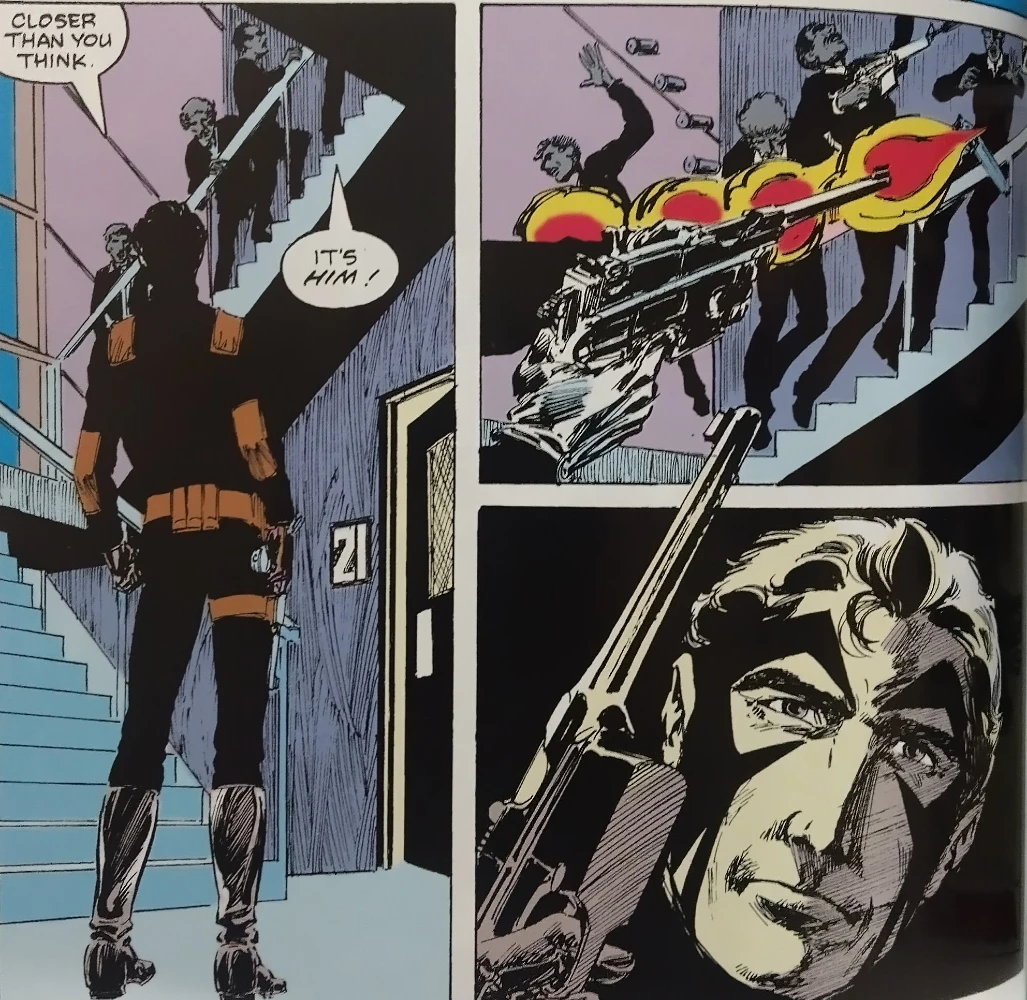
Sable is the more natural form, and as the series isn't titled "B.B. Flemm, Freelance Writer," we tend to follow the bloodletting more than the inkletting. As in the first volume, Grell knows how to construct vibrant action sequences, from Sable hunting several enemies in a skyscraper, to a fun pursuit on a motorcycle, to Sable's expertise being tested against a female cat burglar who, I feel, is meant to intentionally remind us of another long-haired thief who woos a tall, dark, handsome hero. We're given the downtime necessary to let the characters breathe, but Sable's a smart guy (when he isn't letting people sneak into his house) set on smart adventures. We're here for action and drama combined.
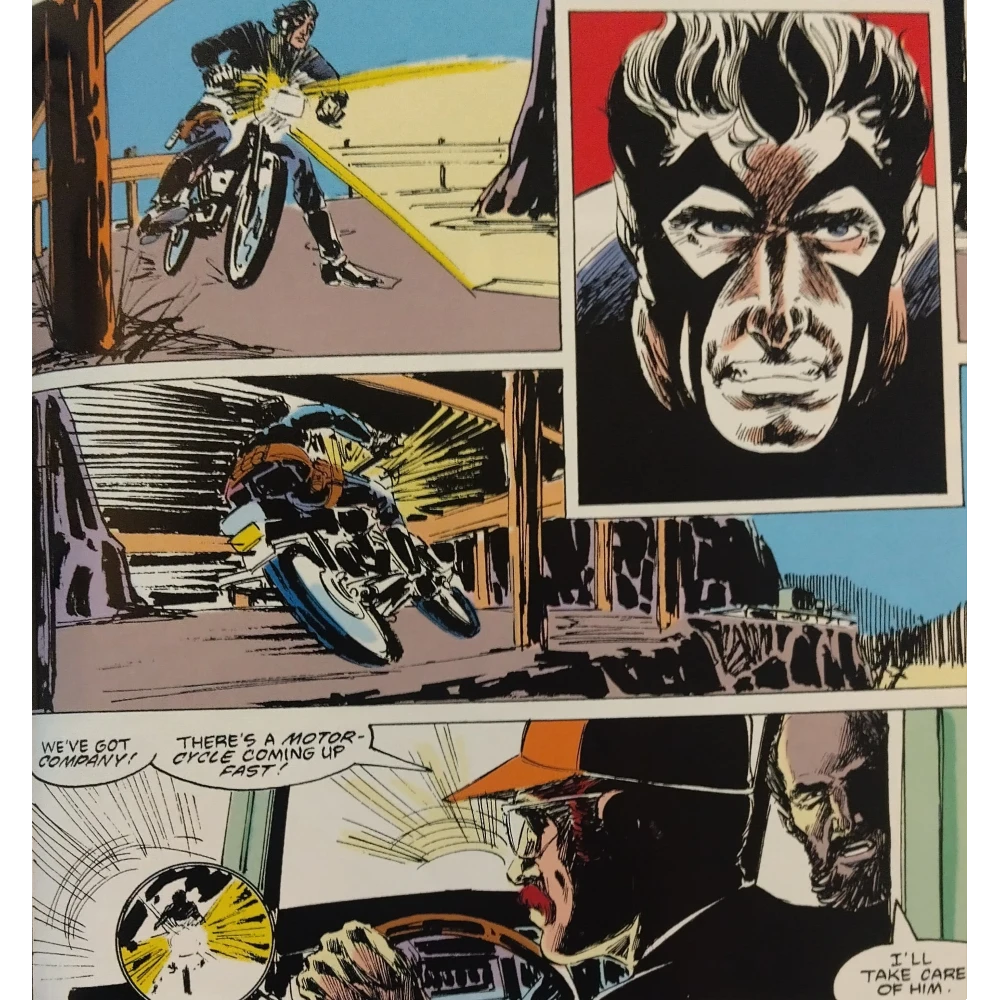
Grell is wise enough to mix up the ringers he sends Sable through, blending grounded action with fitting adversaries. A simple frame-up becomes a race against time as Sable battles rogue American soldiers teamed with a band of non-Western mercenaries (from an undisclosed country) threatening devastation with dirty bombs. The culprit in this volume's opening adventure may be obvious, but Grell nicely ratchets the stakes throughout as Sable is forced to contend with keeping an innocent victim safe while fighting armed enemies. There's a neat simplicity to each story here which unfolds into something a tad more complex by time we're finished, Grell playing a little close to the chest as he unfurls stories he's certainly planned out beforehand.
"Unfurling" could be applied to some of Grell's other characters as he endeavors to craft a small supporting cast around Sable, knowing that even crusaders of the non-caped variety cannot exist in a vacuum. The Batman parallels also exist here as Grell saddles Sable with an elderly, mustachioed close confidant no stranger to acting (he's a stunt double, but still…), a police officer watching Sable's every move (and is more abrasive than friendly, but still…), and the aforementioned cat burglar who seems more than sweet on our hero while maintaining her reputation for kleptomania (and forgoes the purple uniform, but still…). These characters have their charms and hints at their own stories–the elderly stunt double has family drama and seeks out Sable's friendship to fill a relational void, while a work associate of B.B. Flemm's attempts to reconcile her growing attraction to Flemm's darker half–which play out briefly in these issues. I assume they gain traction in later volumes.
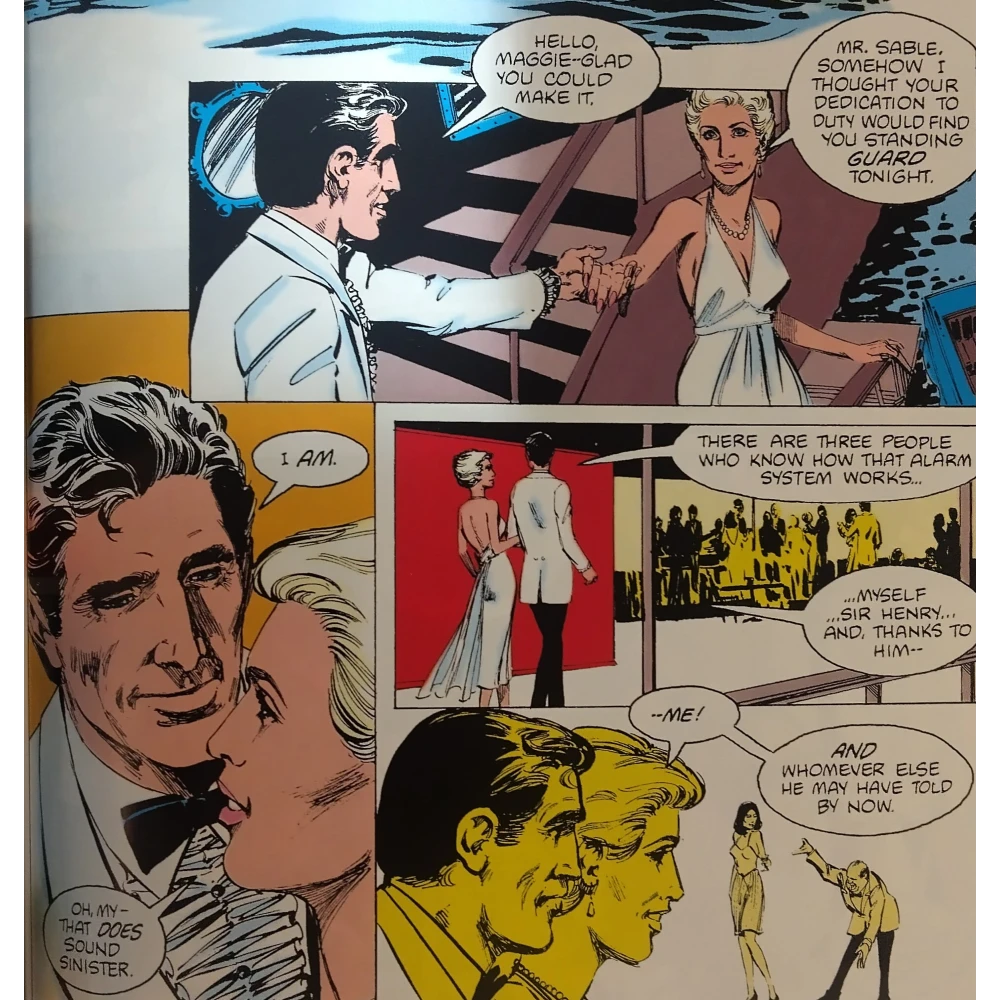
All the pieces click together nicely, like all the elements needed to assemble a handgun (Sable's seeming lack of home security notwithstanding). Grell isn't necessarily telling one ongoing narrative with Sable; there doesn't seem to be an endgame in mind, at least, not at this stage. His arcs are fairly short, nothing amounting to the significance of Sable's origin in the previous volume. Yet they're all entertaining, Grell pacing himself well. Our pages are divided between showcasing vibrant action and dwelling on a mercenary sure of himself in the stirrups yet struggling with identity when the click of a typewriter replaces the click of a chambered round.