(Strand)om Stories: The 'Nam (vol. 1) Review
These issues kick off a popular series that showcases growth in the interstitial silence between bouts of violence
—by Nathan on April 1, 2026—
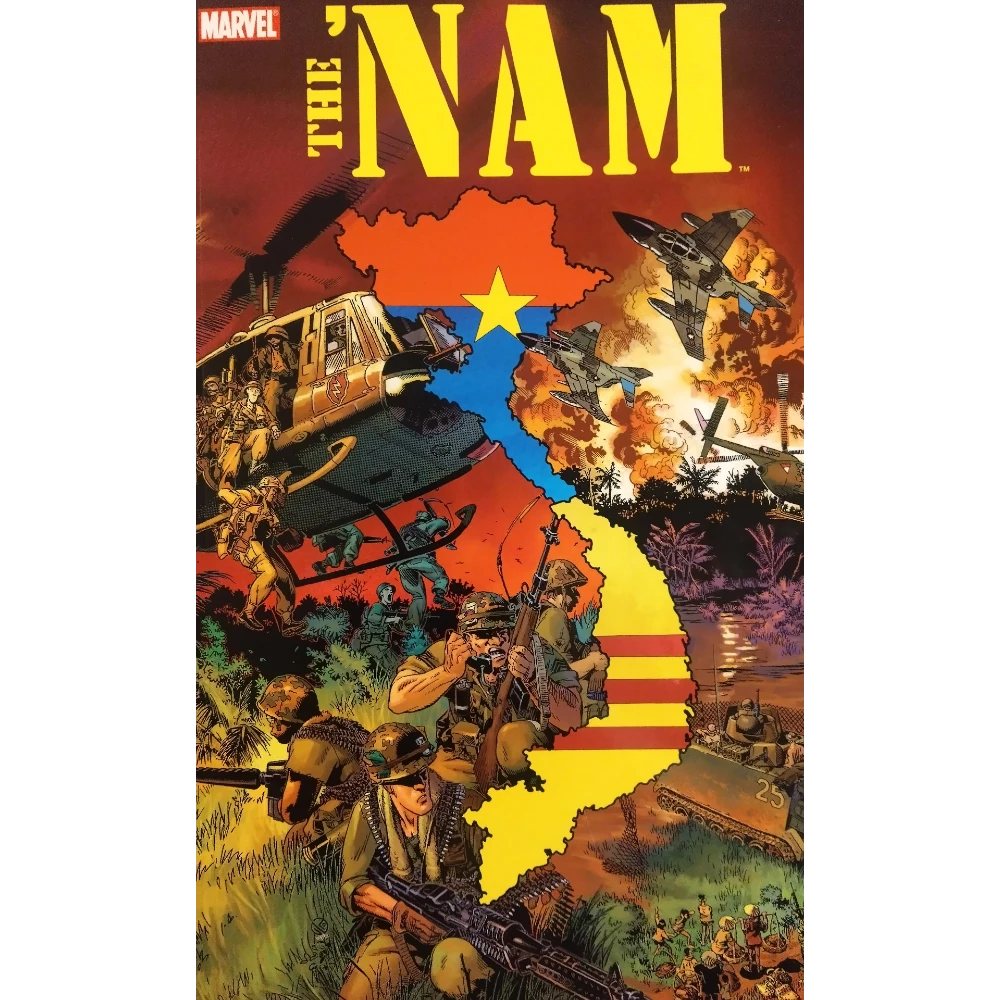
A few posts ago, I reviewed a volume collecting the first several issues of Marvel's classic G.I Joe series, slotting that blog under my "Random Reviews" banner as the volume I own was published by IDW. Written by comics and military veteran Larry Hama, those issues took a concept originally invented for a toyline in the 1960s and helped Hasbro relaunch the franchise in the 80s as a fairly serious Cold War drama. That's right, I said "serious," with those first issues grounding the conflict in decent realism, with a hint of cartoon fun thrown into the mix.
But if Hama could make something serious and respectable out of an updated line of kids' toys featuring fictional soldiers and terrorists, we're now gonna see what he could do when he got his hands on some real action.
Hama did not write the issues we're reviewing today, serving in an editorial capacity. Approached by Jim Shooter bearing, supposedly, a mock-up of a G.I. Joe cover titled with the words "The 'Nam," Hama was put in charge of developing a historical fiction series. To do so, he tapped fellow Vietnam vet Doug Murray and artist Michael Golden, who had worked together on a different Vietnam issue for Hama's Savage Tales anthology. Together, Murray and Golden constructed the first several issues of the series.
The 'Nam proved popular, running for more than 80 issues issues across seven years, mostly written by Murray. Michael Golden didn't stick around as long, but for this review, we've got the first ten issues he and Murray worked on together, thrusting readers into the heart of the Vietnam jungle as American soldiers fight an enemy they can barely see in a war they don't want to fight.
The 'Nam (vol. 1)
Writer: Doug Murray
Pencilers: Michael Golden and Wayne Vansant
Inkers: Armando Gil, Pepe Moreno, John Beatty, and Bob McLeod
Colorists: Michael Golden and Phil Felix
Letterers: Phil Felix and Kurt Hathaway
Issues Collected: The 'Nam #1-10
Volume Publication Date: January 2009
Issue Publication Dates: December 1986-September 1987
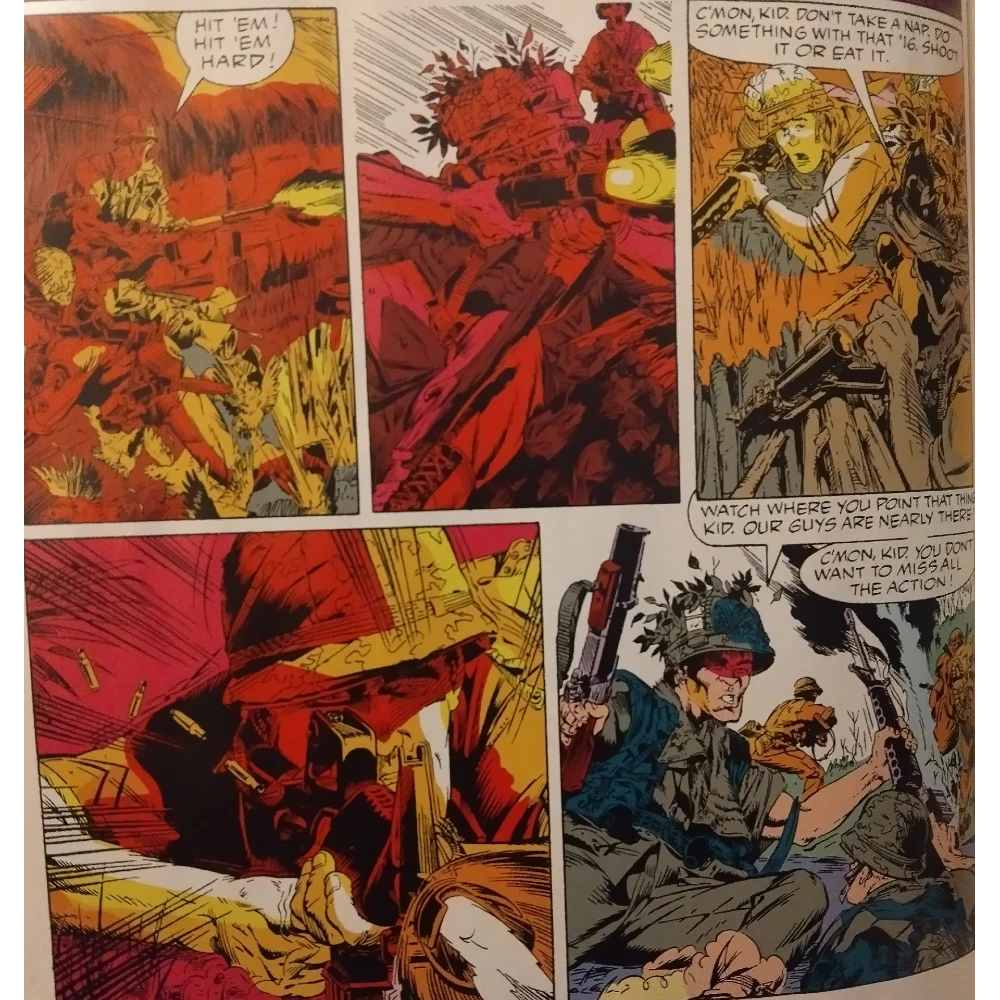
I alluded to the "not wanting to fight" above, but these first ten issues of The 'Nam aren't really political. They don't get into the tensions between politicians or focus on stateside protests. No one's arguing over peace, man. These narratives are focused squarely on the soldiers themselves and the sufferings they endure, largely told through the eyes of private Ed Marks, covering his first ten months in Vietnam.
Yep, that "ten issues/ten months" bit isn't a coincidence. One of the interesting facets of this series is that it was meant to play out in "real time," with a year's worth of published issues covering a year's worth of in-universe deployment. It does make me wish this volume had tacked on two more issues so we could get Ed's full first year in combat, but I guess that's also incentive for me to pick up the next volume, should I want to give it a read.
Ed's a soldier, and he starts this volume as green as they come, spending a brief period at base camp before being shipped off to the 'Nam. Any thoughts of a heroic tour of duty–indicated by a smiling air hostess as Ed leaves–are wiped out as Ed's plane is fired upon while landing at Saigon Airport. Would that hostess still be smiling if she knew the horrors a heroic soldier like Ed was entering? The young man is momentarily captivated by the sight of a flaming plane, just a taste of the terror to come, before being whisked away to camp, where he and his fellow soldiers are stationed in between missions, firefights, and the occasional trip into Saigon proper. The action, from the jump, is tense, Murray and Golden detailing an environment filled with grounded tension. These stories are based on real places, real types of people (if not actual people themselves), real experiences lived by soldiers. Some comic book hokeyness would play into the series later, but for now, this is meant to encapsulate a vision of real horror and violence, within the realms of suitability for the times.
The stakes may not be world-ending like saving a planet from Galactus, but Murray recognizes the need to develop enemies within and without the base. The Viet Cong (also referred to as "Victor Charlie") go unseen or obscured for several issues, popping up sporadically in-person but largely left to the shadows of the jungle. Golden details muzzle flares and gun barrels, highlighting the guerilla tactics the V.C. utilized. The most dramatic scenes are the ones where the presence of enemies is implied, possibly everywhere, our heroes waging a war against seemingly invisible foes; it's enough just to know they're there. Bullets sail by, bombs disrupt an otherwise pleasant trip to Saigon, dark tunnels could hide enemies around any corner. The fighting itself is dangerous enough, but Murray and Golden often leverage the ever-present and deadly spontaneity of such a ruthless combat style.
Such tactics make the series burn with a sense of unfairness, and you quickly come to understand Ed and his fellow troops are in a dire position. Purpose feels obsolete. Soldiers go on missions, come home from missions, and then head back out again. Assignments themselves never feel important or paramount to securing victory; if anything, these guys mostly maintain some kind of status quo. Murray's strongest issue switches point-of-view momentarily, telling a tale from the perspective of a former Viet Cong soldier, his story fraught with injustices at the hands of fellow Vietnamese, Americans, and the French, highlighting the need for sympathy for people other than the soldiers repping the U.S.A. This isn't an epic saga where Ed or anyone else is sent on a quest to defeat an overpowering adversary; survival's the name of the game–if you can just get through the next firefight, you're one day closer to going home. "Short," as the men call it, as they near the end of their deployment. That's pretty much the driving force behind most soldiers here…
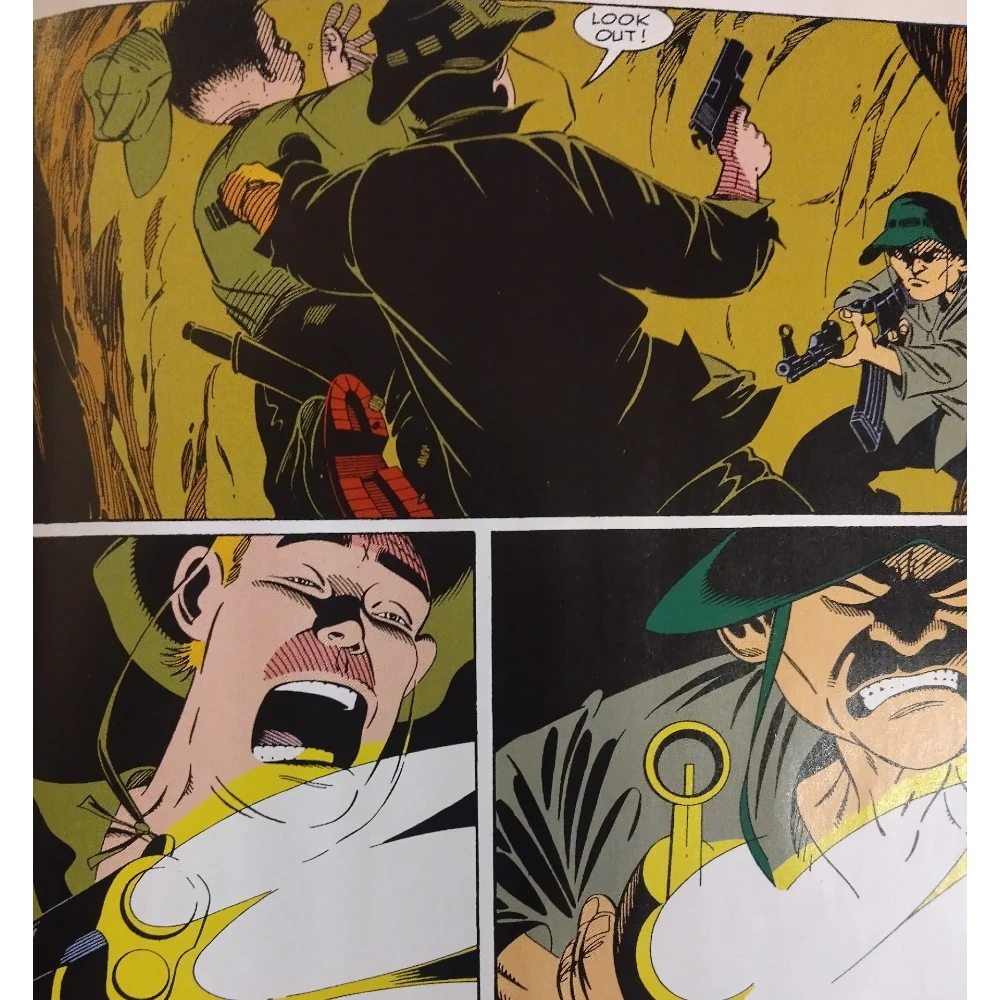
…save for the occasional high-ranking jerk, naturally, which is where the "enemies within" aspect appears. Tensions can be found on base as well, with one commanding officer depicted as manipulative and corrupt, only adding to our characters' woes as they try navigating his thorny personality. Another issue, in a short text-heavy piece near the end, notes a soldier shooting his commander on purpose to avoid going back into a series of tunnels. Murray nicely, at times, highlights the differences between the men with power and the men without. Even amidst the dire unfairness of the war against the Viet Cong, some men choose to either leverage their authority or treat others in a sub-human manner. You want to see these guys, regardless of rank, unified under one purpose, but Murray allows human nature to creep into situations where you'd hope, fruitlessly, that dignity would win out.
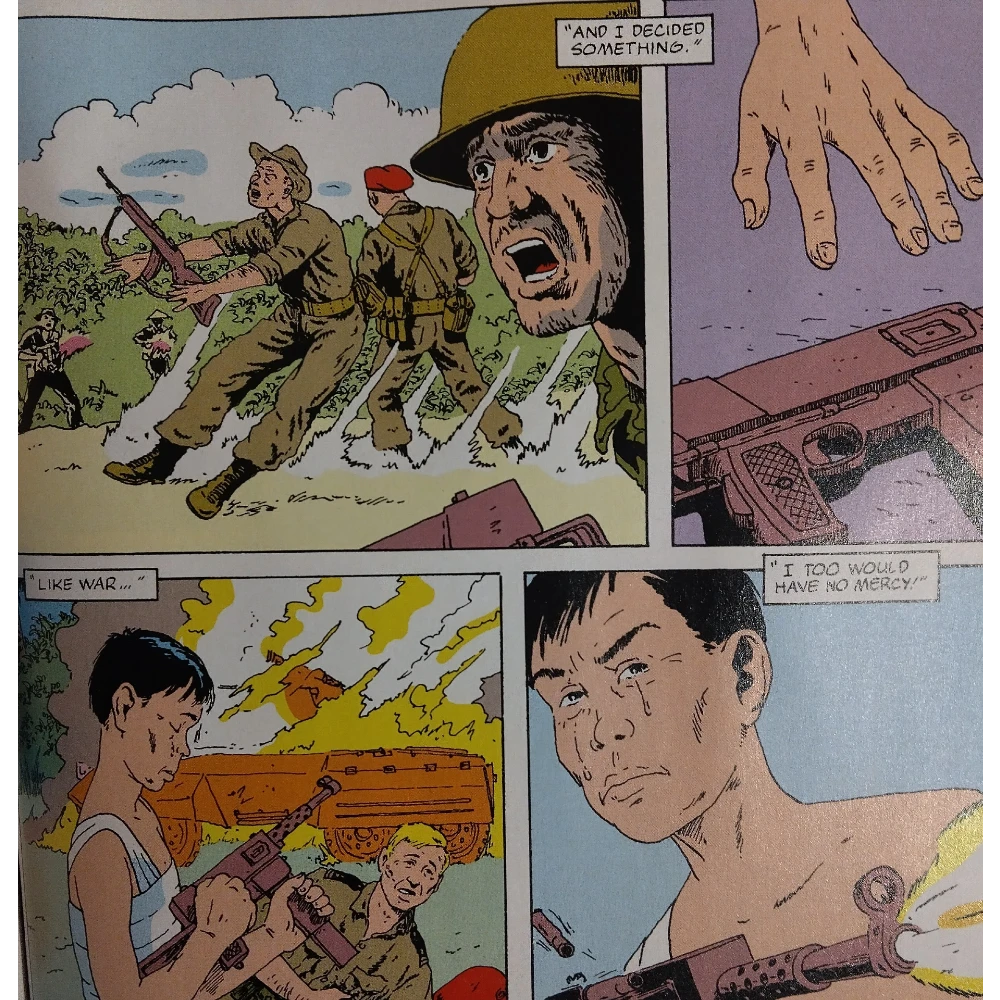
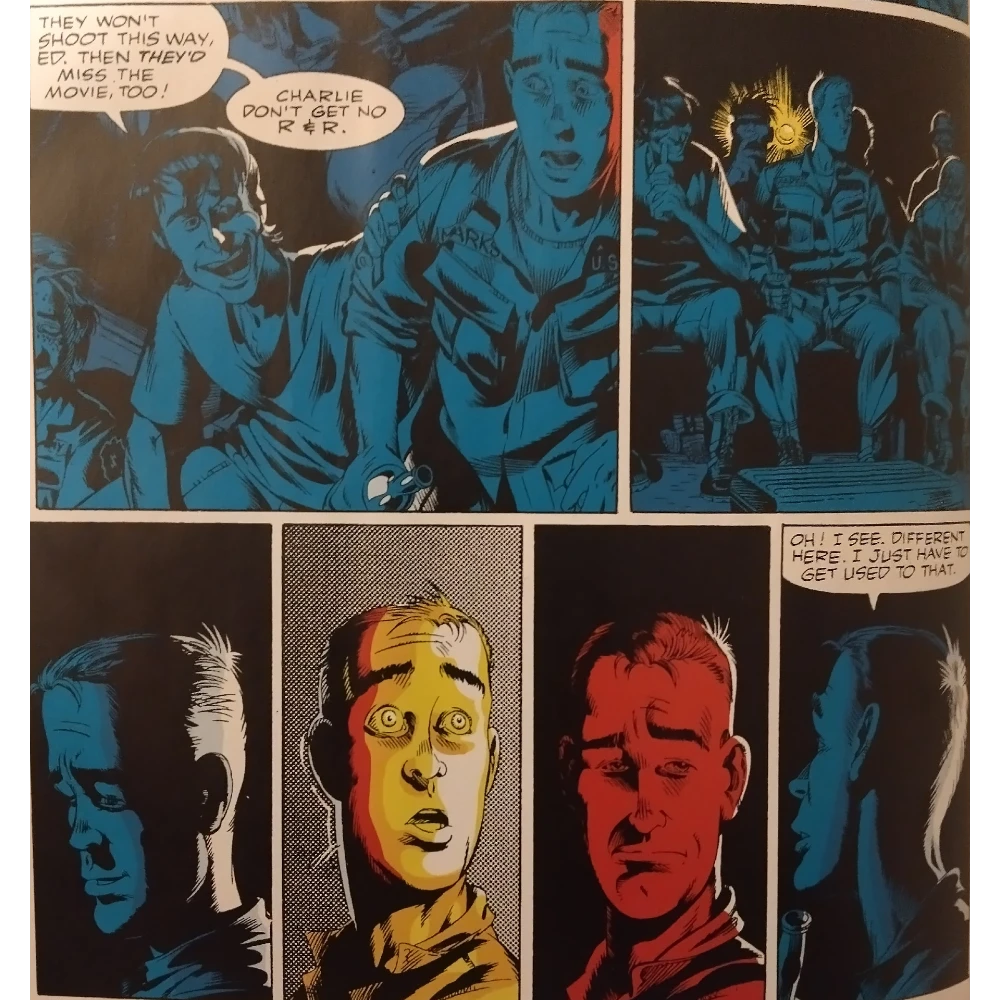
Characters don't necessarily develop across the issues, but in the time between each installment, you trust how Murray handles these people. As months progress, so does Ed's confidence. He becomes more comfortable with the lingo, grows closer to his friends. When someone in his troop dies, you feel the anguish Ed expresses and can understand and empathize when the next issue opens with him facedown in a bar. It's a lot for a nineteen-year-old to face. You've not seen the relationships develop outside tense moments of combat–no lingering conversations, not much levity–but Ed's pain is believable. Given the series' timeframe, Murray is leaving a lot out, trusting he can lead the reader to believe these moments have occurred between issues. Instead of watching characters develop over time, you see the fruits of their learning and survival. Some may complain that the payoff feels emptier than if we were given the growth situations themselves, but I found Murray's method rewarding regardless.
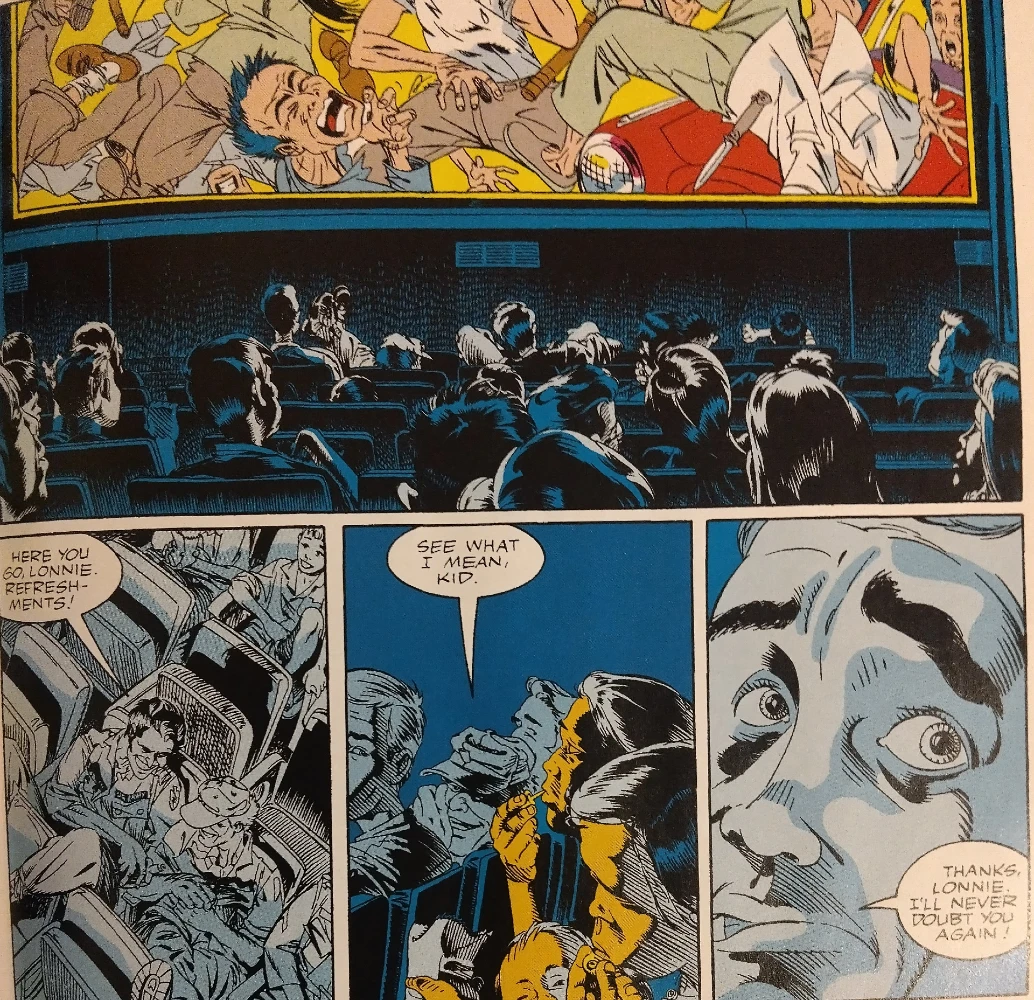
It isn't all blood-and-guts throughout the book (and, to be fair, there isn't a lot of blood or guts depicted). Several scenes are treated passively or with a simple mundanity to remind readers these soldiers didn't spend their entire deployment camped behind bushes and fighting in small villages. Life goes on for these men, with visits to Saigon for movies, games of poker, letters from home, and drinking with buddies. Yet even these relaxing moments are often punctuated with the sudden tides of war, interrupted by an attack or a command to leap into a chopper and fly out somewhere. It's life as normal until it isn't, and though the same could be said for when our own lives are rattled by spontaneity or trouble, the abruptness and clash between these two different states is what allows this series its bite. A bad day for you could mean a flat tire or a flooded basement; a bad day for these guys means the theater they're attending gets blown to smithereens by Victor Charlie.
Golden fits his last name well, being a great choice for these issues. His style leans towards slight exaggeration when it comes to his figures, providing enough detail yet restraining from peppering the panels with too much realism. Subject matter is treated seriously and with weight, but the grit isn't overdone, Golden straddling a fine line. The extended jaw of a sergeant barking orders is balanced with faces knotted in muted fear or expressing astonishment over the sheer hopelessness of the world these soldiers have entered. Environments are peppered with feeling, from the dense jungles where enemies could hide anywhere, to the bright city still under attack, the ramshackle camp where our soldiers live, and the shadow-infested caves where rats and more crawl.
Ed Marks isn't your traditional Marvel hero. He doesn't slip on a mask and fire webbing, throw a shield, or whip a billy club. He's a soldier, with a helmet and a gun, facing fraught peril that actual men lived through…or died during. The 'Nam was an incredibly popular book when it was published, beginning only a decade after the actual Vietnam War ending. I'm not aware of all the intricacies in that war, nor do I believe a comic can present an actual representation of the cumulative horrors men faced. But what Murray and Golden do is provide a strong approximation governed by Murray's actual experience and Golden's capable detail work, transporting you to Vietnam so you can experience the visceral calamity of war from the comfort of your couch.