Spider-view: "Death from Ωn High" (Spider-Man 2099, Part 7)
In teasing future issues, this arc feels like it often neglects its own development
—by Nathan on December 9, 2025—
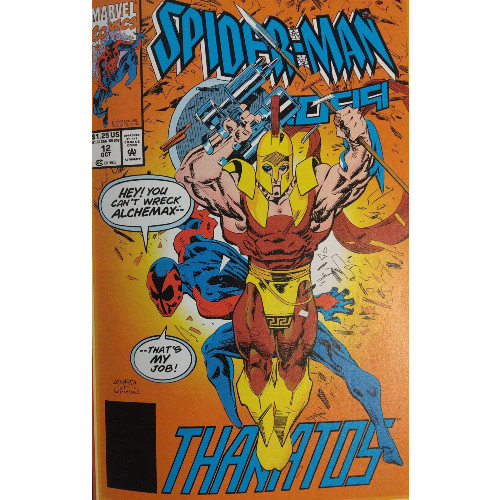
When last we examined the adventures of Miguel O'Hara, the Spider-Man of the future, we witnessed him take an oath: not a "Yes, Father, I shall become a spider" kind of oath; more of a challenge. No longer was he letting Alchemax stand in his way, and he told them so, right to their faces…their shiny, metallic faces. OK, he yelled at a security camera, but you have to imagine that the Alchemax higher-ups, including Miguel's boss Tyler Stone, heard about that whole fiasco.
Try as he might to stay separate from the whole "Alchemax is an evil organization that we need Spider-Man to fight" debacle, Miguel finds himself constantly drawn back in–an assassin tries killing his brother's girlfriend, religious fanatics begin cosplaying as him (Spidey, not Miguel), even his mother has made a shrine of sorts to the new Web-Head. He's surrounded by danger, action, heroism, not of his own accord, but he's now chosen to become involved.
Folks refer to him as the "harbinger of Thor," the herald who will pave the way for the Norse God of Thunder's return to save Nueva York from their oppressive technocratic overlords. Miguel's not sure what to make of that…but as this story shows, there may be more legitimacy to it than he realizes.
"Death from Ωn High"
Writer: Peter David
Pencilers: Rick Leonardi and Tom Grindberg
Inkers: Al Williamson and Don Hudson
Colorists: Kevin Tinsley, George Roussos, Steve Buccellato, and Eva Grindberg
Letterers: Rick Parker
Issues: Spider-Man 2099 #11-14
Publication Dates: September 1993-December 1993
Peter David knew what he wanted to do with this series; that much is clear, and this four-part arc gives a glimpse of the direction he planned on taking it. He knew the story he wanted to tell, one where this Spider-Man of 2099 becomes a champion for the people of 2099, saving the downtrodden from corporate calamity while maneuvering through his own existence and unraveling whether he is a central figure in the return of Thor and maybe other gods. There are plots here, central concepts being formed, subplots bubbling under the surface. David establishes a cadence early on and allows his sense of direction to guide him fairly well.
Yet we hit a hiccup in the rhythm through these issues, a bit of a bump. Because David wasn't just building into the next arc (which, as we'll see in a few "Spider-view" posts, culminates in the 2099 Universe's first crossover event); he was building the arc after that one, maybe a few arcs down the road, Chris Claremont-style. And that's where we run into problems, because from my understanding, those fields ended up a tad more fallow than Mr. David would have appreciated.
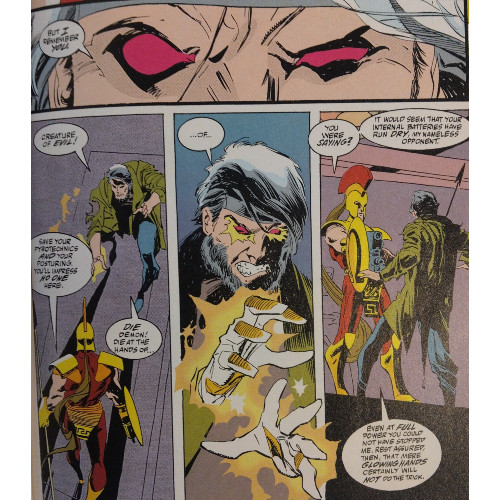
I'll admit it may not be fair to judge an arc that doesn't quite promise to deliver on future expectations when reviewing just the arc itself. My investment is on this direct story, so I should just be focused on this direct story in the here and now. I wish it were that simple. The issue is that part of the intrigue David develops in this narrative is through the introduction of two new characters, Thanatos and the Net Prophet, and while they're interesting, enigmatic characters, the eventual revelations surrounding them fall flat for a few reasons.
But before I jump into that, why not take some time to dish on the exact story David is telling?
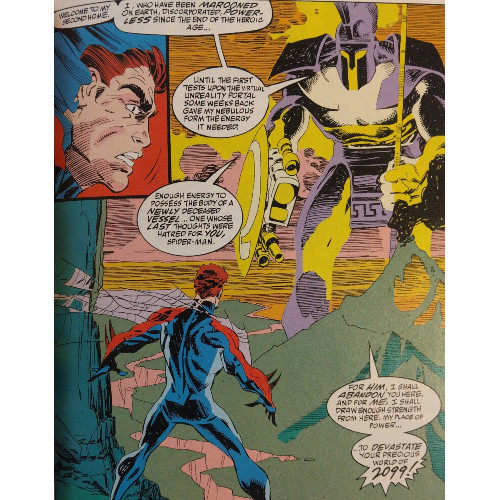
This tale brings together the threads David has been weaving and begins revealing the larger tapestry. Miguel is, officially, at war with Alchemax and comes to physical blows with their agents before running into Thanatos, so named after the Greek god of death, whom he believes could be a fellow agent in the fight against Alchemax. Thanatos claims to have come from the same "Age of Heroes" the OG Spider-Man hails from and says he's the dude who killed Thor! There's a mystery woven within this man as to who he is, what his identity was during the "Age of Heroes," and what he represents for the future. Throw in this "Net Prophet" guy, who has no recollection of his own identity yet shares some vague familiarity with Thanatos, and you've got a bubbling mystery waiting for extra heat to be brought to a boil.
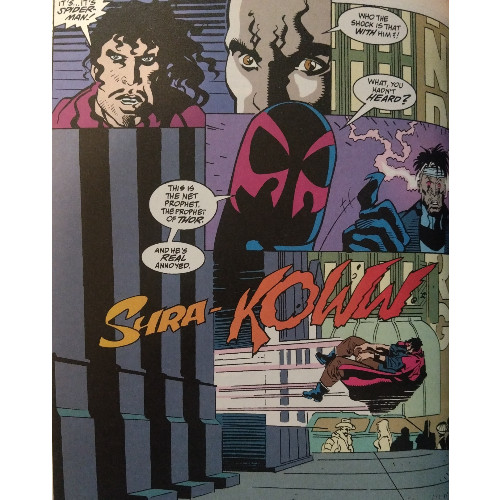
I like the forward momentum this arc generates–you get the seriousness which David injects into this story, that he's doing what he can to find that sweet spot between developing a cool Spider-Man title and drawing readers into this burgeoning future world Marvel's been developing. A boardroom scene between Tyler Stone and other Alchemax head honchos gives brief insight into occurrences in other 2099 titles like Doom and Ravage; temporarily aligned with the Net Prophet, Spidey 2099 is cemented in this "harbinger" role, with hopeful chatter from "Thorites" that he will herald their Norse savior. Bits like showcase the building world, the coming together of narratives, and Miguel's continually developing role in the larger 2099 dimension.
David's subplotting also works fairly well, particularly with the development of supporting cast members. Kasey, the girlfriend of Miguel's brother Gabe, persists in her revolutionary role, despite some physical setbacks, her fervor heightened with the arrival of Spider-Man in Downtown again (a trip which fares better than his last tour). Her part is doled out in bits and pieces, her fascination with the costumed adventurer veering into romantic inclinations but also intended to give her goal some heft. Even better is David's use of Lyla, Miguel's holographic assistant. An earlier instance or two had indicated a developing personality within her, and David latches onto that plot thread here. Gaining some form of sentience, Lyla wrestles with her newfound emotionality, struggling with her programming to remain calm, collected, impersonal. It's just some teasing here which David does, but if I remember what occurs in later issues, it's teasing done well, hinting at an arc to come.
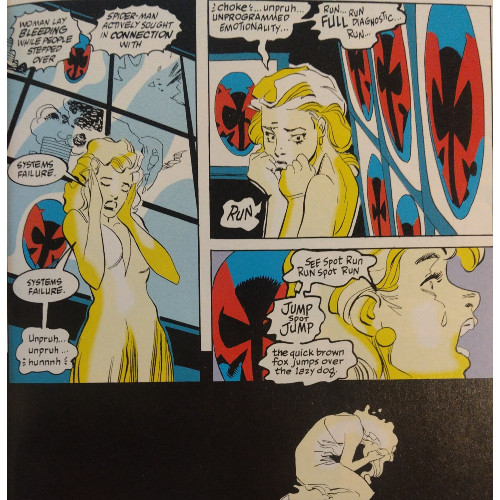
Wish I could say the same about our new characters.
Some digging notes that Thanatos actually makes no additional appearances after this arc in Spider-Man 2099 and would actually not appear again until Peter David's run on Captain Marvel eight years later. Captain Marvel is where David divulged the character's true identity, which I will not note here, but he did go on record stating that identity was merely one of several ideas he had for the character. As an antagonist, Thanatos certainly carries himself well, backing his assertions with a decent showcase of power. But given that he never appears again in this series, his time in the book is limited, disappointing. He feels like the start of grander things, and his ultimate removal from the title moving forward hurts the principal narrative surrounding him.
The same goes for the Net Prophet, whose true identity is wrapped up in a character David wrote a few years prior for Marvel's New Universe imprint. I have no idea if fans would have leaned the Prophet's real identity were they not aware of the New Universe title he was from, and it does appear that the character made some later appearances in Spider-Man 2099 which uncovered his story more fully…but that's several issues from where he are. An intriguing mystery, he is nevertheless a bit of a messy inclusion like Thanatos, an idea sparked by David for further plots which seemingly did not get resolved until much later than intended.
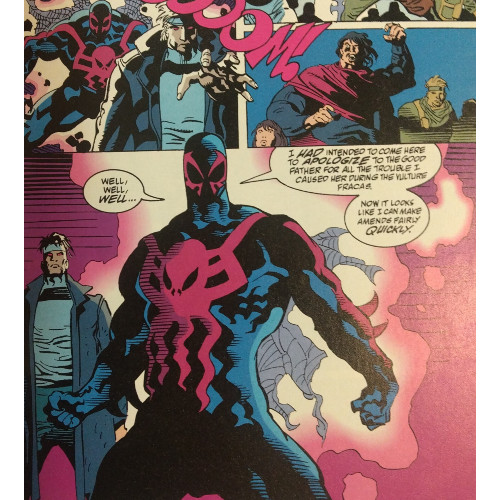
Perhaps the most disappointing aspect of both these characters is how they take away from Miguel. Spidey 2099 gets entangled in their shenanigans, sure, doing what he can to stop Thanatos and aiding the Net Prophet later in the arc. He's involved, but his role is limited, mainly as a set up for an arc immediately after this one. A couple moments with Miguel do exist–he becomes bitter with a new coworker, harbors some new resentments towards Tyler–but his involvement is unbalanced, set aside for subplotting and future plot planning.
Thanatos, as I mentioned, is the name of the Greek god of death, and he has a somewhat harsher hold on this story than intended. I like David's writing a lot, I do, and there are some clever moments in here and some good development on plots which needed immediate attention. But there is a lot of signposting, of encouraging readers to keep coming to find the next big mystery or to have the next secret character revealed. Woooooh! Were those subplots handled in a satisfactory matter, I'd be rating this story more highly. In the end, this kinda feels like Avengers: Age of Ultron, which was so focused on laying out the future, it neglected the present. Which, in Miguel's universe, is still the future, so I should say I wish David had spent more effort crafting 2099 instead of planning for 2100.