(Strand)om Stories: Iron Fist: The Book of Changes Review
These issues fail to adequately explore the return of their central hero, meandering ideas submerging vital characterization
—by Nathan on April 21, 2026—
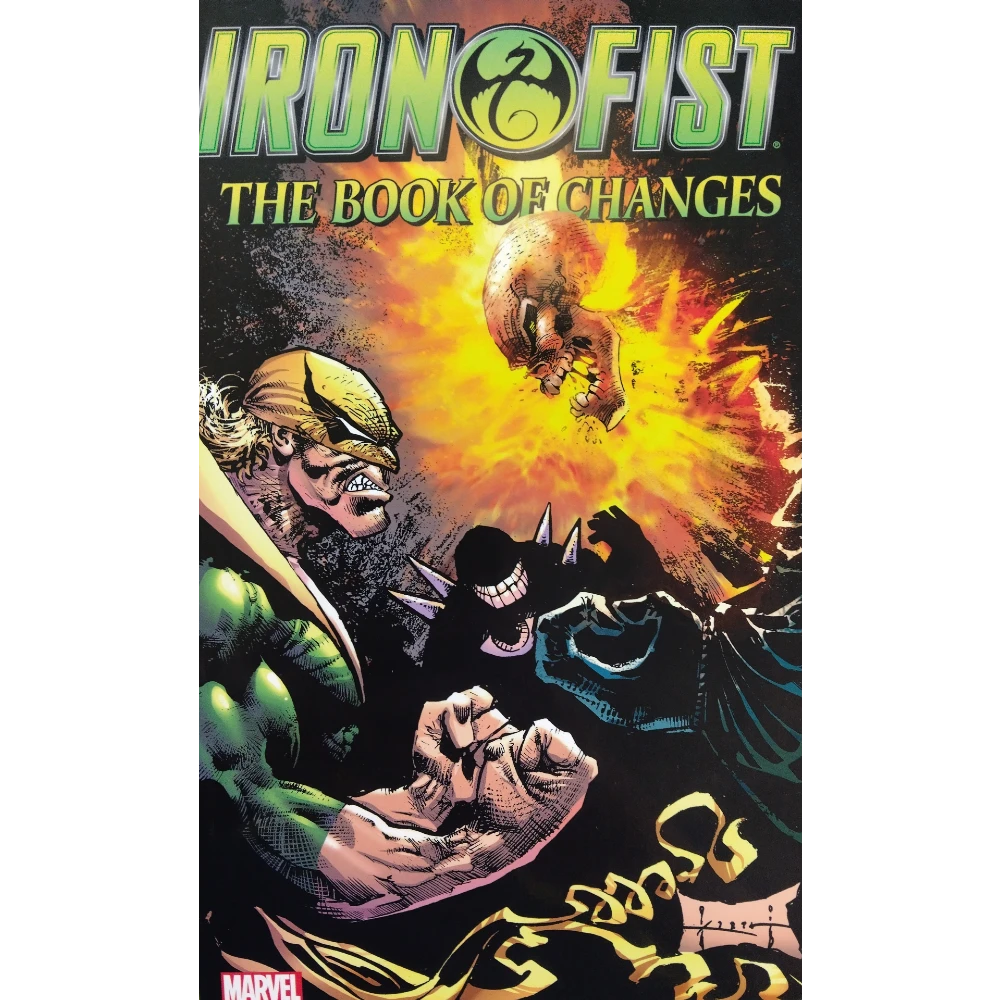
As the 90s dawned, the Iron Fist was dead.
Danny Rand had, for years, been protecting the streets of New York alongside his best pal Luke Cage in their Power Man and Iron Fist series (which I will certainly be reviewing at some stage, don't worry). In issue #125 of that series, writer Christopher Priest (then going by Jim Owsley), at the behest of editor Dennis O'Neil, tragically killed the rich kung-fu master, having him caught unawares and senselessly beaten to death by a powered young man he and Luke were trying to help. To make matters worse, Luke was then suspected as the murderer and went on the run! It's honestly not one of the most frequently discussed deaths I've ever come across, but the fairly brutal and spontaneous fashion of Danny's murder seemed to really irk fans…
…so much so that when John Byrne–known, among other things, for collaborating with Chris Claremont on several of Danny's earliest Iron Fist adventures–brought the hero back for good (after an earlier fake-out) in his Namor series, he retconned the Iron Fist who died as being an alien doppelganger (what is it with Byrne seeding resurrections for characters he illustrated in the 70s in later series he was writing?). Hear that folks? Danny was never actually dead! The real Iron Fist was eventually found and nursed back to health, and this is where we find him in the stories we're reviewing today.
Oh, the fickle nature of comics. But I'll mark this as a good retcon, because the more I read about Danny's "death," the dumber it becomes…
As this volume contains a three-part team-up with Spider-Man that I intend to examine in "Spider-view," I wanted to dive into these first solo stories after Danny's return, to see how the Iron Fist changed since his supposed "resurrection." Danny's no longer being held hostage by an alien race; he's back in the real world, and though he'd team with pal Power Man again, here, he's trying to determine his place in a world that moved on while he remained a captive.
Iron Fist: The Book of Changes
Writers: Joey Cavalieri, Ron Marz, Tim Matias, John Figueroa, and Terry Kavanagh
Pencilers: Alex Morrissey, Shawn MacManus, Dave Hoover, Bill Wylie, Chris Renkewitz, Andy Smith, Fred Haynes, James Blackburn, Ron Wilson, and Jae Lee
Inkers: Brad Vancata, Shawn McManus, Jimmy Palmiotti, Ken Branch, Jeff Albrecht, Bud LaRosa, Peter Palmiotti, Bill Wylie, Don Hudson, James Blackburn, Ron Wilson, and Jae Lee
Colorists: Brad Vancata, Fred Mendez, Mike Thomas, Glynis Oliver, George Roussos, Sue McTiegue, Kevin Tinsley, and Ericka Moran
Letterers: Steve Dutro, Janice Chiang, Dave Sharpe, Michael Higgins, Ken Lopez, Jon Babcock, Loretta Krol, and Joe Rosen
Issues Collected: Spider-Man #41-43 and material from Namor, the Sub-Mariner Annual #3 and Marvel Comics Presents #111, #113-118, #125-137, and #140-141
Volume Publication Date: April 2017
Issue Publication Dates: September 1992, October 1992-December 1992, February 1993-February 1994
Appropriately, just as Iron Fist's debuted in anthology title Marvel Premiere, his return occurs in a book that is not his own. And that's where the similarities between those two ideas dies harder than an alien doppelganger punched to death by a wayward superhero. Because while different artists and writers maintained an interest in Iron Fist until Claremont and Byrne could do something of substance with the character, these narratives, primarily written by Joey Cavalieri, can boast of no such success.
Cavalieri makes an effort to generate not only sympathy for Danny Rand but also give us a reason to want to keep following his adventures. Yet he doesn't touch on, at least not early in this volume, Danny's return or his attempts at reintegrating himself into the world. Like Danny first journeyed as a young man from the mystical realm of K'un Lun to Earth and needed to learn how to live like a regular individual (albeit, a regular individual who inherited a company from his parents), so should his return from his kidnapping ordeal have had a transitory phase. Maybe the Namor issues he appeared in followed that development, but I hoped Cavalieri would make some effort to breach Danny's emotions and mindset. He does not.
In the titular "Book of Changes" arc, Cavalieri does present an Iron Fist interested in Rand Corporation dealings, facing Hydra and AIM when a supervillain endeavors to steal an artifact the company is examining. This multi-part saga does provide somewhat of a look into Danny's feelings regarding his place in the world, yet Cavalieri moves at a rapid pace across these shorter narratives. His page count per issue isn't much, not enough to tell much of a story when he isn't building up to a handful of dramatic moments, and though this is an understandable situation, he isn't allowed the depth I would have appreciated him having to craft a decent arc for Iron Fist.
This take on Danny Rand leads Fist to become far too suspicious far too quickly of the people around him, including love interest and police woman Misty Knight, who appears for all of four pages in this whole arc. Danny feels anyone he usually trusts could be a traitor, even his most trustworthy allies and friends, yet he develops a burgeoning romantic relationship with a young woman he meets later in the story. Changes happen far too quickly for Cavalieri to have Danny absorb and consider them genuinely, a frenetic pace keeping us moving from the Rand Corporation itself, to a small neighborhood, to a junkyard, to a grim Hydra base.
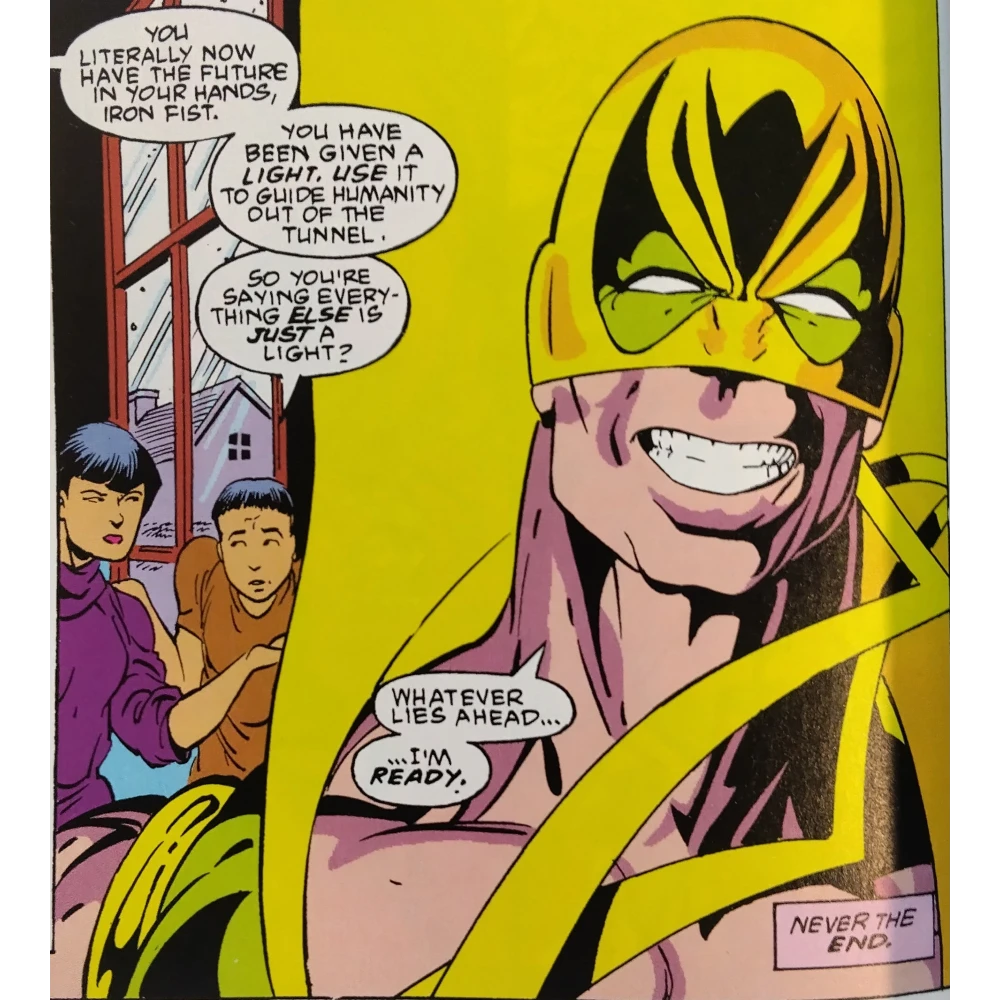
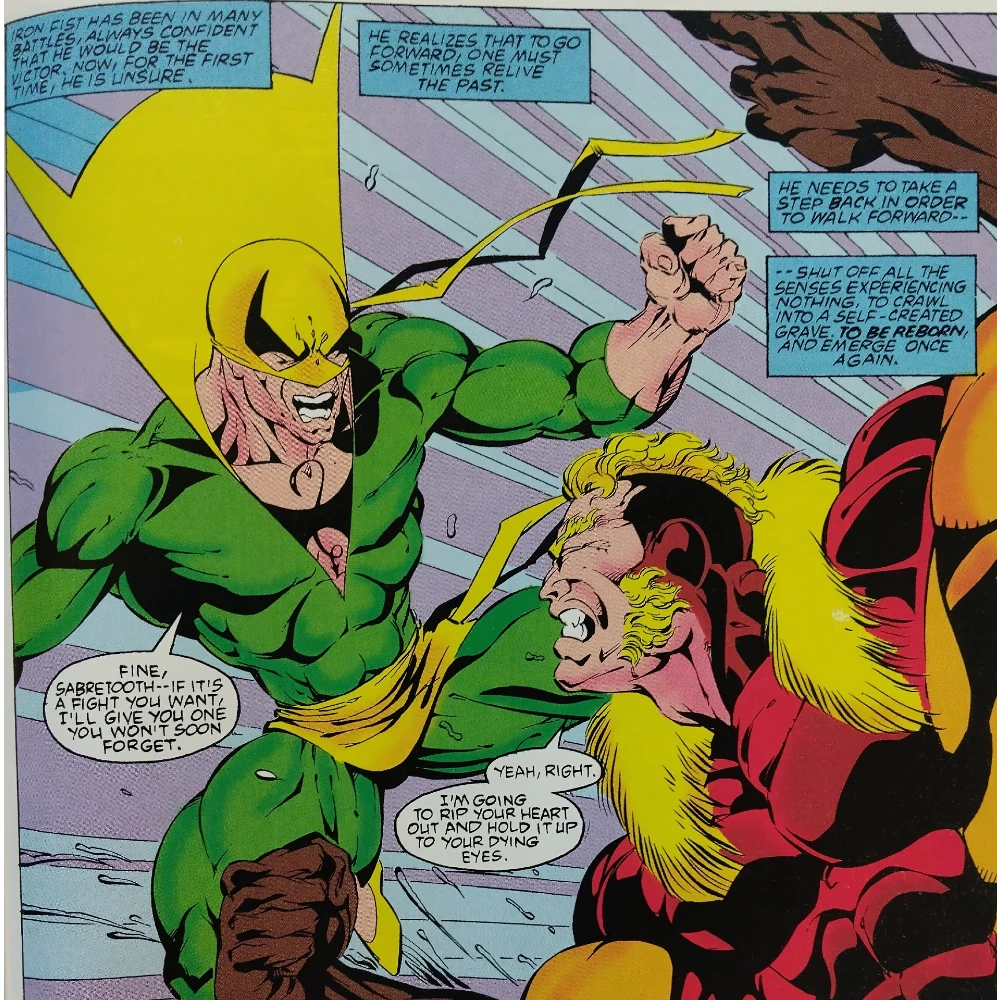
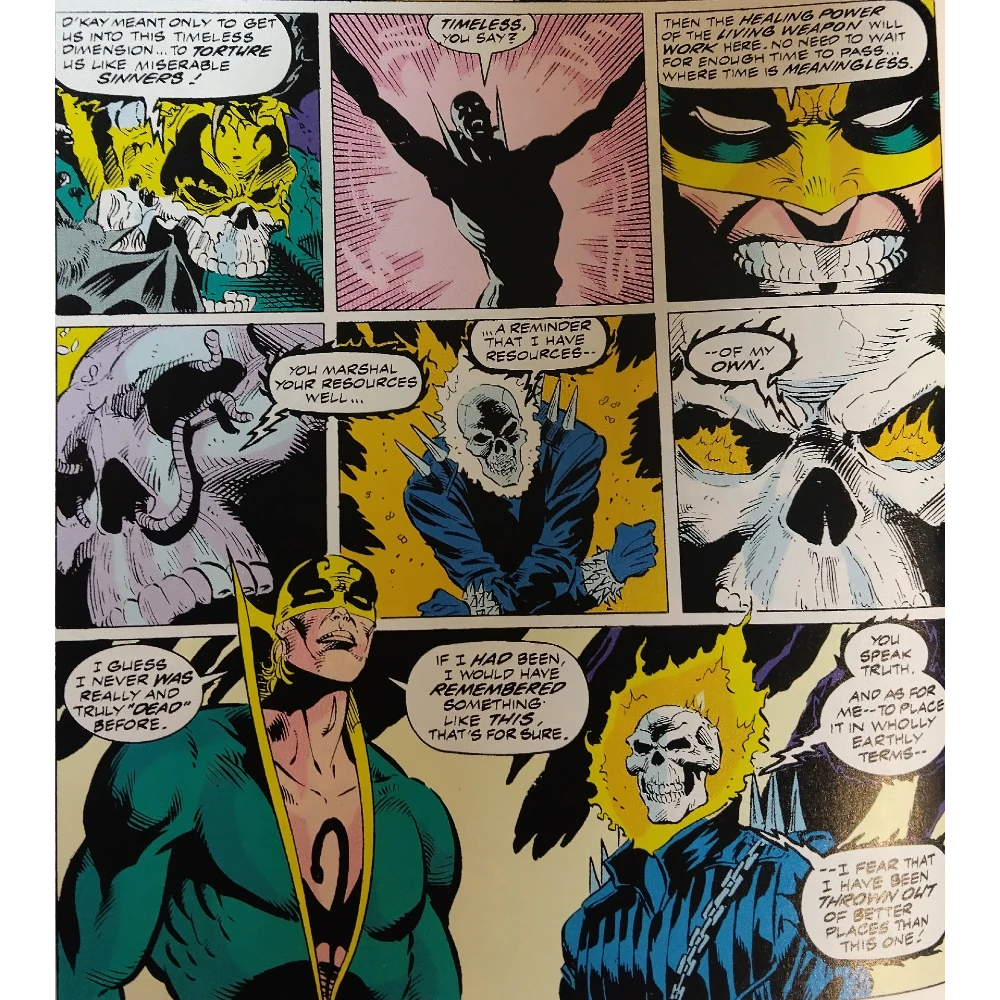
The arc ends with Danny feeling a renewed sense of purpose in his calling, yet nowhere is this touched upon in any of the following stories, either by Cavalieri or other writers. Heck, no one even references the new costume Danny receives at the end of "Book of Changes," doubling down on the title's unintended irony. Danny moves from mission to mission, never having one defining role as a superhero. He fights demons alongside Ghost Rider, stumbling onto their presence; he battles a wicked cult after being drawn, almost mystically, to their presence; he works with a few agencies to protect a couple stoolies from a few different adversaries. The latter narratives do lead to a decent tussle with Sabretooth, which is a nice nod to the Claremont/Byrne era, yet this fight underscores the overall reluctance to draw from the past in order to see Danny grow as a character. The fight is a nice reminder of the shared history between the two, but it feels used more for the sake of nostalgia rather than commenting on either character in any significant way.
The small changes to Iron Fist we do receive are somewhat confounding. An arc where Danny's powers begin sputtering out, leading to a drawn-out fight with a fairly low level ninja, feels wasted. The trouble's onset happens quickly and has no lingering consequences for Danny beyond the fight; there's a sense his waning abilities should be connected to Danny's own sense of self, but this isn't even commented on gradually enough to feel like a personal arc or theme. It adds conflict to the moment and nothing more. Like the renewed sense of purpose referenced above, this brief change isn't given a proper narrative examination to create tension for Danny or enable Iron Fist the opportunity to grow beyond this newfound weakness.
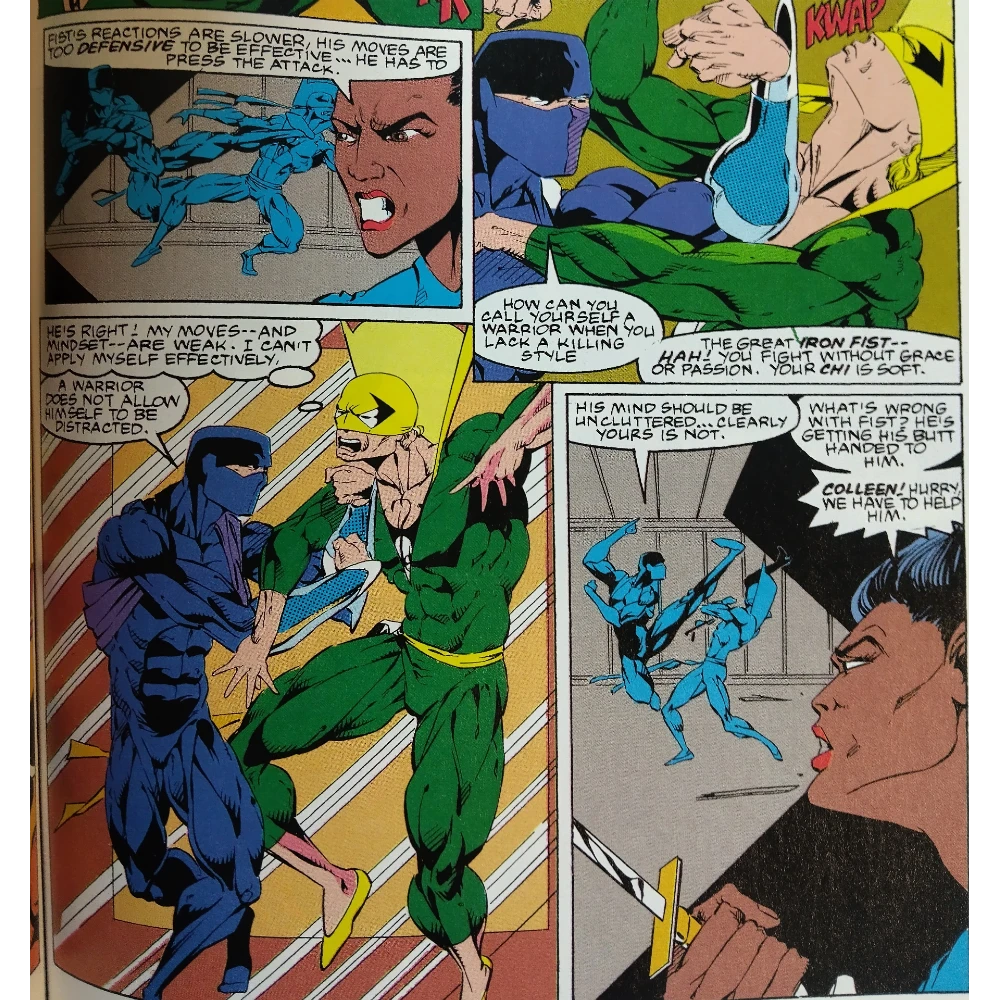
Situations happen to Danny, but rarely does he feel like he has agency over his actions. One story, he winds up battling a cult; the next, demons; another, Sabretooth. He feels like a mercenary at times; other times, he's somewhat invested in Rand dealings. One fairly random, fairly short story, courtesy of Ron Marz, sees him happen upon a Himalayan temple for reasons unexplored. There's no narrative throughline guiding these issues, ideas bouncing around like Danny does when he's engaging in some of that kung-fu fighting. It's a shame because, as Claremont, Byrne, and different creators on Power Man and Iron Fist proved, Fist has interesting qualities and an entertaining personality. He's been driven by a sense of righteous vengeance before; elsewhere, he's developed strong heroism. He's a hero here, sure, fighting ninjas and demons. But that's a lot of he does: fight. There's little exploration of anything else.
So much of this volume smacks of writers wielding uncertainty with the weapon that is their words. "Like unto a thing of iron!" older comics referred to Danny's blazing fist, yet here, the narrative quality feels like unto a thing of glass. Maybe Iron Fist wasn't worth Marvel's attention at the time to receive solid plotting and satisfying character growth, despite the protests of fans over his unfair demise a handful of years prior. Danny wields uncertainty himself, unsure of how to walk this newly returned life of his…or so it's meant to seem. Small effort is made to cast him as a wandering soul, finding possible betrayal in his company and picking up odd jobs as a superhero. Most of that is my speculation, however, and not because I feel like the writers here genuinely make Danny's road forward conflicted. They feel conflicted themselves, confused on how to handle the character. Maybe they needed to take a page from Iron Fist himself, settle down, achieve some form of internal peace and understanding before setting Danny on the road to find his.