Random Reviews: Buzzboy: Trouble in Paradise
A bit too dated at moments, these issues nevertheless possess a fairly engaging plot suitable for younger readers
—by Nathan on June 12, 2026—
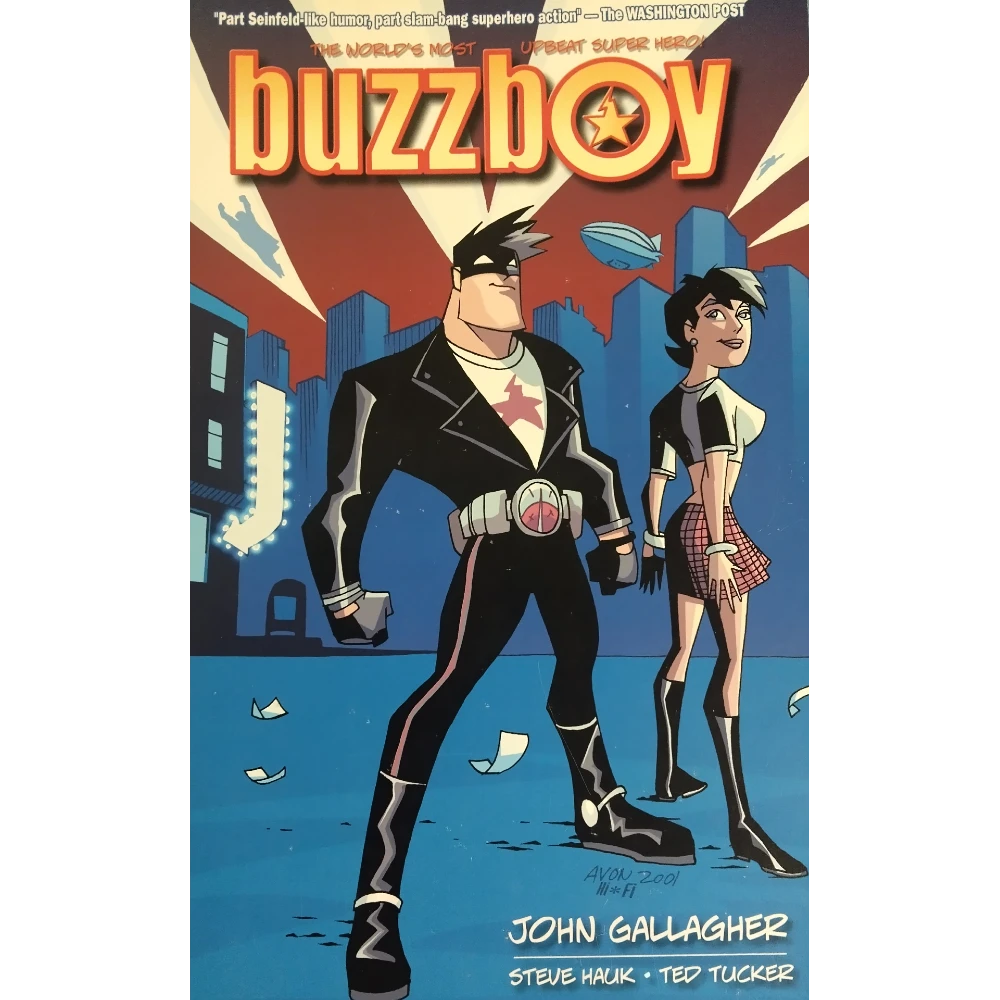
Years and years ago, my introduction to a certain comic came about the same way as so many others: my dad found a volume at the library he deemed was kid-friendly enough and let me take a crack at it. Back in the days before I could determine for myself what was suitable or engaging material, he pulled together whatever he could find. Colorful, with no coarse language or obscene violence? Usually passed muster.
As I have been doing on this site periodically, I am taking a stab at one of those narratives he picked up in a two-part review. Technically, I'm reviewing the volume he found in the next "Random Reviews" post, as tthis blog deals with the first volume produced by John Gallagher and Sky Dog Press. I felt diving into today's featured character from the beginning of his appearances was the right thing to do, and as this is a comic primarily for younger readers, shouldn't the focus here be on doing the right thing?
No heavy-handed preaching exists in Buzzboy's world, though. He isn't going to tell kids to not take drugs or make sure they help little old ladies cross the street. With his telltale warcry of "You are soooo busted!" Buzzboy and his brand of heroism are of a more "show, don't tell" nature, especially when the safety of New Paradise Metrogrove is on the line.
Buzzboy: Trouble in Paradise
Writer: John Gallagher
Pencilers: John Gallagher, Tim Ogline, Steve Conley, Giovanni Lucca
Inkers: John Gallagher, Tim Ogline, Steve Hauk, Steve Conley, Giovanni Lucca, Eric Martin, and David Manchester
Letterers: John Gallagher and Vincent Sneed
Issues: Buzzboy #1-4
Volume Publication Date: December 2002
Issue Publication Dates: May 1998, August 1998, October 1998
Publisher: Sky Dog Press
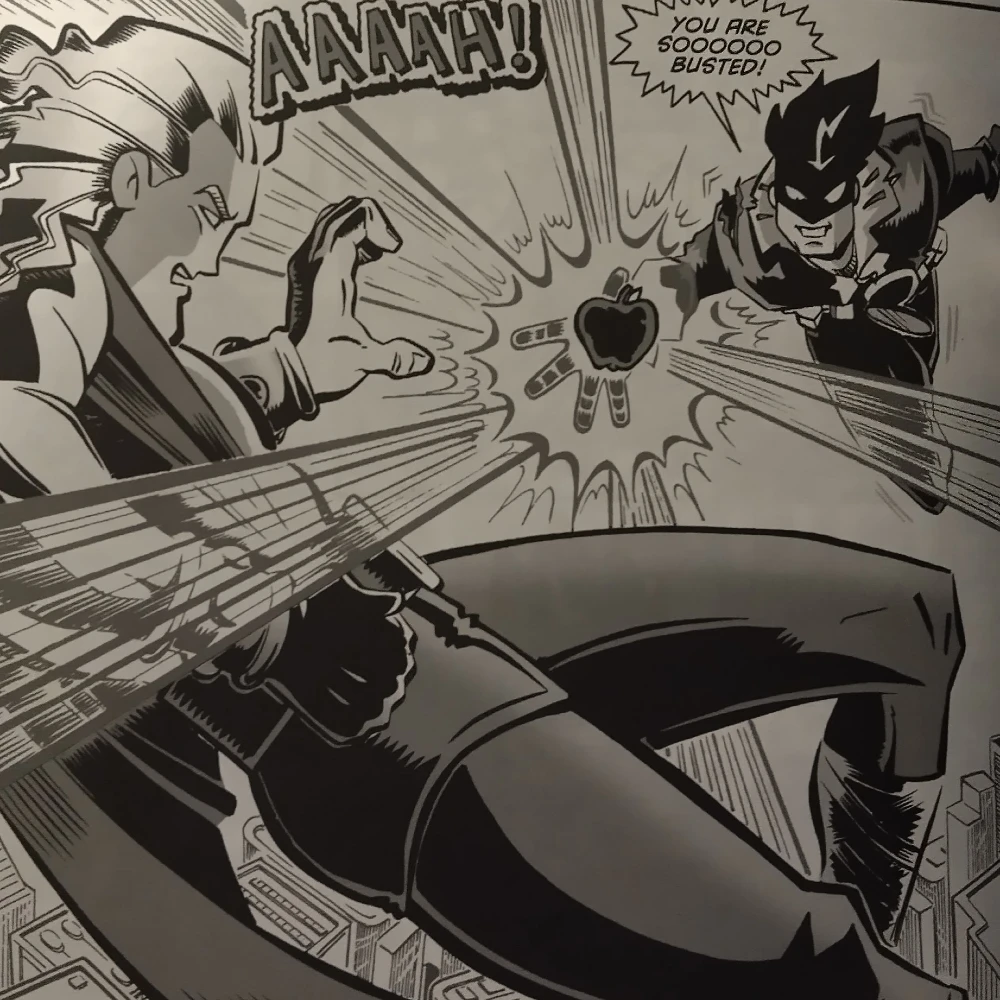
The second volume I plan on reviewing is more of an anthology, featuring Buzzboy in a series of (mis)adventures, so I was pleasantly surprised to discover this limited series is actually a complete story arc predicated on an engaging premise: the city of New Paradise Metrogrove has been placed under martial law by the hero Ultra, who promises to keep order and peace intact yet does so at the cost of the populace's expression of free will and free speech. For a kids' comic, we get off to a pretty heavy start, especially as Ultra's forces vaporize a vocal dissident to the hero's regime. Like, the dude's dead. We see his skull, and even if it's drawn in a somewhat cartoony fashion, Gallagher makes no bones (sorry) about the stakes here. Move over, Homelander, Omniman, and Injustice Superman.
Underneath this premise, which sees Buzzboy and some fellow heroes take a swing at upending Ultra's rule, is a slow burn backstory which, revealed piece by piece, enables Gallagher to keep the reader invested. As history unfolds for Buzzboy and his allies–former villain Doc Cyber, sarcastic sorceress Becca Smith (just don't call her Buzzboy's sidekick!), and fellow superhero and speedster Zoomer–clues seeded earlier are brought to the present with a few fun twists (one of which is similar to yet predates a concept explored by Paul Jenkins and Jae Lee's The Sentry series). The hints are doled out in a way that may allow for the reader to come to certain conclusions ahead of time, but I doubt many of those readers exist within the age range of Gallagher's intended audience. Blame me for just being too old, I guess?
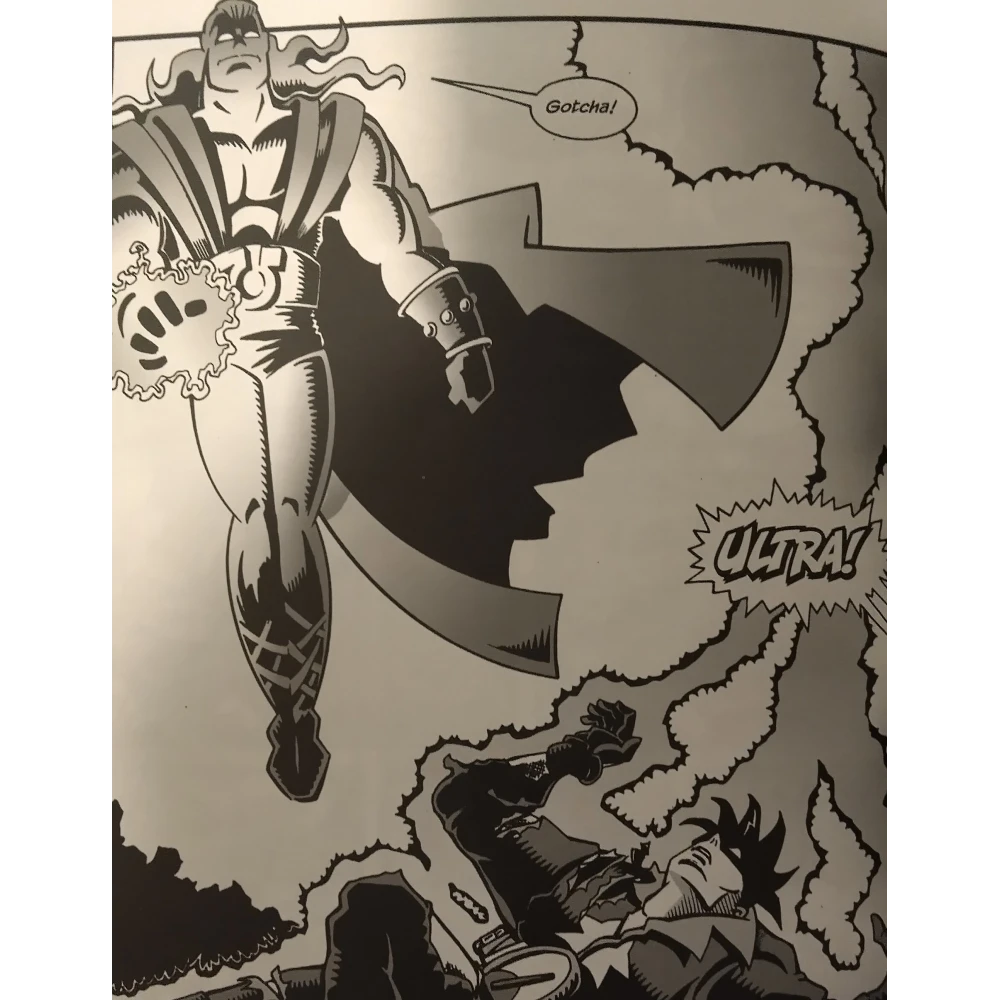
Though the narrative is humorous in nature, and though Buzzboy and his world handily spoof characters and tropes found in more mainstream comics, there is that nice underlying current of seriousness. Buzzboy, having vanished for years, comes back to a world where he's a little out of touch, with Gallagher allowing him a bit of development in how exactly he wishes to reintegrate with the world once he figures out this whole "Ultra overlord" situation. Character elements flit here and there–Becca is really a "sorceress in training" and learning to use her powers more expertly, while Zoomer throws on his costume after years in retirement. They're not given arcs, per se, but across the four issues, these supporting cast members are offered hints of growth.
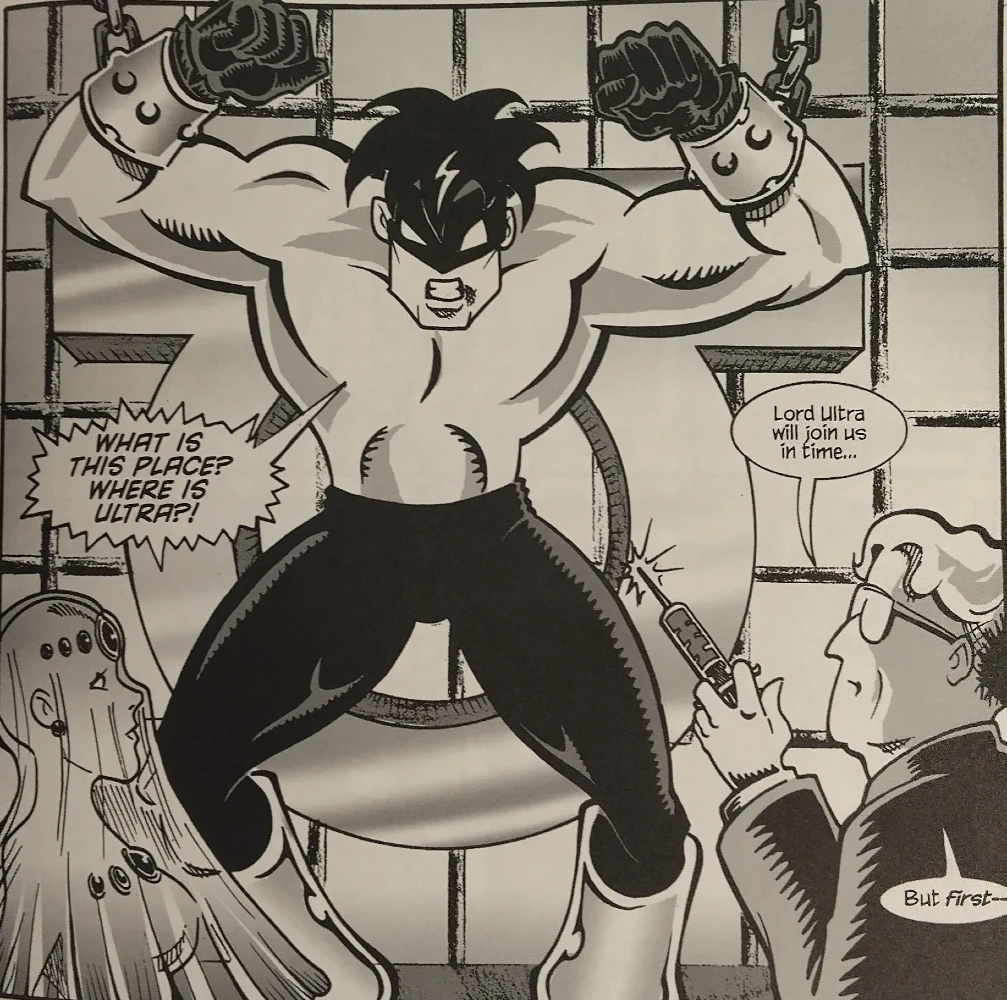
As a character, Buzzboy isn't much beyond his costume and codename, aside from his triumphant return after a particularly devastating battle with an arch villain. If anything, he's a sidekick coming into his own as a hero, distinguishing himself from his former mentor and becoming the true kind of protector New Paradise Metrogrove is in need of these days. There's an arc here, perhaps condensed over the issues we're given. He's not allowed much in the way of doubt or struggling with his purpose, though he does face that classic moment of seeming defeat which most heroes experience at some point in a story, all for the purpose of providing him an obstacle to overcome.
Gallagher enjoys nodding to Buzzboy's inspiration as a Silver Age style of hero by having the young man spout all sorts of references to media I assume Gallagher grew up with, such as Ghostbusters, Muppet Babies, Michael Jackson, and Seinfeld. Heck, he even draws in nods to media I assume his parents introduced him to, such as Leave It to Beaver, The Wizard of Oz, I Love Lucy, and the slogan for a cosmetic company from the late 50s. Not to say some of these references would be completely irrelevant to kids these days or even to the audience Gallagher originally published for (except, I assume, the slogan for the cosmetic company from the late 50s), but the references do lend a dated quality and don't seem to be the right kind of humor for his audience.
Elsewhere, Gallagher achieves more of a "timeless" quality when riffing off comics–he's got teams of teenage superheroes, giant robots, and a sidekick wanting to become his own hero rather than remain in the shadow of his mentor's cape and boots. These tips of the cowl feel more natural and relevant to the medium Gallagher is working in, rather than just scads of jokes and references to older TV shows and movies. If you've read a comic, regardless of your age, you've likely encountered these tropes somewhere else and can more readily identify them in the pages of Buzzboy.
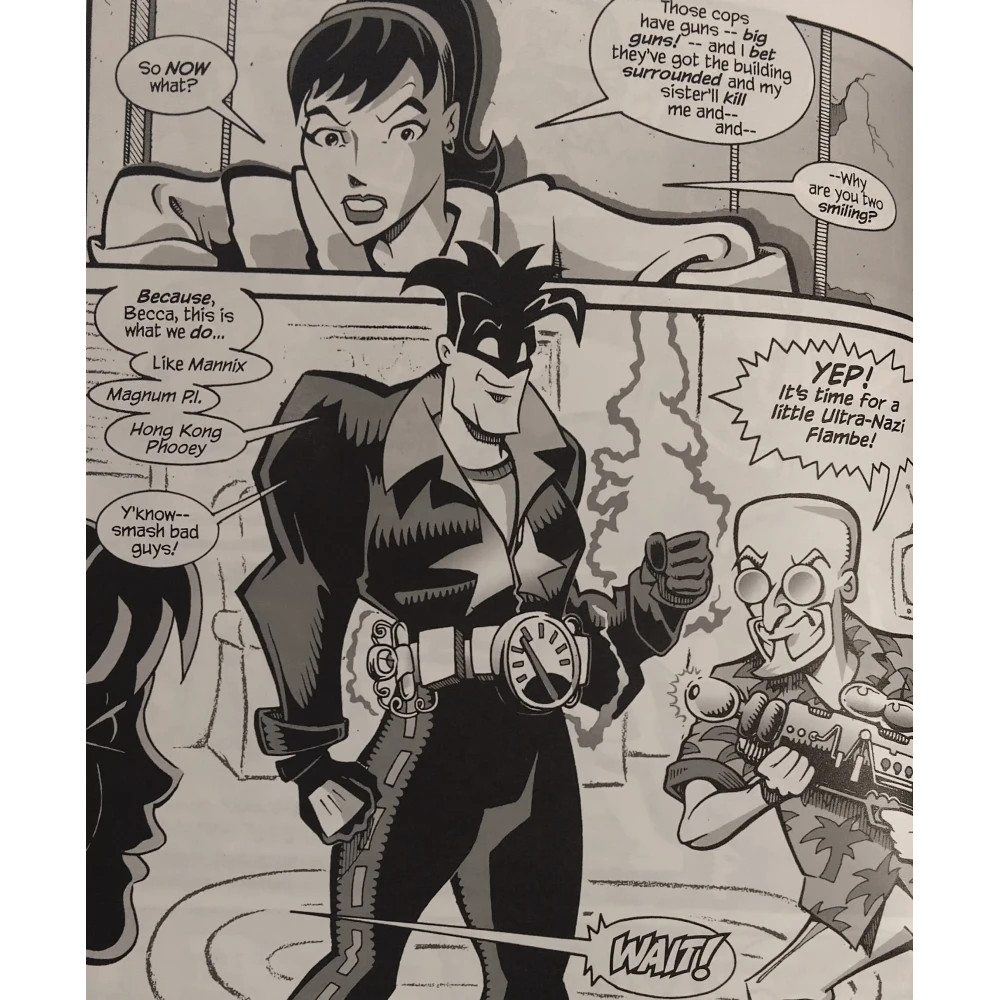
I used to be the target audience for this kind of title, and I do recall the second volume with some fondness. That exact fondness doesn't necessarily follow through the decades since I last broached Buzzboy's world. These issues contain a complete narrative, simply yet fairly effectively told for the kind of reader Gallagher hopes to interest, which makes his choice of humor all the more perplexing. Maybe the intent was to create a story a parent could also enjoy while reading Buzzboy to their child, which is likely the optimal reading experience. If you're a kid checking this out, you may find yourself a little lost with Gallagher's style of humor, unless your parents have raised you on the pop culture their parents likely appreciated as well. Still, you may enjoy the story beats and character moments Gallagher delivers as Buzzboy comes out of the darkness of memory to be a beacon for a city with graying horizons.