Spider-view: Spider-Man: The Mutant Agenda
Complex villains elevate a so-so story told in an experimental format
—by Nathan on August 22, 2026—
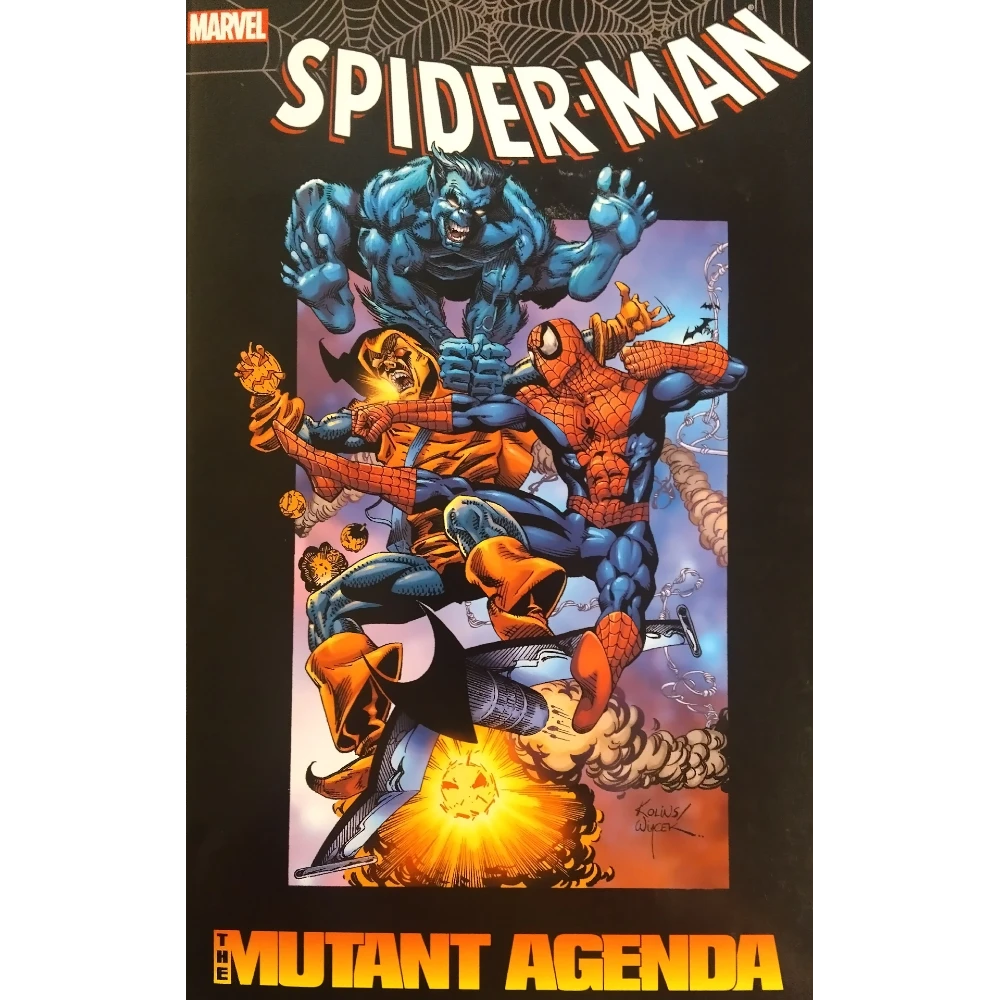
In the 90s, Marvel's biggest stars were Spider-Man and the X-Men. Spidey was sporting multiple titles at the time, with the inaugural issue of Todd McFarlane's adjectiveless Spider-Man series selling 2.5 million copies alone. Not to be outdone, Chris Claremont and Jim Lee's X-Men #1 sold over 8 million copies, still the highest number of any American comic issue ever. Such unmitigated financial solvency basically demanded that these two powerhouse properties be melded.
So Marvel did. Kind of.
We've at least got the Beast.
I'm not saying this is the only time Spidey crossed paths with one or another of Marvel's merry mutants during the 90s–McFarlane himself had the Web-Head team up with Wolverine and then X-Force at the tail end of his time on Spider-Man–but today's review also marked a unique coalescence of (non-X-)forces. The powers of print came together to provide readers a unique reading experience: The Mutant Agenda was actually told twice, concurrently, in two different formats. The first was through a typical comic limited series; the second was through a series of newspaper strips, meant to be glued down on blank pages in chronological order to tell a complete story.
Fortunately, for the modern reader picking this up in trade (as I did), one is not expected to glue anything down. A reader can simply peruse the strip itself, already laid out by Marvel (how thoughtful). Across the three-part comic series and its Sunday funnies equivalent, we're delivered a twice-told tale asking how far some people will go to eradicate someone they hate...and how much people want to read (and re-read) such a story.
Spider-Man: The Mutant Agenda
Writers: Steven Grant and Stan Lee
Pencilers: Scott Kolins, Larry Lieber, Paul Ryan, and John Romita
Inkers: Sam de la Rosa, Larry Lieber, Joe Sinnott, and John Romita
Colorists: John Kalisz and Joe Agostinelli
Letterer: Steve Dutro
Issues: Spider-Man: The Mutant Agenda #0-3
Publication Dates: February 1994-May 1994
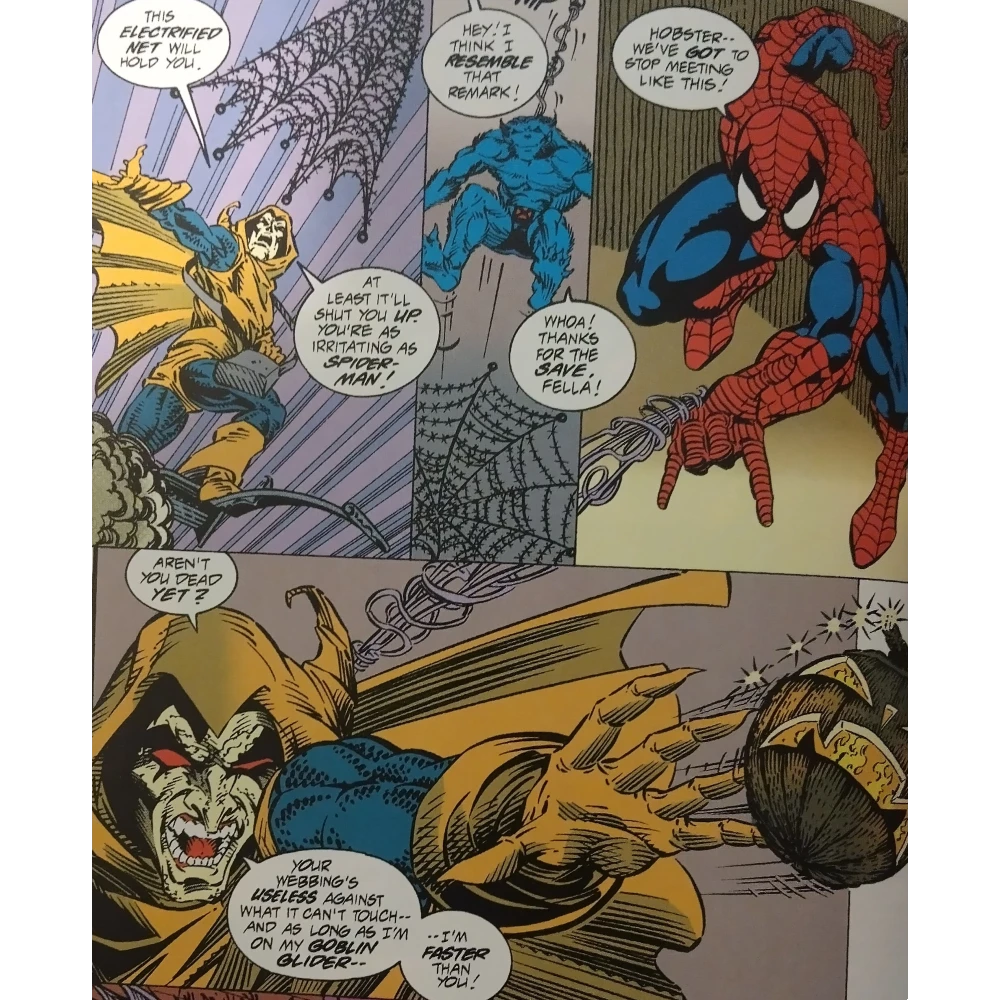
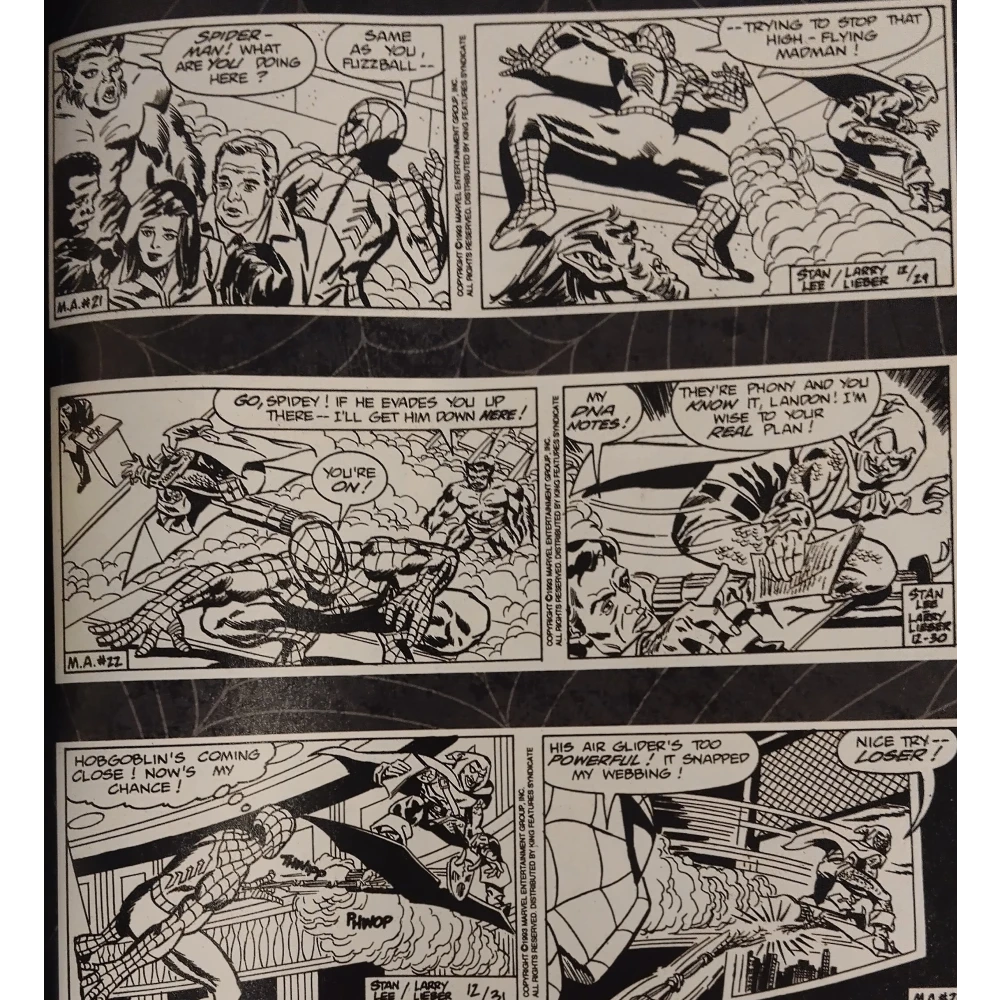
As noted, we're sold two stories told concurrently–the same tale in different formats. If you'd rather skip out on Steven Grant and Scott Kolins' edgier rendition, with big panels and big explosions, maybe you'll prefer the same tale told in smaller boxes by Stan Lee and brother Larry Lieber, the ever-wonderful John Romita, and Squadron Supreme illustrator Paul Ryan. Or maybe not? Of the two (and this will likely come as no surprise), the preferable rendition is the typical comic.
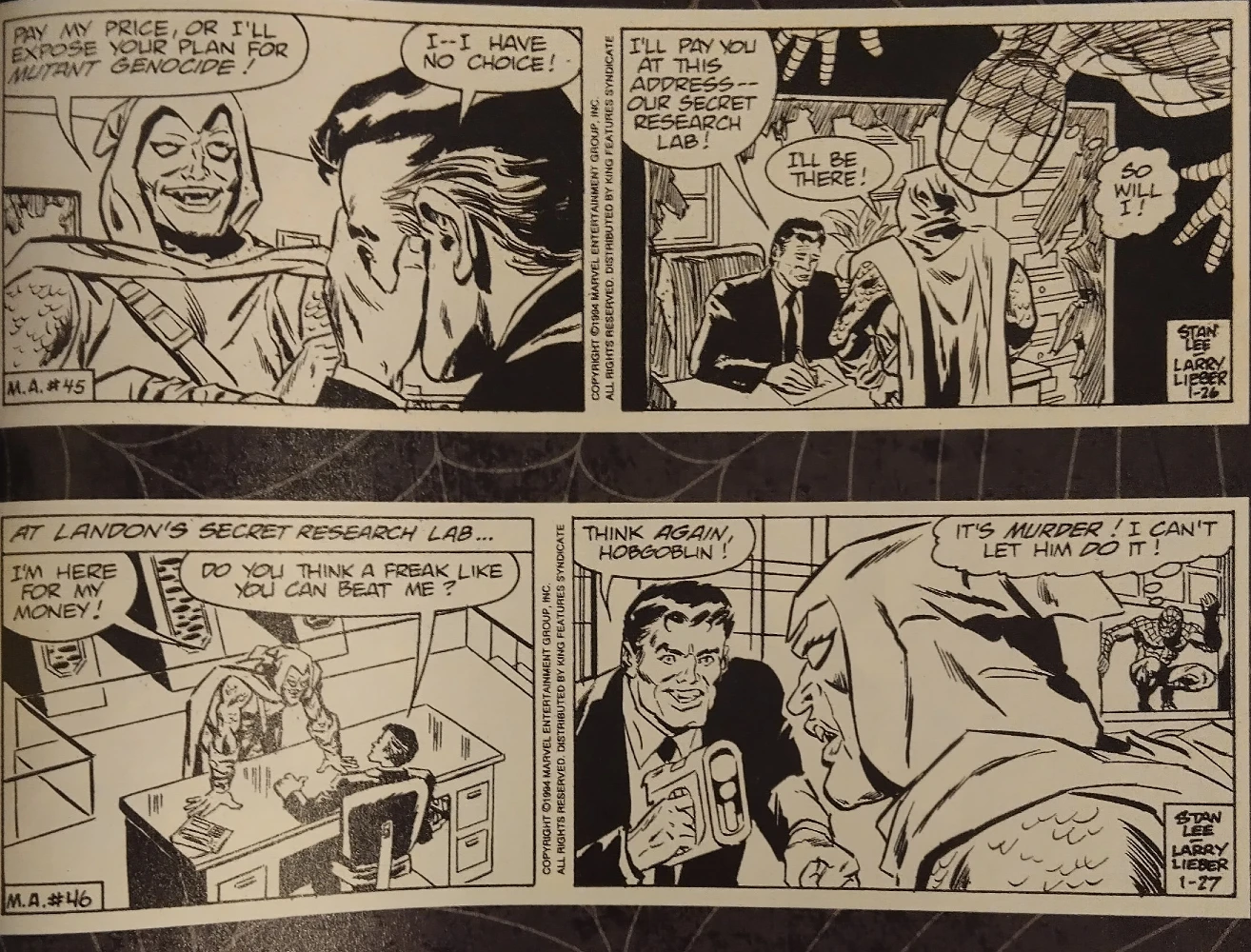
The team of Lieber and Lieber endeavor to use the newspaper strip format artistically, condensing parts of the larger story into bite-size chunks, finding places where suitable cliffhangers would lead newspaper strip readers into the next day's multi-panel predicament. Such storytelling does allow for Lee's penchant for purple prose, such as Spidey shouting "Only one chance to save her!" when a bomb topples a woman from a balcony, setting up the next day's events. The format also leads to panels beginning a new day's strip by recapping the previous day's ending or cliffhanger. Obviously, I'm not reading this narrative as was intended, and I assume that for those readers checking out tiny chunks on a daily basis, the recap pleasantly reminded them of earlier events after yesterday's newspaper was pulped or stuffed into shoes. It does hamper the rhythmic flow of the narrative, but then again, so can an opening splash page in a regular issue repeating the previous issue's final panel.
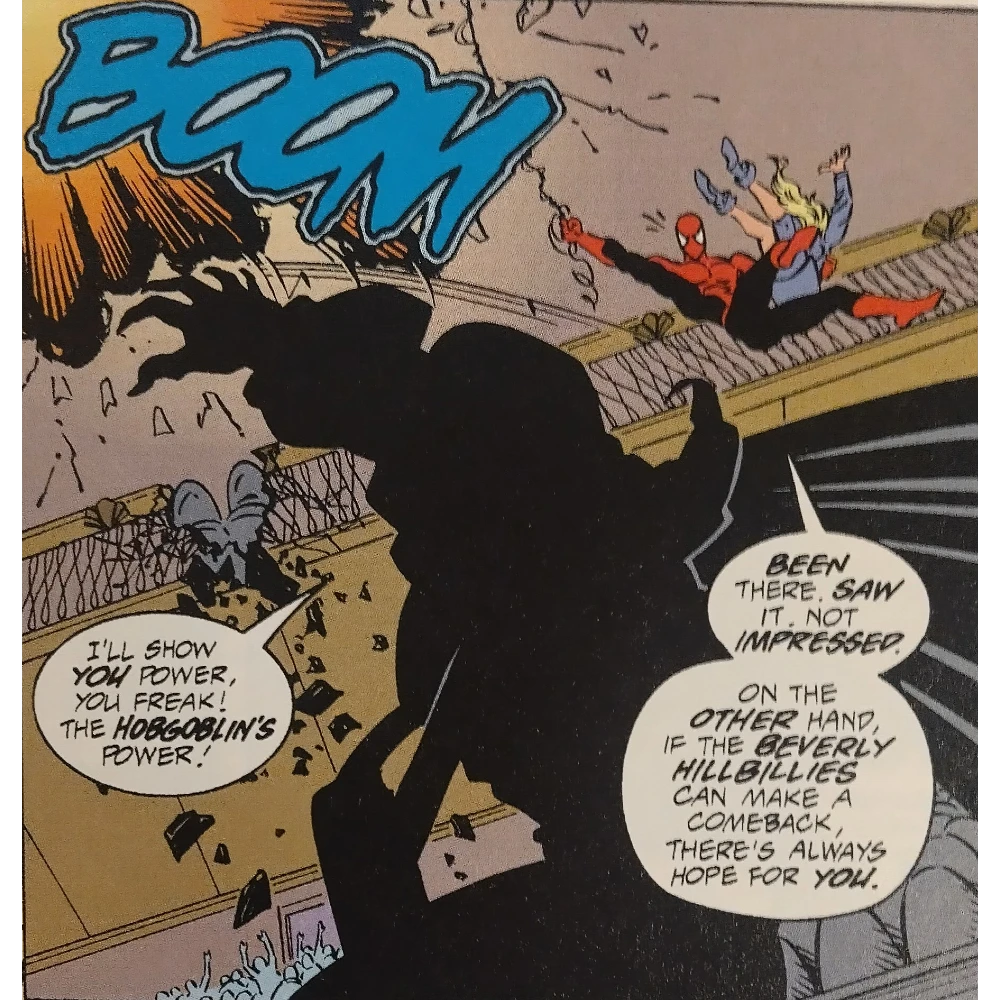
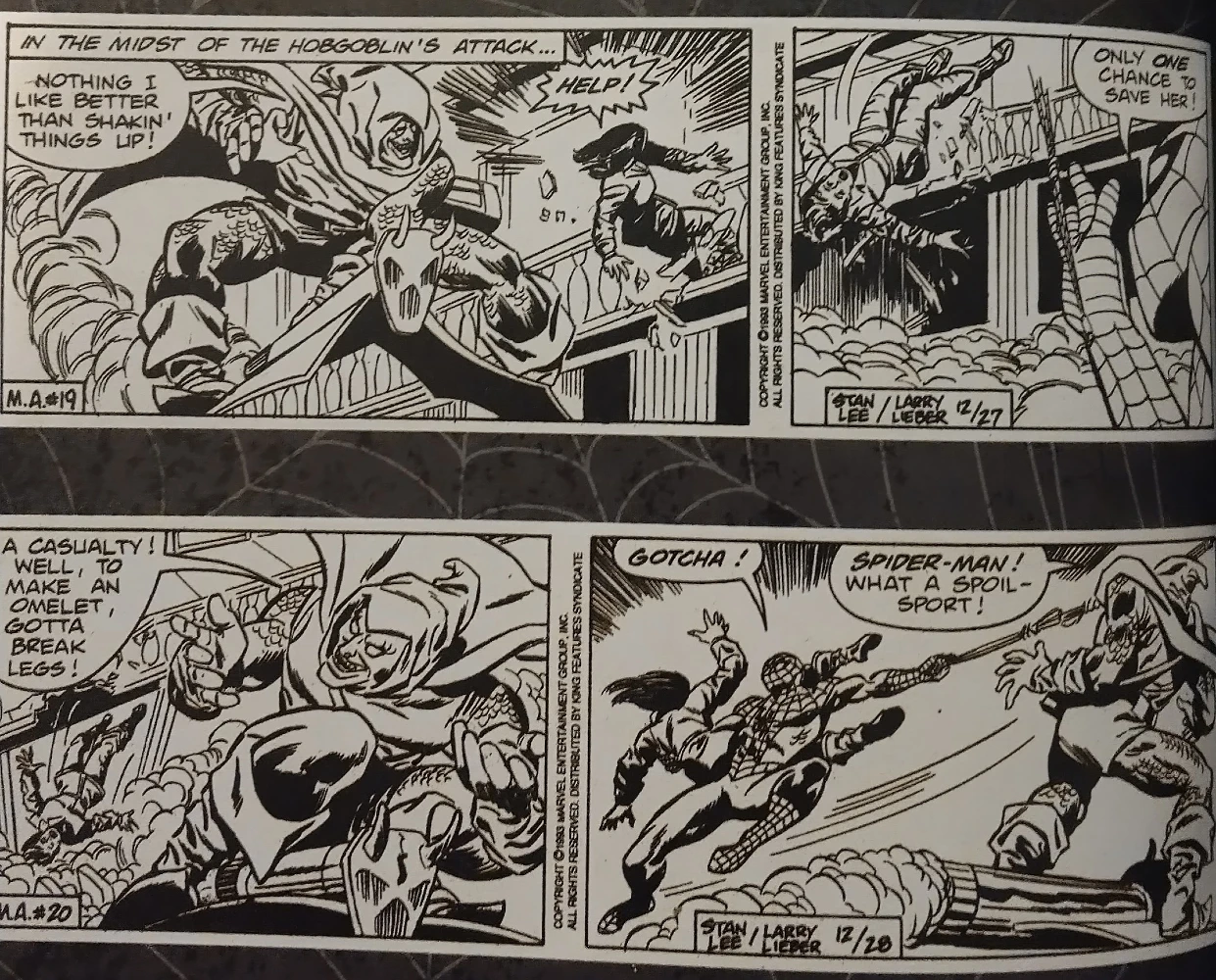
It's clear that, at the very least, Grant and Lee either collaborated on the story or that the limited series' narrative was explained completely to Lee and his brother to render it faithfully in the strip format. Though not an exact beat-for-beat recreation, the brothers Lieber hew closely to the narrative from the limited series, adding some dramatic flair when appropriate. Lee makes MJ more of a prominent character, expressing concern over her husband's dramatics with the Beast against the Hobgoblin, and he creates more conflict between our heroes and the public, turning to the old staple of "regular folk mischaracterize actions taken from superheroes and despise them temporarily because they read the Daily Bugle too much." You can take all the time you'd like to quibble over the differences between the two versions, but Lee at least endeavors to play with a few ideas Grant doesn't.
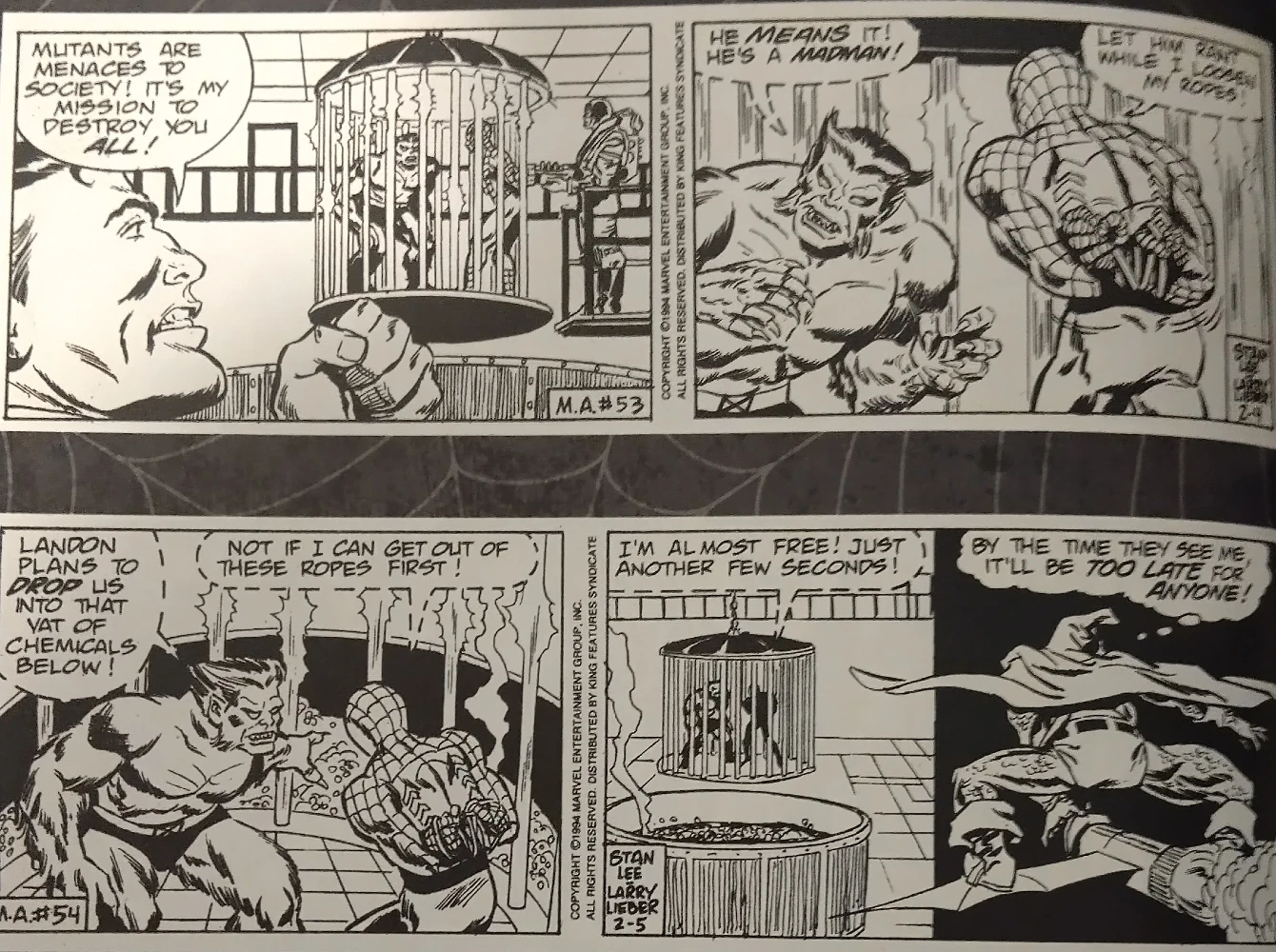
Which, as I referenced above, is not to say Lee's version is superior. Between the two, even with some of Lee's interesting ideas, the comic tells a more complete narrative, with fleshed-out villains and understandable motivations. Taking his cues from the Amazing Adventures issues which first saw Hank McCoy transform into his blue-furred self, Steven Grant pits the loquacious mutant against his former employers, the Brand Corporation. Unknowingly bumping into Peter Parker at a science convention, the Beast becomes more involved when the Jason Macendale version of the Hobgoblin, divested of his demonic other half, attacks the proceedings, targeting CEO Herbert Landon. The Beast buddies up with Spidey, and the two genetically altered superheroes see if they can't find the chink in Hobgoblin's body armor.
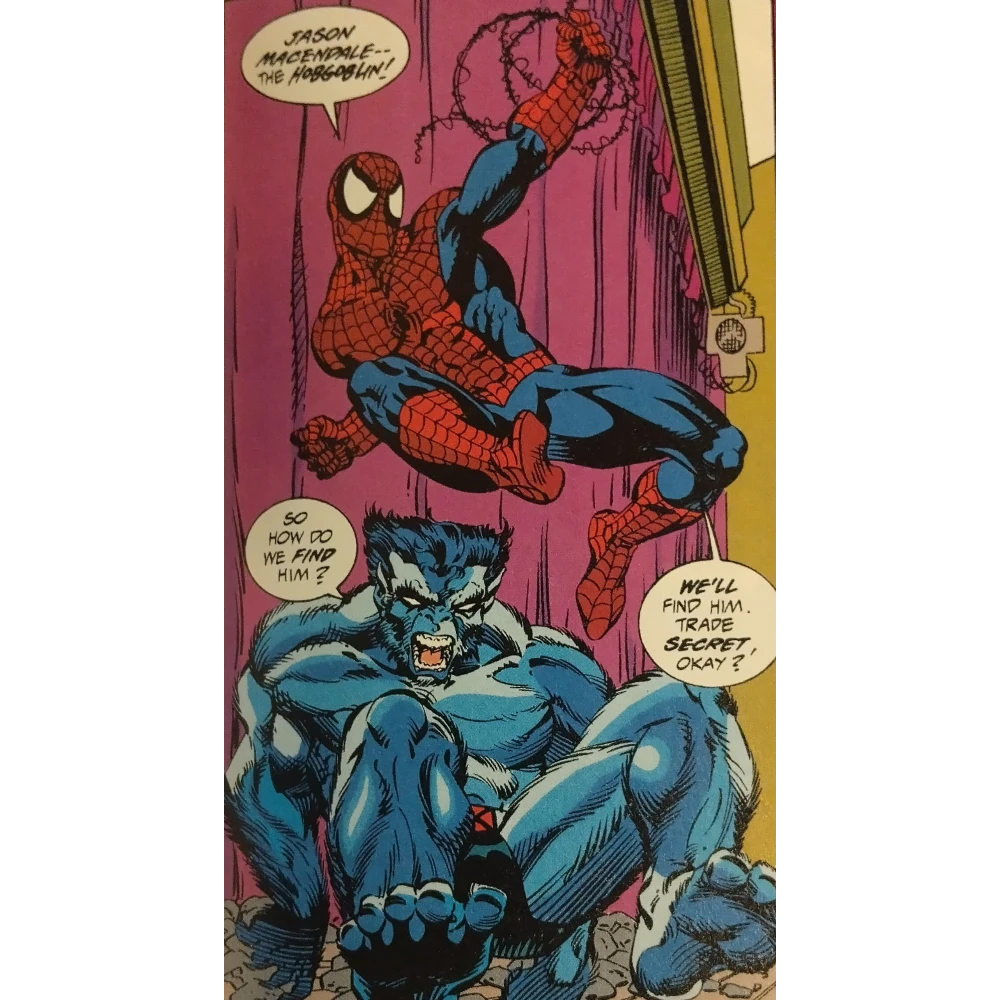
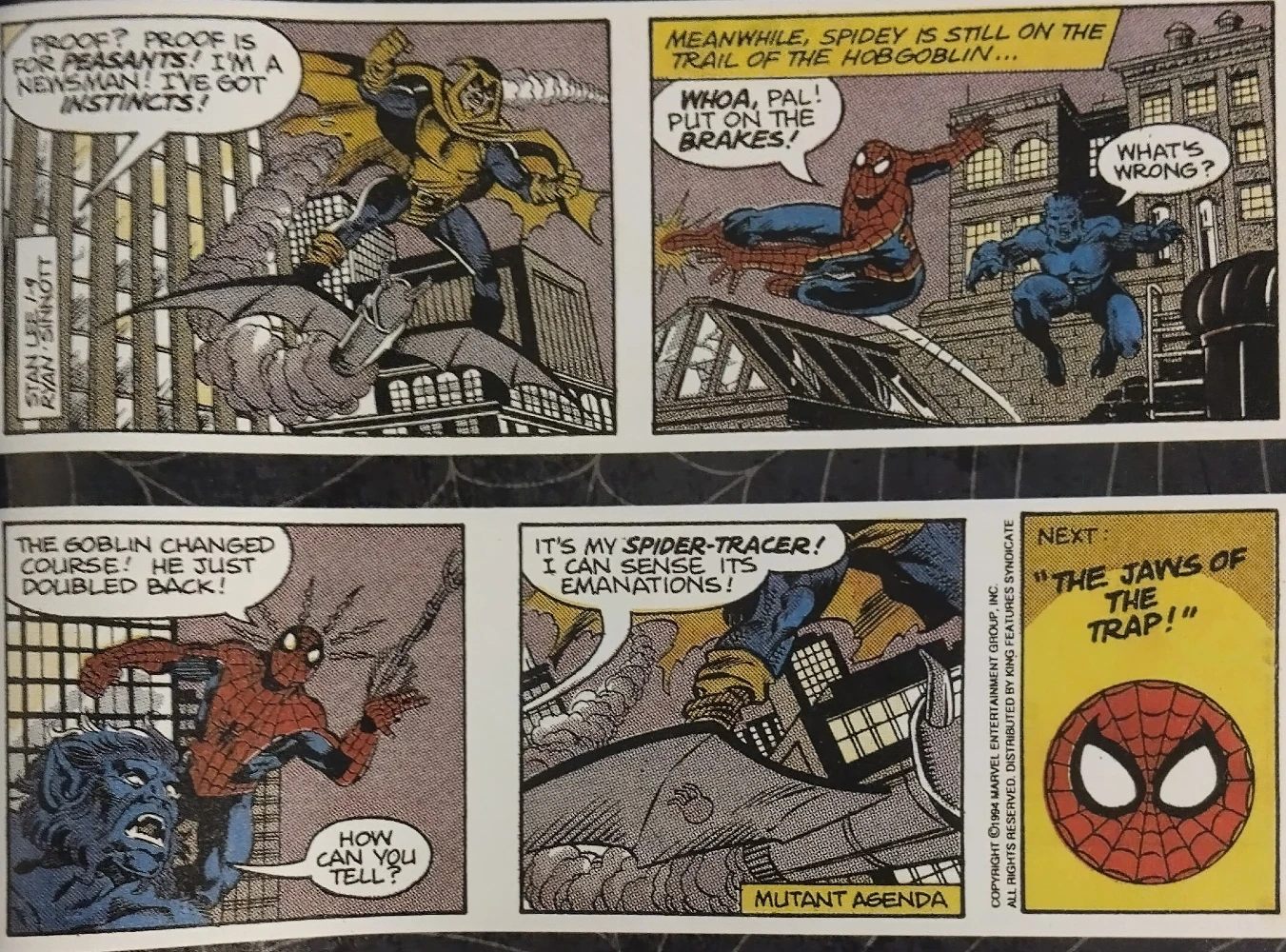
Though this is a Spider-Man comic, Grant allows the Beast allows to carry the story's emotional heart. Hank finds himself frustrated with Brand's stance on genetics, seeing mutation as something to manipulate and control, and while Peter himself is interested in learning what he can at the conference about his own genes, that bit doesn't propel the story. Does it create a bit of connection between the Wall-Crawler and his X-Man compatriot? Sure, especially when some folks suggest Spidey himself may be a mutant, but it doesn't drive the story. While I would have liked Spidey's role to be more prominent–his appearance at the conference seems a tad forced–he at least gets to show his stuff against the series' main threat.
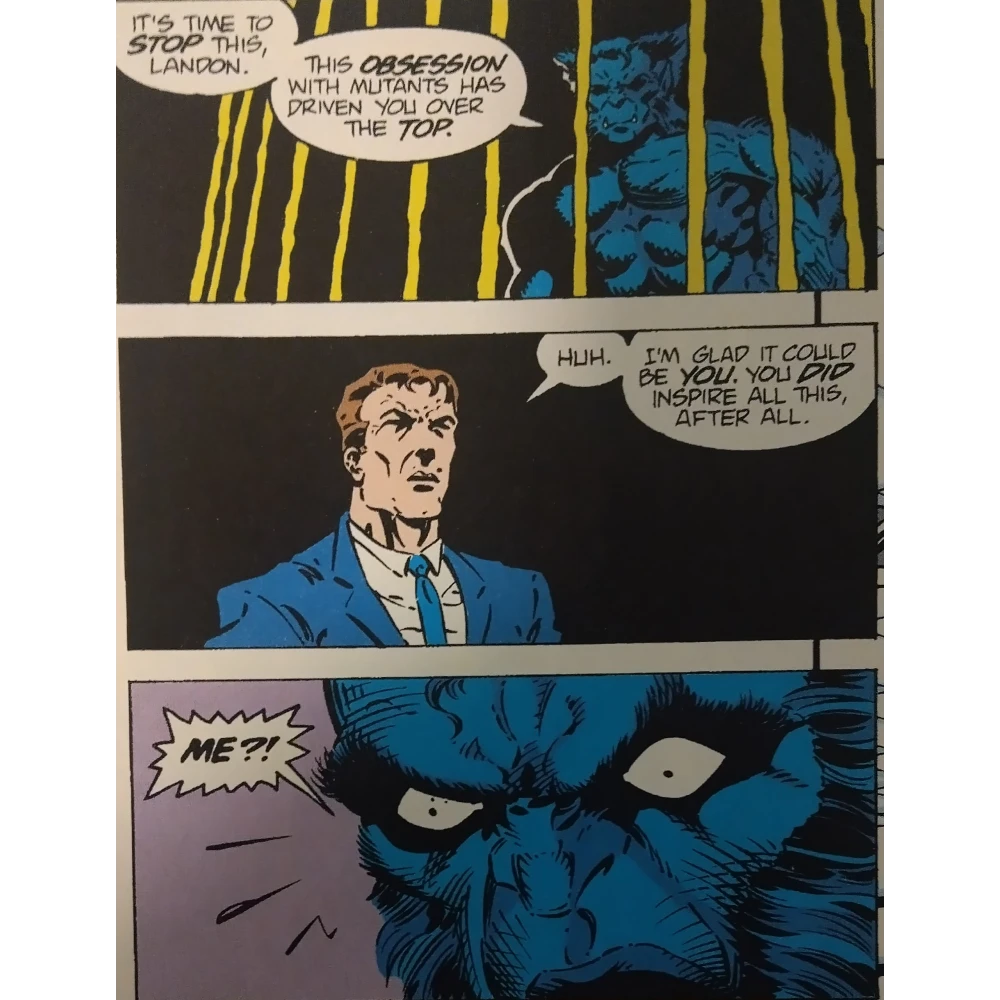
Throughout, Grant employs a fun bit of dramatic irony by having Landon, introduced in this series yet said to be a former friend of Hank's, completely disbelieve that Hank could have ever transformed into the hairy hero. He believes Hank was murdered by the Beast, and though it's suggested he really should know otherwise, he's all but blind to the real McCoy. This bit of irony places Landon in a unique state where he's not so much an out-and-out villain as he is a misguided businessman. Perhaps sleazy and rapacious in some respects, sure, and, okay, fine, he wants to manipulate mutations for his own means, but there's an underlying reason for his actions. He's not just sleazy and rapacious like most Marvel moguls; he's got a hint of tragedy working through his heart. It allows you a bit of justified frustration rather than deliberately directed hate as you follow him around, and it marks the conclusion to his particular story with a bit of poetic justice.
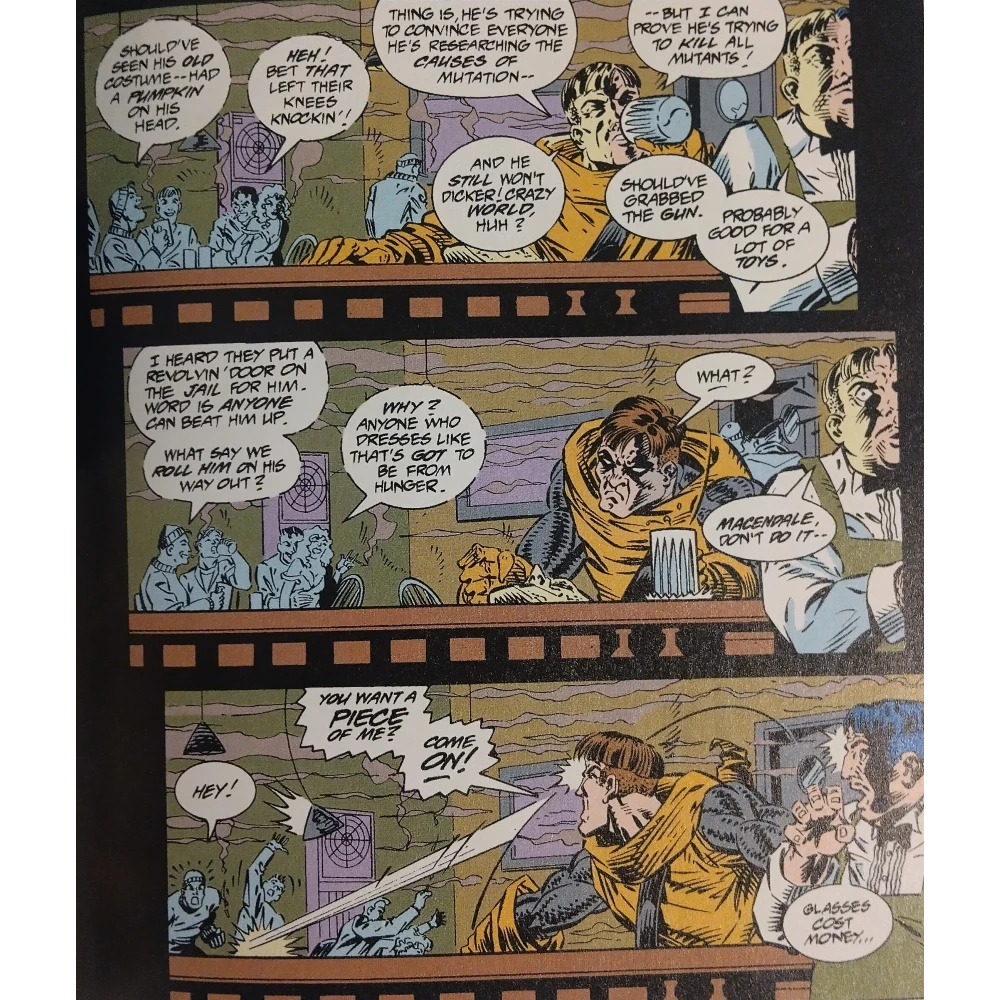
If you're looking to hate somebody in this series, it had better be the Hobgoblin. Jason Macendale is probably my favorite version of the Green Goblin knock-off, all thanks to the 90s Spider-Man animated series, and though he's not exactly the genuine article (we'll get to the conclusion of that kooky arc someday!), he provides the mantle a thrilling time here. Considered by most to be an absolute loser, from his starting gig as Jack O'Lantern to losing the demonic part of himself he received after making a pact with N'astirh, Macendale just wants something to go right in this arc. Such motivation leads to a highly entertaining scene where he tears through a bar to win back the determination needed to finally beat that accursed Spider-Man!
I'll let you read the series to find out how that all goes.
Again, Macendale may be a ripoff version of a ripoff character, but darn, if he doesn't supply a great deal of energy and villainous charm to keep the narrative's momentum ongoing. Grant has him ham it up for the heck of it, and the notion of a loser villain trying his darndest to prove he's not the loser everyone thinks he is just makes for some entertaining moments.
The Mutant Agenda has its high points–Macendale's latest spin as the Hobgoblin, Landon's perpetual state of blind hate–but as you'll notice, both of those examples point to our villains. The bad guys, written with some engaging complexity, absolutely shine in this narrative, even if that's more true about Grant's series than it is Lee's newspaper strips. What you get from the strips is classic Lee dialogue, with strands of character moments not quite balancing out the odd pacing or forced cliffhangers. I suppose if you're telling a story about someone manipulating matter to their own ends, experimenting with two different printed mediums is the proper way to execute this series, and I guess that means living with the results, regardless of how successful they may or may not be.