(Strand)om Stories: Avengers/Invaders Review
A fun reflection on the state of the post-Civil War Marvel Universe comes at the cost of some awkward plotting
—by Nathan on June 21, 2026—
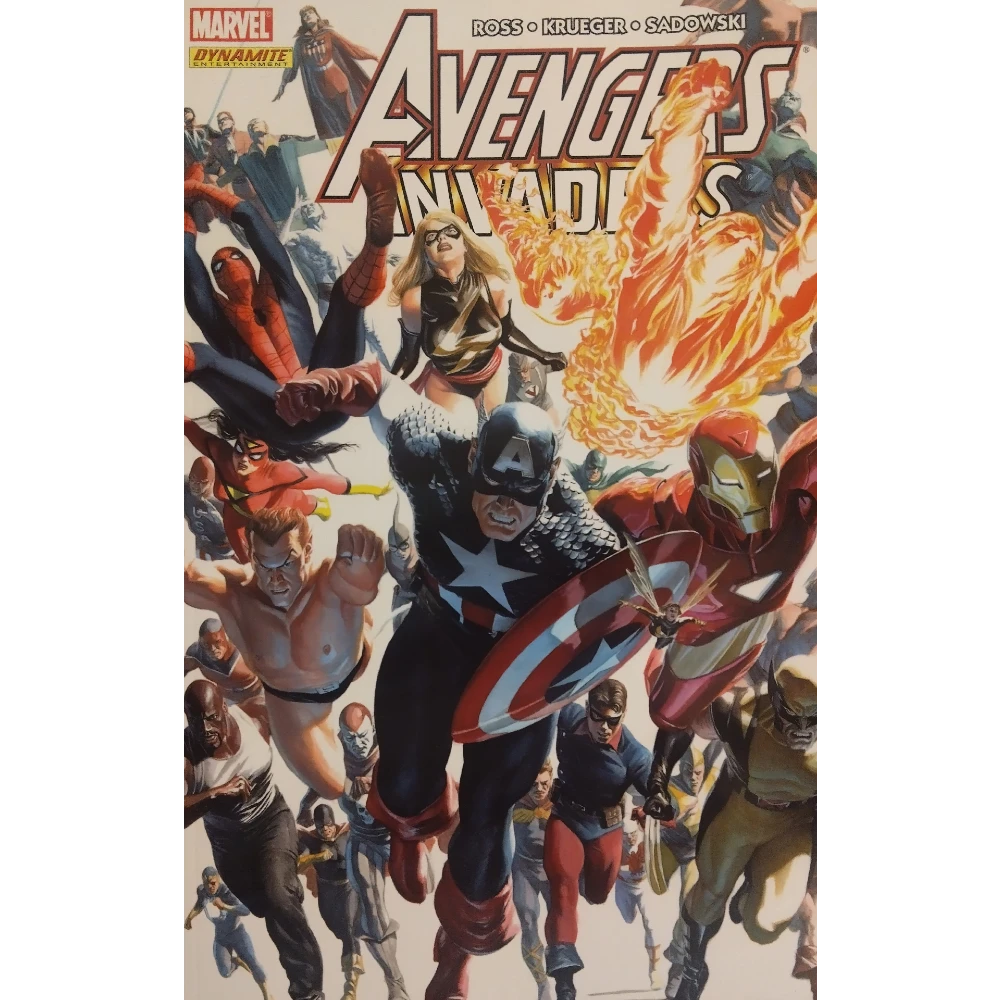
For a couple posts now, I've explored some collaborations between Jim Krueger and Alex Ross, likely most famous for their Earth X trilogy. But I've not discussed Earth X, choosing to explore other narratives where Krueger and Ross collaborated. Ross, along with Doug Braithwhite, provided art for DC's twelve-part maxi-series Justice, and Ross offered a hint of interior art for Krueger's Project Superpowers with Dynamite Entertainment, though he largely stuck to covers.
Project Superpowers collaborator Steve Sadowski provided the main artistic force for that series, and he followed Krueger and Ross over to Marvel for the series we're reviewing today. A joint Marvel/Dynamite production, this twelve-part epic seems the Marvel equivalent of what Justice was for DC: Krueger and Ross in collaboration, taking a stab at classic characters born during the Golden Age and bringing them face-to-face with a modern world in turmoil. Set against the backdrop of the post-Civil War Marvel Universe, this series isn't as wholly untethered from continuity as Justice, but maybe we'll find it's those connections to the broader world that make this a compelling read for audiences.
Avengers/Invaders
Writers: Jim Krueger, with Alex Ross
Pencilers: Steve Sadowski, Patrick Berkenkotter, Alex Ross, and Jack Herbert
Inkers: Steve Sadowski, Patrick Berkenkotter
Colorists: Thomas Mason and inLight Studios
Letterer: Todd Klein
Issues Collected: Avengers/Invaders #1-12
Volume Publication Date: August 2009
Issue Publication Dates: July 2008-August 2009
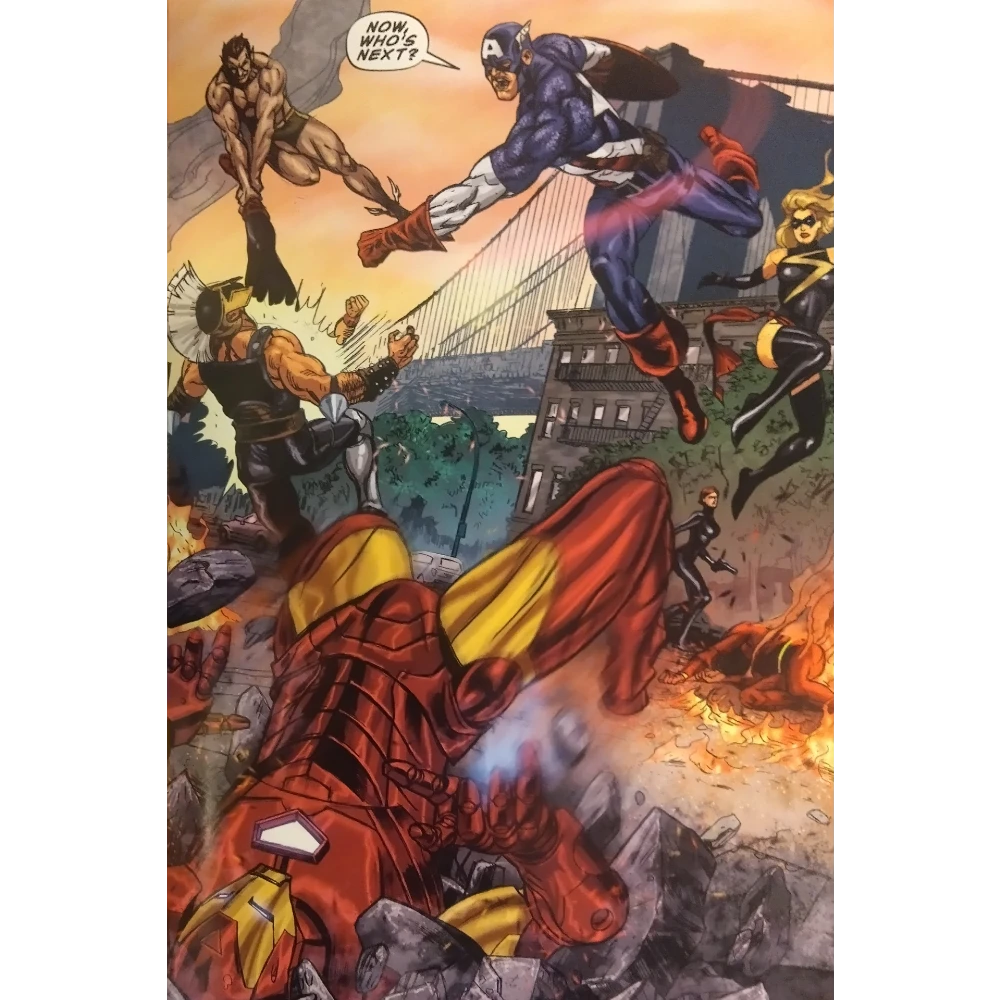
According to one character in this series, it's been about a year since Steve Rogers, the original Captain America, was assassinated in the wake of Civil War. Tony Stark, the invincible Iron Man, is still head of SHIELD and several heroes are still fugitives, hiding underground and refusing to register with the government and join Stark's Fifty State Initiative. It's a very important setting that Krueger alerts us to almost immediately, because without it, I don't think this series would be as effective. I have qualms, as I have had with other stories Krueger has written, but I find myself a tad more forgiving.
I don't know whether Krueger or Ross was the driving force behind the concept for this series, but you can see the appeal, and it's similar to Project Superpowers: World War II-era heroes drawn into the modern day. Two big exceptions, of course, exist between Dynamite's series and this one: first, all the heroes involved here are owned by Marvel; not a single public domain hero among them. Just characters who have been around for decades and have genuine histories and personalities. Second, instead of having these World War II heroes live until modern times, Krueger pulls some time travel shenanigans and drags a group of heroes known as the Invaders from the frontlines of the war into present day New York. Instead of dealing with a group of men and women who have aged and now must deal with the 21st Century, the Invaders are whisked into the present by surprise, bypassing decades and drowning in confusion.
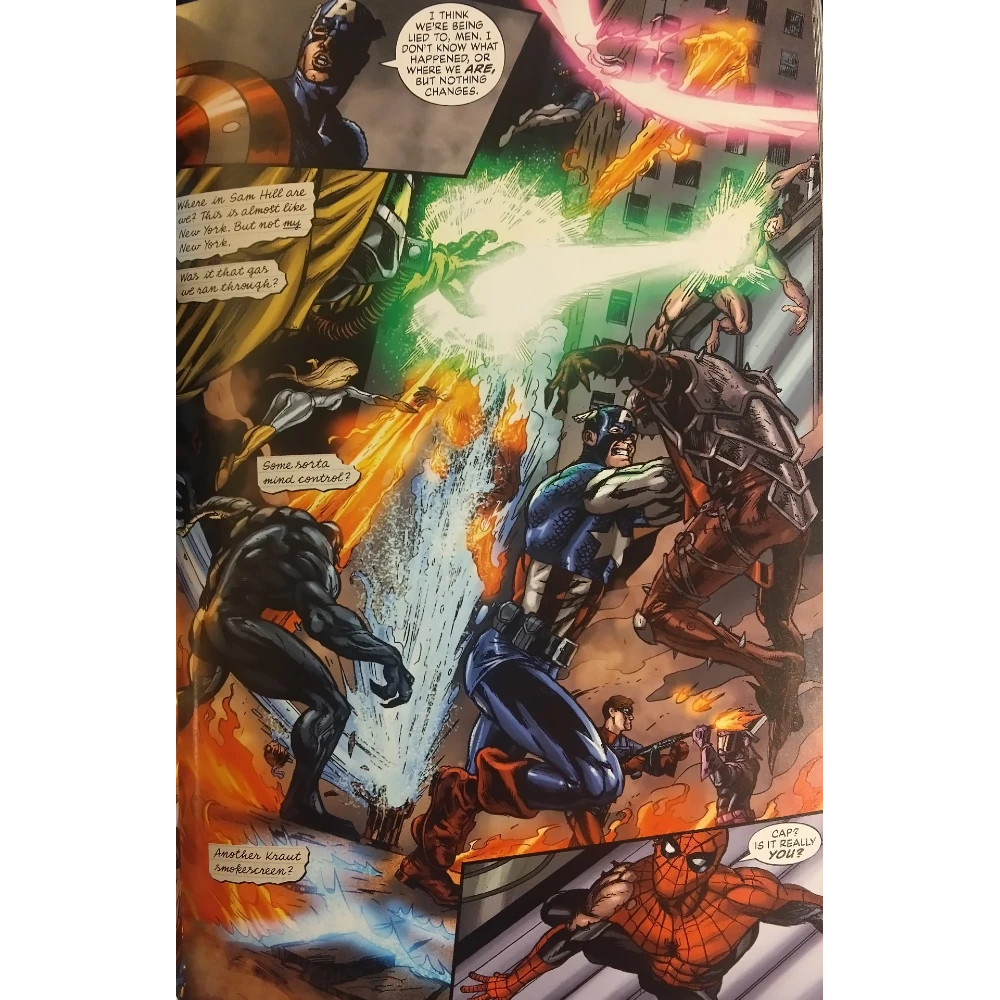
Dramatic irony becomes Krueger's best friend in developing this series, and the most fun aspects of the narrative deal with how our time-estranged Invaders deal with the present day. Suddenly, Captain America is in a world where the post-"Civil War" Steve Rogers is dead, which may explain all the surprised reactions he receives. The original Human Torch, Jim Hammond, meets SHIELD LMDs, convinced these other androids been enslaved by the peacekeeping organization. Collectively, the Invaders believe they've been trapped by some Nazi plot, and though the series' second half provides a twist on that notion, Krueger nicely plays up the confusion caused by their misunderstanding for several issues.
But let's see you come from Nazi Germany straight into a world where a dude in a metal suit blathers on about upholding law and order with what seems to be a fairly iron fist and not make some comparisons to the fascist madman with the J. Jonah Jameson mustache.
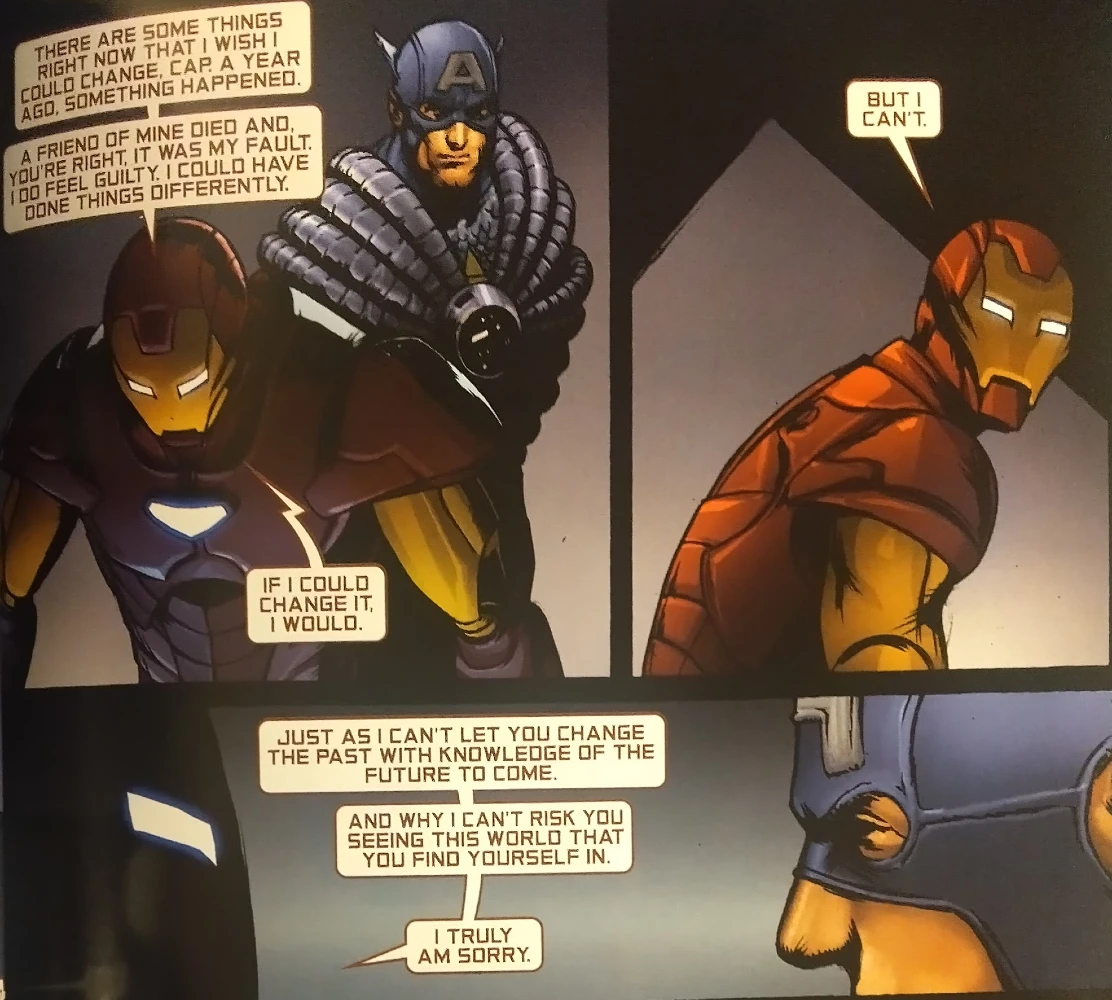
The confusion winds up being genuinely entertaining, especially when our heroes react to circumstances and characters the audience understands more completely. A dude with a metal arm in a Captain America costume bumps into the youthful Bucky Barnes and tries to warn him against deactivating some buzzbomb drone during the waning days of the war. Cap has no idea why that iron-suited man (whatever his name is!) seems to react regretfully whenever he's around the Star-Spangled Avenger (who, I guess, wouldn't be an Avenger at this point in time, but you get it). Invader Prince Namor physically fights the current King Namor of Atlantis, Krueger nicely highlighting the differences between the older, somewhat more responsible monarch and his younger, brash self. None of this happens too bluntly–the parallels and paradoxes are apparent, but the audience is allowed at least a notion of drawing conclusions from the scenarios Krueger develops.
Setting this in the wake of Cap's death injects a brutal bit of tragedy any time Invader Cap is on the page. He's the quintessential American hero, returned, seemingly, from the grave. Our heroes have a chance to reconnect with the famed Avengers leader, with the twist that he has no idea who they are or why people act so strangely around him. Dragging the Invaders into the present pits their notions of black-and-white morality against the grayer areas of right and wrong dredged up by the Superhuman Registration Act. Folks aren't terribly interested with politics right now; there's conflict, and as a few villains showcase, there's evil. Any philosophies of justice vs. injustice lean heavily in favor of our World War II-era heroes. Even pro-Registration Act poster child Iron Man is left to wallow more in pity that he is to impose his ideologies.
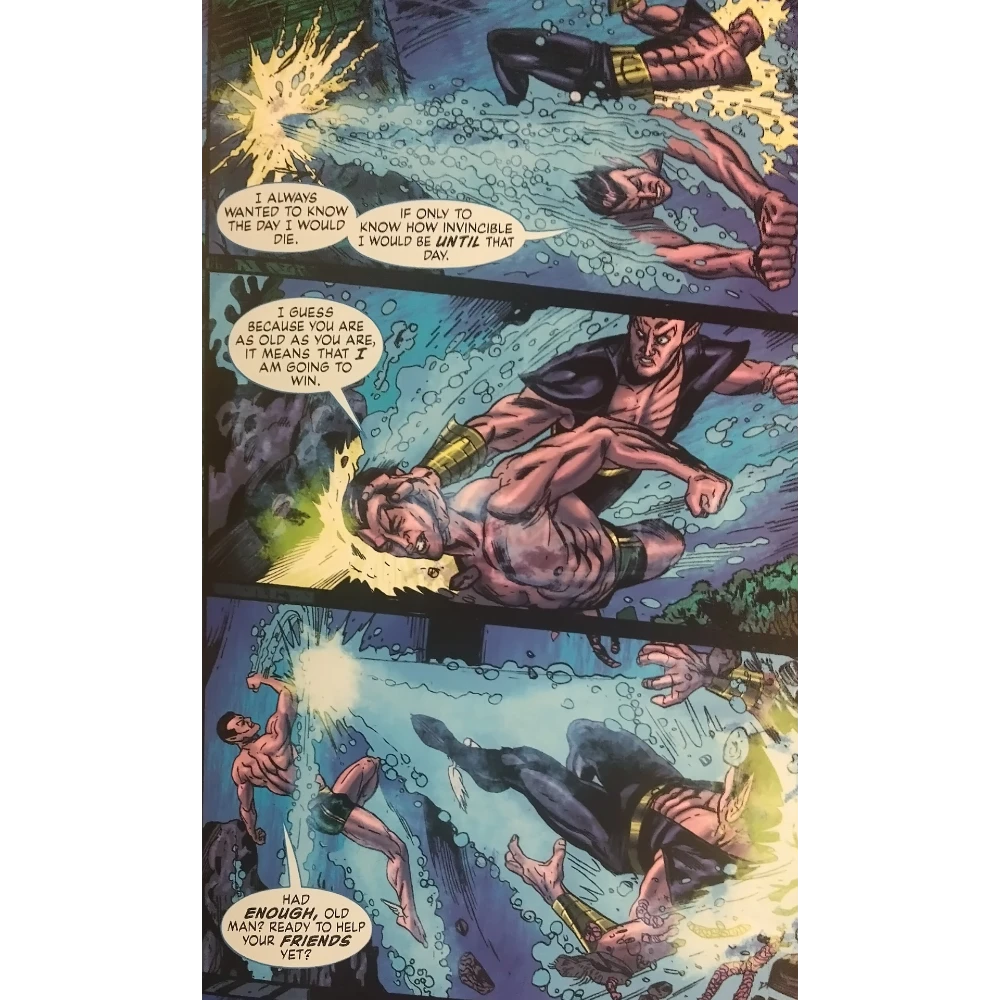
Around this conflict, Krueger sets a narrative across three acts, and how he divides his story occurs because he doesn't appear quite sure how to extend "Avengers vs. Invaders" to twelve issues. So while you get "Avengers vs. Invaders," you also get "Avengers and Invaders" as conflict is generated elsewhere. These acts show, to me, that the series could've been trimmed down a few issues; Krueger tries to make the narrative flow from chapter to chapter, but a fairly disruptive ending to issue eight tacks on a whole different kind of story as Avengers and Invaders both battle against a twisted world. The idea leads to some fun costuming as a few present-heroes assume the mantles of different Golden Age heroes, but in terms of storytelling, the shift is abrupt.
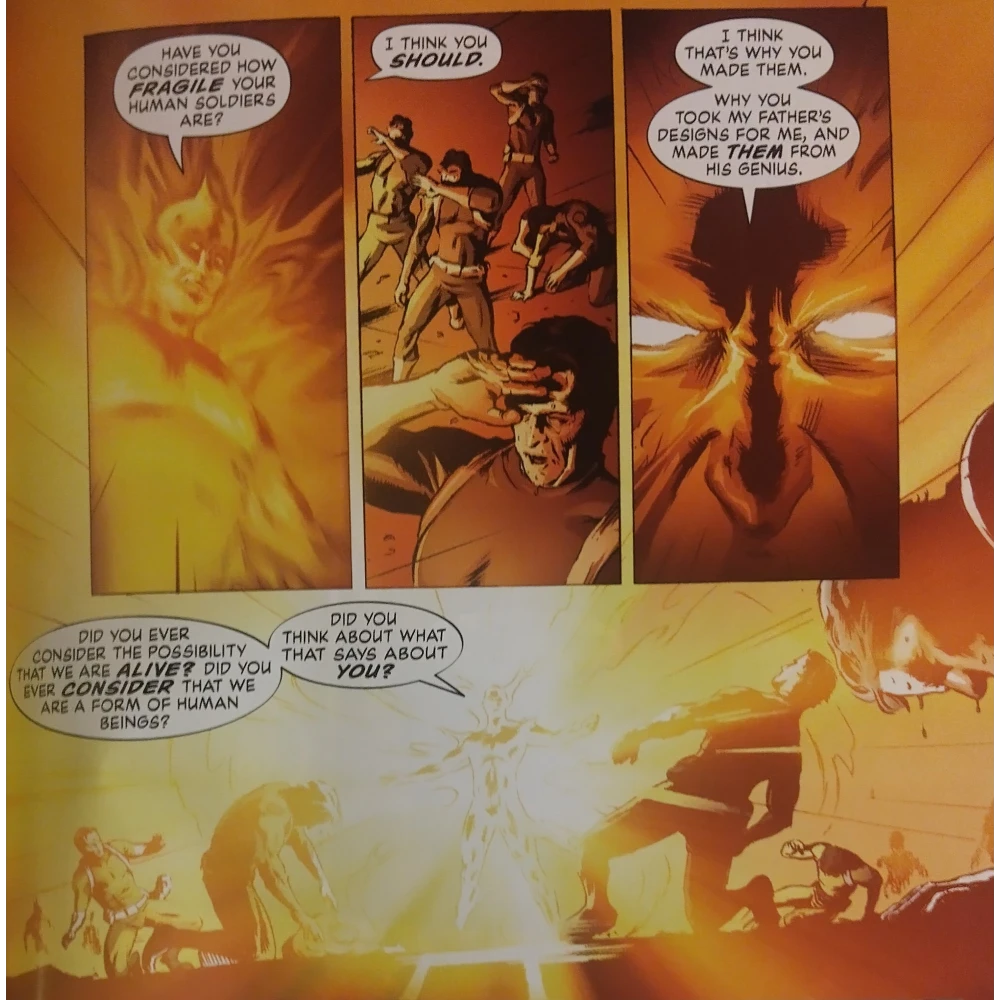
That no less than three central villains pop up across the series, fully independent of each other, also hampers the pacing, causing Krueger's attention to shift from plot point to plot point. The use of one villain seems to become Krueger's "out" for a somewhat mystifying subplot involving Hammond leading an LMD revolution–Krueger tries to drum up sympathy for these robotic SHIELD agents (with Sadowski at one point visually linking Hammond's sympathy to his memories of the Holocaust???), but it falls flat. Maybe I just don't care for likening soulless, emotionless robots to actual human misery. The villain reveal, it seems, is meant to bolster that sympathy, but it happens too suddenly and is resolved too quickly to leave much of an impact. Likewise, two other villains are plopped into the narrative, the first in a pretty haphazard way, the second in a way which, logically, makes sense but happens so late that his presence feels wasted.
There are really two stories being told here, and I find one of them more compelling than the other. Krueger finds merit in the Invaders dealing with a present they don't know, injecting playful amounts of irony while inserting a bit of Civil War commentary. Between Justice and Project Superpowers (even Ross' and Kurt Busiek's classic Marvels), you get the understanding our creators are fond of either older characters or older takes on classic characters. Perhaps it's why Krueger's Spider-Man does little more than crack wise or why Luke Cage is primarily defined by his race. Depth can be found in the ways the older and newer worlds collide, even if Krueger lets the plot get away from him in the latter half.
Avengers/Invaders could have been two distinct series; maybe you wouldn't have been able to sell Marvel on the notion when you could package distinct ideas in a twelve-issue maxi-series, but this narrative has a conflicted identity as a result. A bizarre subplot, some latter half time travel shenanigans, and no central antagonist makes this series feel more piecemeal and spontaneous than it should be. As a post-Civil War examination of the Marvel Universe, this is a fun read, Krueger cleverly allowing the past to provide commentary on the present. But when he diverges from that tapestry and feels the need to pad the series' length because he, Ross, and others need to deliver twelve issues, that's when you feel the coherence stretching like atoms pulled between two different decades.