Distinguished Critique: Justice Society (vols. 1 and 2) Review
Characters old and new are allowed fine development unhampered by mediocre plots and some coincidences
—by Nathan on January 23, 2026—
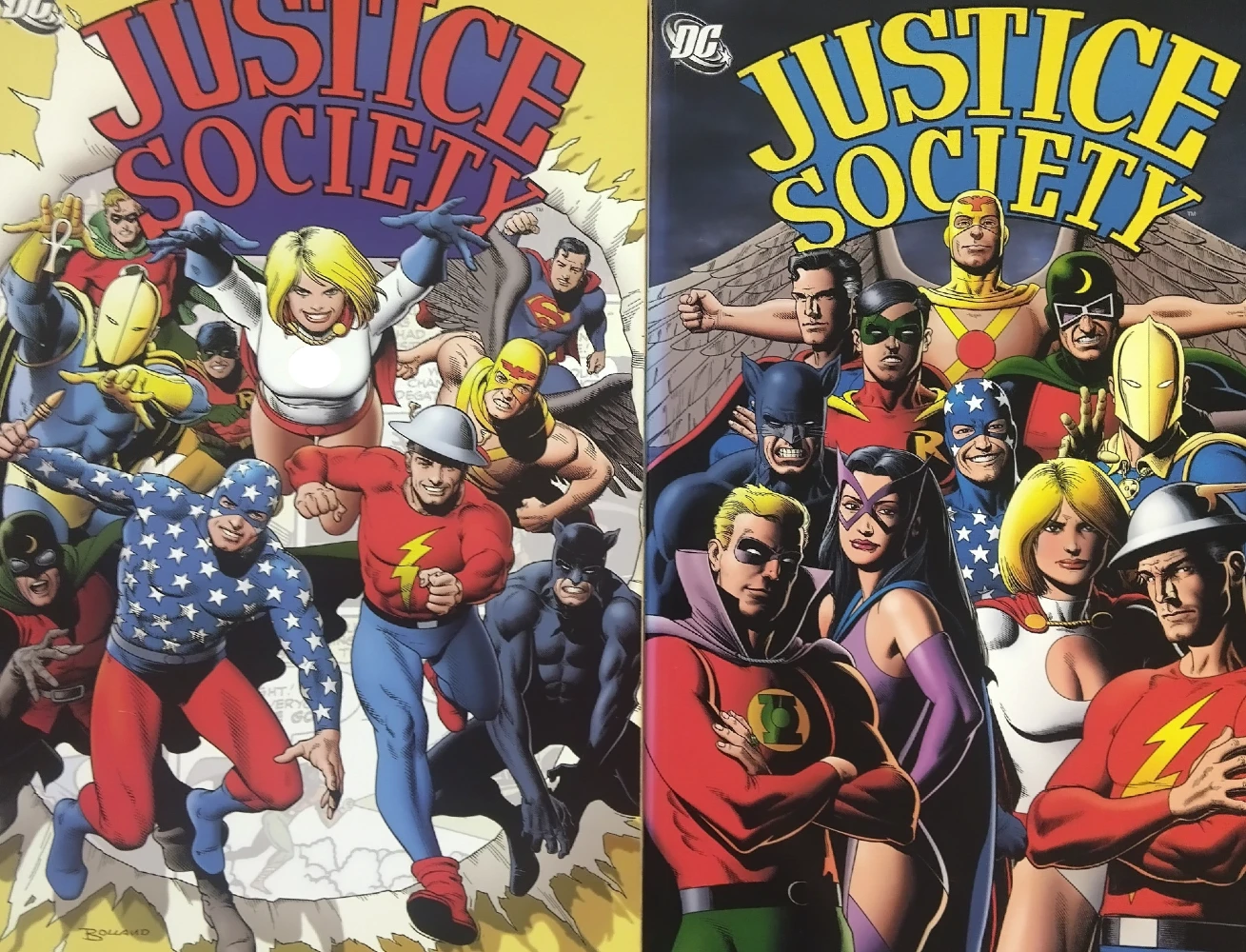
Periodically, a story I read will alert me to the existence of another narrative, occasionally a sequel or follow-up, but more often than not, a tale which preceded the current story I'm reading. A character will reference an event which happened before, and I, wanting to know what that "happened before" was, will do a little digging to determine whether or not I already own that story and, if not, whether that story is worth picking up (which generally means it has to answer the question, "Has it been collected in a trade?"). Such considerations have led us to today's review.
A while back, I picked up a four-issue series from the mid-80s written by Roy Thomas titled America vs. the Justice Society" While reading a summary of the series, I noted references to the Justice Society of America's history from the 70s, which I had read about in a volume published by TwoMorrows publishing (if you have not checked out their American Comic Book Chronicles series, I strongly advise you to give some of their volumes a read, even if only digitally). Intrigued by the development of the team in the 70s, I wanted to dive into some of those older narratives before broaching Thomas' series. In a "one thing lead to another" way, I found myself engaged in a few other Society-centric stories, one of which I plan on publishing between this review and the "America vs." series review.
The connective tissue across the current and upcoming reviews is DC's first super-team, inhabiting Earth-Two, a parallel universe where characters such as Superman and Batman belonged to a Society rather than a League. The team, as far as I am aware, had inhabited that parallel world ever since Barry Allen met Jay Garrick in The Flash #123, members of the Society crossing over for guest appearances in other titles and an annual summer tradition which saw the Society and the League team up to thwart some "Crisis" or another.
Eventually, the JSA proved popular enough to be rewarded its own title, with the team's original series, All-Star Comics, resurrected after twenty-five years, from a suggestion given to Gerry Conway by JSA super fan, the aforementioned Thomas. Conway added new blood to the team, drawing in three younger heroes and initially calling the combined generations "The Super Squad" (yeah, that name wouldn't last). The two volumes I'm reviewing today collect the run of issues until All-Star's cancellation, plus a few other backup features involving the team. As these stories blend into each other and feature several of the same characters, and as the contents of both have also been collected in a single hardcover edition (in All Star Comics: Only Legends Live Forever), I decided providing a single review covering both volumes would work well, seeing how a team which hadn't been featured in their own book since the 50s was drawn into the then-present of the 1970s.
Justice Society (vols. 1 and 2)
Writers: Gerry Conway, Paul Levitz, Paul Kupperberg, and Wally Wood
Pencilers: Ric Estrada, Keith Giffen, Wally Wood, and Joe Staton
Inkers: Wally Wood, Al Sirios, Bob Layton, Joe Giella, Dick Giordano, and Dave Hunt
Colorists: Carl Gafford, Elizabeth Safian, Jerry Serpe, Adrienne Roy, Anthony Tollin, and uncredited colorists
**Letterers: Ben Oda, Bill Morse, Milt Snapinn, and uncredited letterers
Issues: All Star Comics #58-74, DC Special #29, and material from Adventure Comics #461-466
Publication Dates: February 1976, April 1976, June 1976, August 1976, October 1976, December 1976, February 1977, April 1977, June 1977, August 1977, September 1977, October 1977, December 1977, February 1978, April 1978, June 1978, August 1978, February 1979, April 1979, June 1979, August 1979, October 1970, December 1979
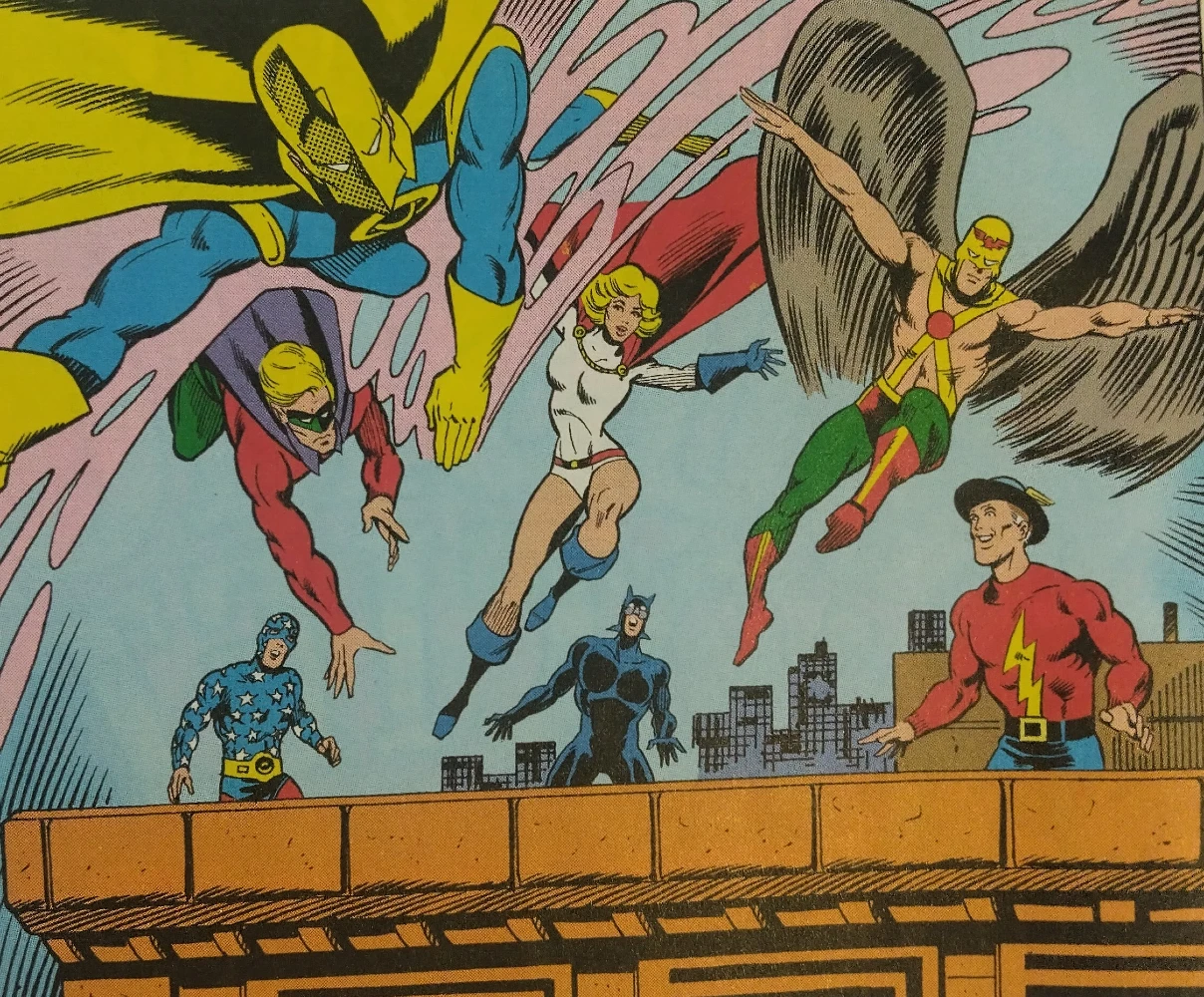
When reviewing the JLA/JSA: Virtue and Vice graphic novel for Thanksgiving last year, I noted I was fairly unfamiliar with the histories involving members of the JSA specifically, not having read many stories featuring characters such as Power Girl, Alan Scott's Green Lantern, or Jay Garrick's Flash. I indicated my love of James Robinson and Paul Smith's The Golden Age, with the caveat that it was an Elseworlds narrative with no impact on mainstream continuity. I headed into these volumes hoping to receive at least a mild understanding of who some of these original DC heroes are.
Thanks largely to the foundation laid by Gerry Conway and the continued characterization developed by Paul Levitz, the issues in these volumes provide an engaging overview of the JSA of a pre-Crisis on Infinite Earths multiverse. Conway comes in on a title which hadn't been published in nearly three decades, its characters left to float through the occasional crossover, and ushers in a new era, relying on the character-focused sensibilities he developed at Marvel writing, among other titles, Amazing Spider-Man. I have not, admittedly, read or heard Conway say as much, but as you approach these first issues, that mission statement becomes fairly clear: these are people first, heroes second.
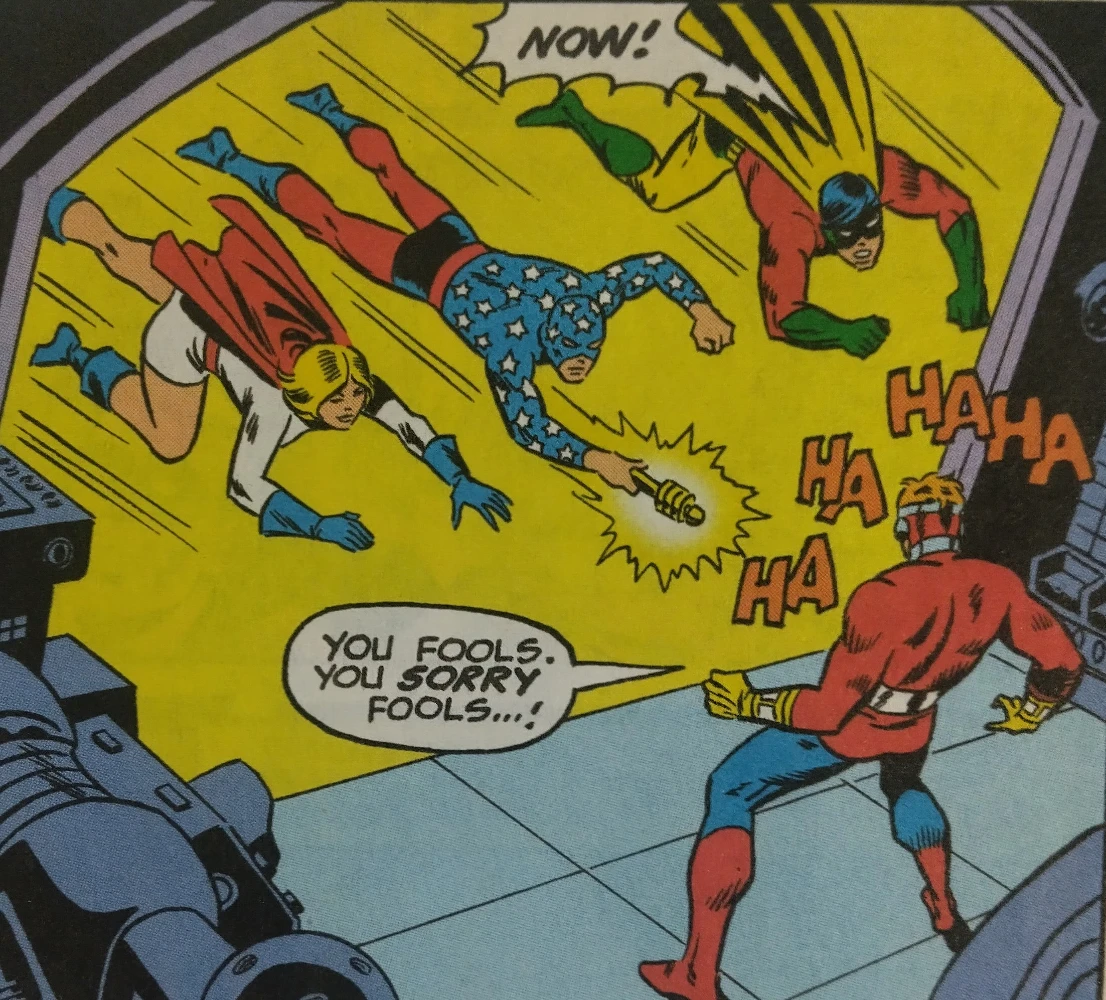
Conway invigorates the title by drawing in "new blood," specifically pulling in a teenage version of Dick Grayson as Robin and the Star-Spangled Kid, and introducing readers to Power Girl, the Earth-Two version of Supergirl. Like Kara Zor-L, this Power Girl is Superman's cousin, kept separate from humanity until her debut brings her into communication with the other Justice Society members. Similar to Power Girl, Robin and the Kid are somewhat more grown versions of other heroes' sidekicks, Conway using their relative youth to cast a contrast with the older members of the Society, appropriately aged up to seem even older than they may have been.
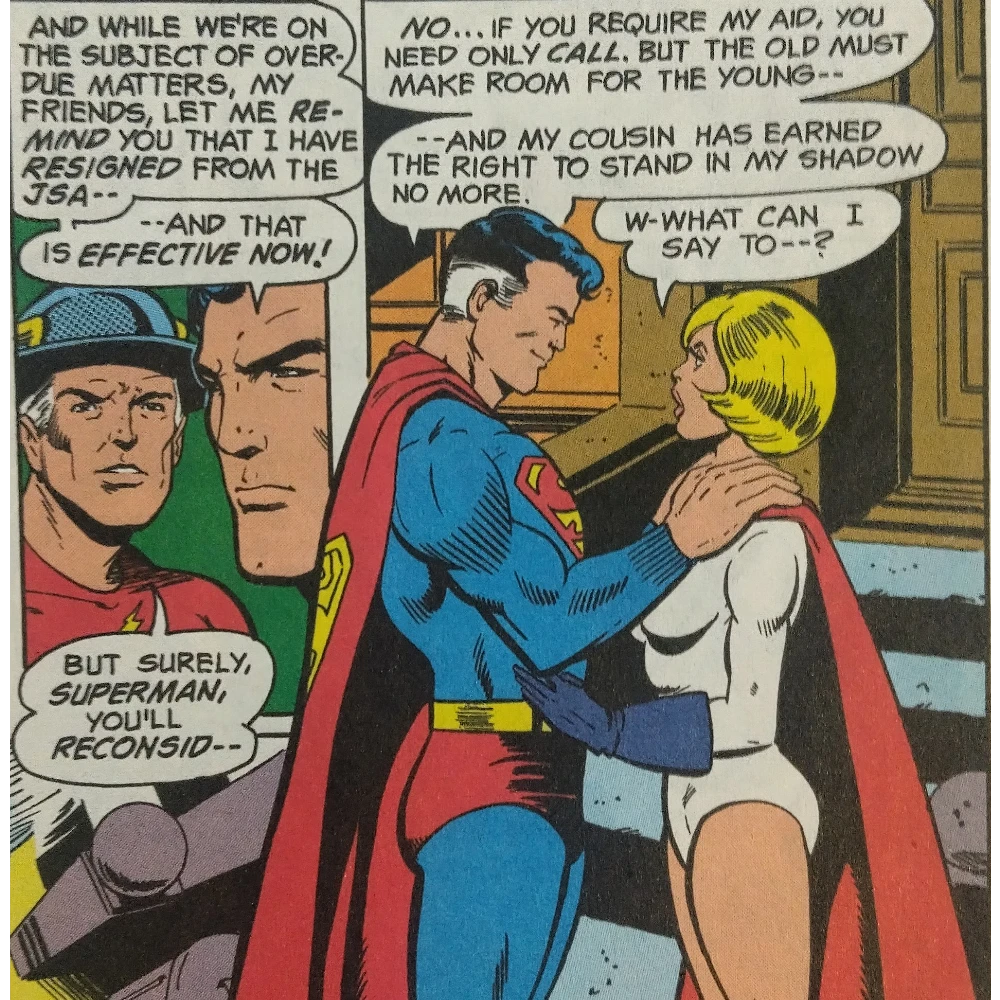
I'll touch on the narratives themselves in a moment, but where I find these issues work best is in how Conway establishes and Levitz continues well-written character work among the team, particularly in how heroes of old give way to their younger counterparts. Superman, called out of semi-retirement in one adventure, leaves the Society shortly thereafter, giving Power Girl his permanent full-time position on the team. Another new character, the Huntress (created by Levitz as Earth-Two's Batgirl analogue), assumes her own mantle as the daughter of Batman and Catwoman, seeking vitality in the vigilante sphere especially after her father is killed on a mission. At least one other character chooses retirement as the second volume winds down, allowing these younger heroes the space necessary to grow into their own roles as the old guard slowly finds themselves less passionate or just too worn to hold the torch.
It's a unique and clever idea Conway and Levitz posit, that real change can actually happen in this alternate universe, that our heroes can grow old. The original Justice Society members spend almost as much time worrying about their personal lives as they do their superhuman adventures– the salt-and-pepper haired Jay rushes off occasionally to make sure he spends time with his wife; Alan deals with his broadcasting business when he isn't fighting crime as Green Lantern; Ted Grant's Wildcat starts to wonder if reopening his old gym is a smart alternative to dusting his knuckles every night. This is a world where Superman can retire, Batman can die, Dr Mid-Nite can reflect on his mortality as he sees himself grow older. The very human realities they may ignored or set aside become present, with endings fans of the regular DC Universe would never see happen to such mainstays as Superman or Batman.
Conflict arises from the age gap as well, particularly early on, as Power Girl presents herself as someone needing to prove her individuality and authority in front of heroes with greater experience. The "old vs young heroes" conflict isn't maintained throughout the volumes, largely used as a launchpad for drawing in the younger characters, but it's enough to create a distinction between these two halves of the Society. Maybe the age difference could come across as somewhat obvious for some readers in creating internal conflict for the JSA, but I felt Conway utilized it well enough and sparingly enough to prevent it from overwhelming these issues thematically.
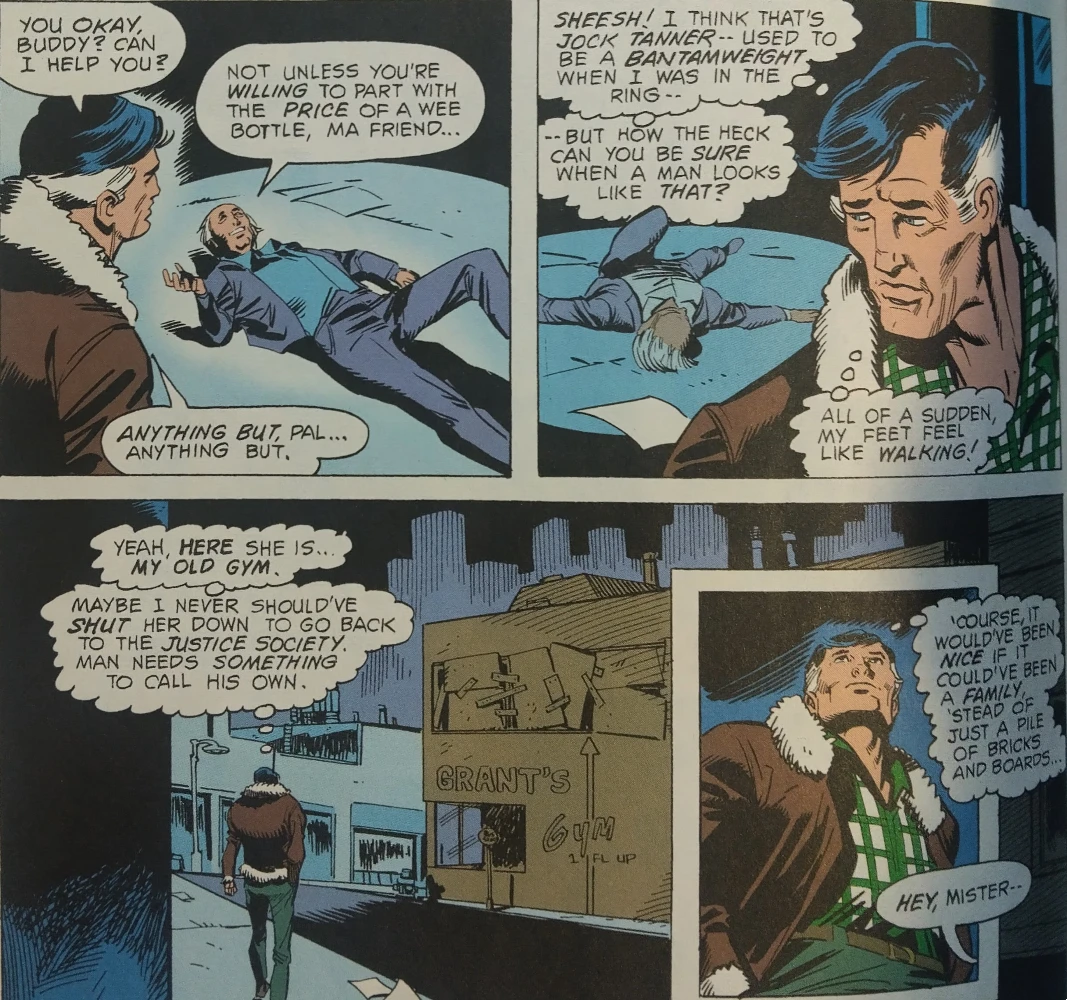
Outside the characterization, Conway and Levitz develop plots which are fairly straightforward. They're not uninteresting, but they play second fiddle to the character work incorporated between scenes of skirmishes with supervillains and otherworldly adversaries. Most tales feel typical–beat this bad guy, save the world, all the while bickering and bantering. When Conway and Levitz create conflict tethered directly to our heroes, such as a supervillainness targeting the Flash's wife or a relative of Star-Spangled Kid's using the young man's resources against him, the stories shimmer with more personal stakes. I became far more interested in watching Bruce Wayne, now the commissioner of Gotham City, struggle to reconcile the Society's vigilante activities with his own past and current philosophy on law and order than I did seeing the crew tackle Vandal Savage or Solomon Grundy. Heck, the final story has the team brush up against the hysterics of a man very heavily implied to be Joseph McCarthy, involving the Society in the historical Red Scare and allowing them a somewhat more solid cultural backdrop–aliens, monsters, and supervillains are all fine and dandy, but I preferred when a more grounded touch was applied.
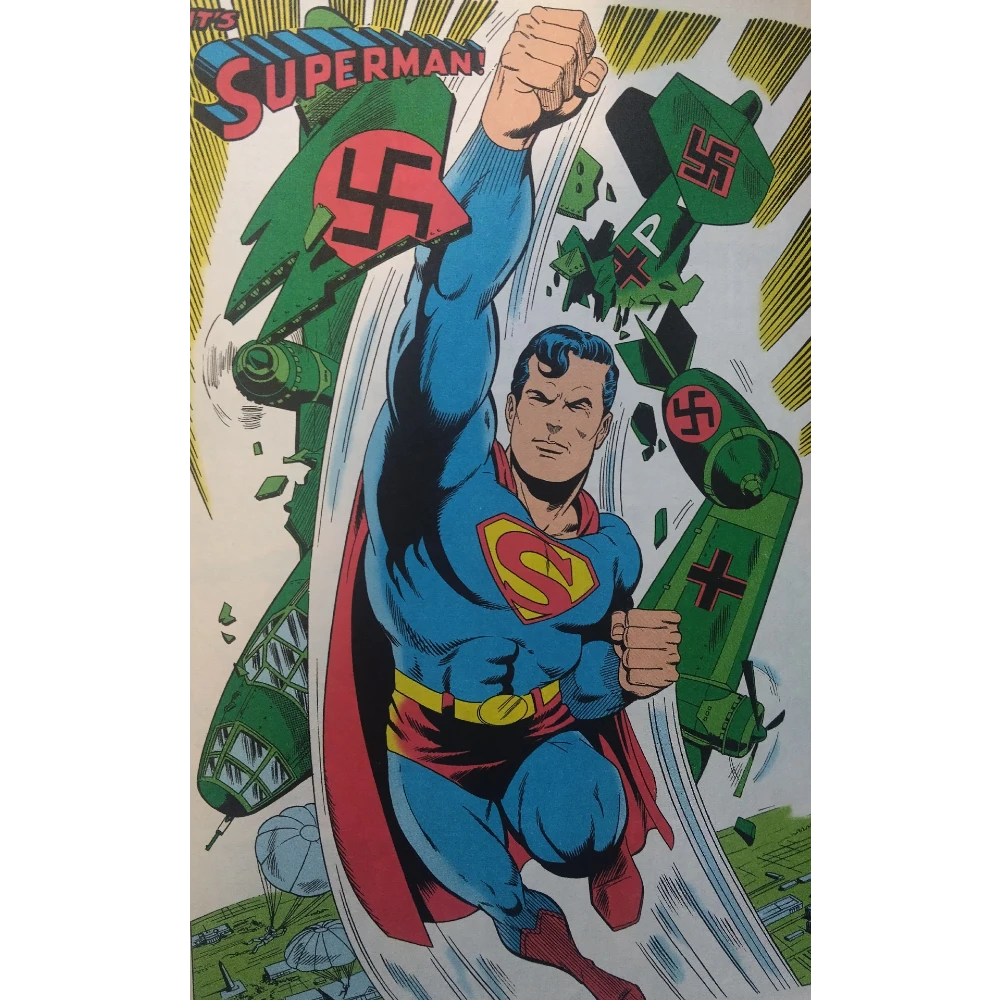
Occasionally, as it seems to happen in older stories such as these, convenience rears its ugly head more than once. DC Special #29, revealing the "untold origin" of the Justice Society during World War II, is genuinely a great read, pitting several heroes against the Nazi forces of Adolf Hitler. Joe Staton creates glorious skirmish after glorious skirmish, Levitz crafting a dire race against time, mounting tension well, having our heroes battle seemingly endless swarms of Nazi soldiers and Valkyrie warriors…until Superman, out of nowhere, arrives to give the team the edge they sorely need. Elsewhere, characters are rescued through sudden means or coincidences help thwart evildoers. The writers aren't persistent with the hands of convenience or fate (except for, of course, Dr. Fate), but the deus ex machina moments can be frustrating. The image of Superman crashing through a Nazi bomber is meant to inspire hope in our heroes, and though it does so, the action failed to evoke a positive response in me. The move felt cheap, Superman bulldozing through a bomber, with no build-up to his presence in prior panels. One could argue that he merely offers our heroes a much-deserved respite after the lengthy battle they've endured, but I would have rather seen the Society turn back their enemies without relying on the nigh-invulnerable Last Son of Krypton.
Shaky plot developments notwithstanding, we're given a slice of unique storytelling in these volumes. Unbeholden to then-current DC continuity, Conway resurrects a title which hadn't seen print in nearly thirty years, gives central billing to a cast of characters often relegated to crossovers and team-ups in other titles, adds in a few dashes of youth, and with generous help from Levitz, concocts a fun blend of action and character-focused material. The adventures may seem somewhat ordinary, marked at moments by plot convenience, but it's the characters you'll come for, whether you're interested in the exploits of younger heroes seeking to establish themselves or older guardians wondering if the time has come to hang up their capes and costumes.