(Strand)om Stories: Daredevil: Father Review
This limited series fumbles an intriguing narrative through a combination of unbalanced theming and genuinely bizarre developments
—by Nathan on February 3, 2026—
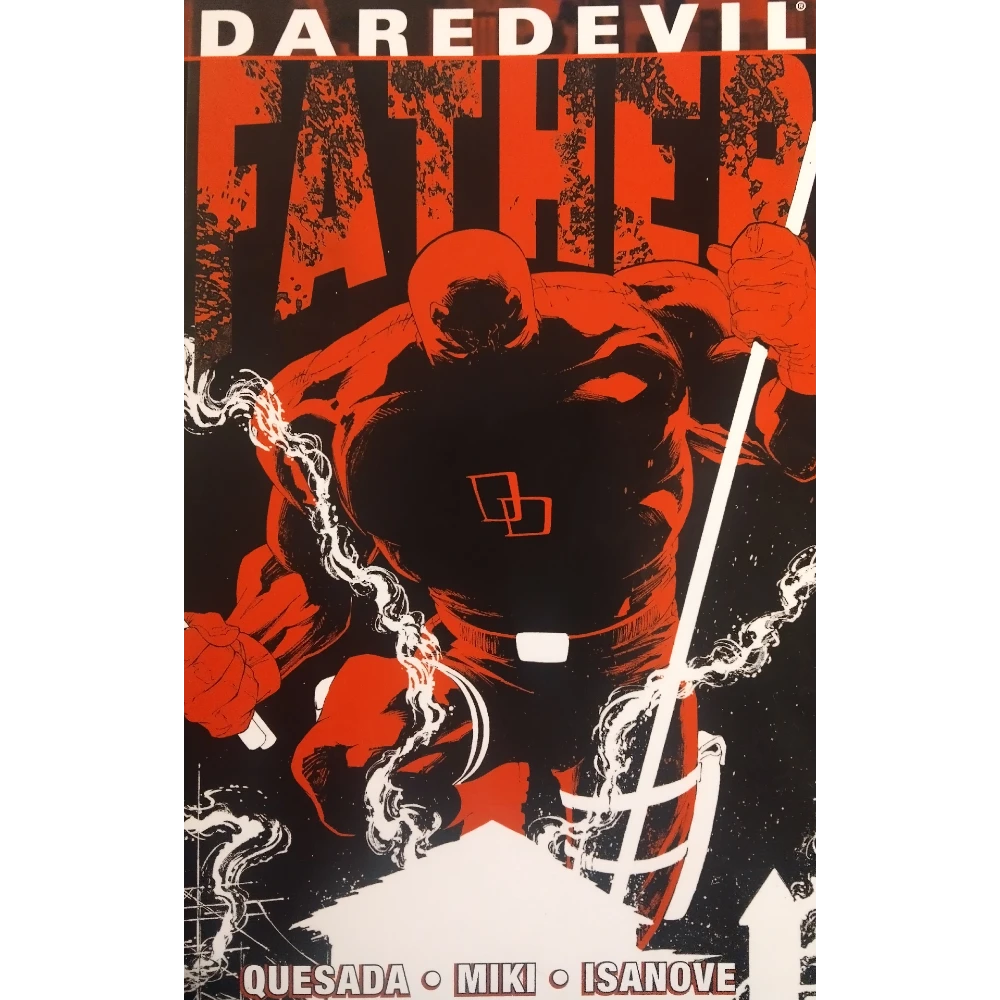
A few of my recent posts have covered stories illustrated (and, in one case, also written) by the man who would go on to become Marvel's editor-in-chief for eleven years: Joe Quesada. In the early 90s, Quesada provided work for Valiant and DC, co-creating both Azrael and an updated version of the Ray, before beginning his own company, Event Comics, with Jimmy Palmiotti and co-creating Ash, a firefighter-turned-superhero.
Most folks likely know Quesada from his Marvel tenure, where he helped usher in the company's Marvel Knights, Ultimates, and MAX imprints and killed the marriage between Peter Parker and Mary Jane in the incredibly infamous "One More Day" story arc. He did more than that during his time, obviously, but those are likely his largest contributions (if you want to call the latter that). Quesada also occasionally contributed creatively, writing a few Iron Man issues and the first NYX limited series as well as providing pencils on titles such as Amazing Spider-Man, Avengers, and Daredevil.
His Daredevil work is what brings us here today.
Last year, I (finally) reviewed Quesada and Kevin Smith's "Guardian Devil" arc, which helped kick off the Marvel Knights imprint along with The Punisher, Inhumans, and Black Panther. "Guardian Devil" has long been a favorite Daredevil narrative of mine, even if it owes a lot to Frank Miller's "Born Again." Though Quesada has never ranked among my favorite artists, I found I enjoyed his take on Daredevil, swooping the lithe vigilante on his billy club across New York, Daredevil cutting through the air and bounding around rooftops. The story involves Matt's Catholic beliefs, and though the main crux borrows heavily from Miller, it does fashion previously used ideas in unique ways. Admittedly, I first read it years before "Born Again," so any notions of "Guardian Devil" feeling derivative manifested after my initial appreciation.
A handful of years after "Guardian Devil," Quesada returned to the mean streets of Hell's Kitchen for this limited series, taking on Daredevil solo this time. The resulting six-issue series cannot be called a sequel to "Guardian Devil," even in the "spiritual" sense, the only connection being Quesada's involvement. Even his Daredevil is different, a more hulking figure, far more physically imposing than the vigilante appeared in "Guardian Devil." Father is its own standalone narrative, driven creatively by a standalone editor-in-chief. Without Smith at Quesada's side, we'll have to see if Joe can swing as easily as Matt Murdock's alter ego with that billy club of his.
Daredevil: Father
Writer: Joe Quesada
Penciler: Joe Quesada
Inker: Danny Miki
Colorist: Richard Isanove
Letterer: Chris Eliopolous
Issues Collected: Daredevil: Father #1-6
Volume Publication Date: January 2009
Issue Publication Dates: June 2004, October 2005-January 2006, February 2007
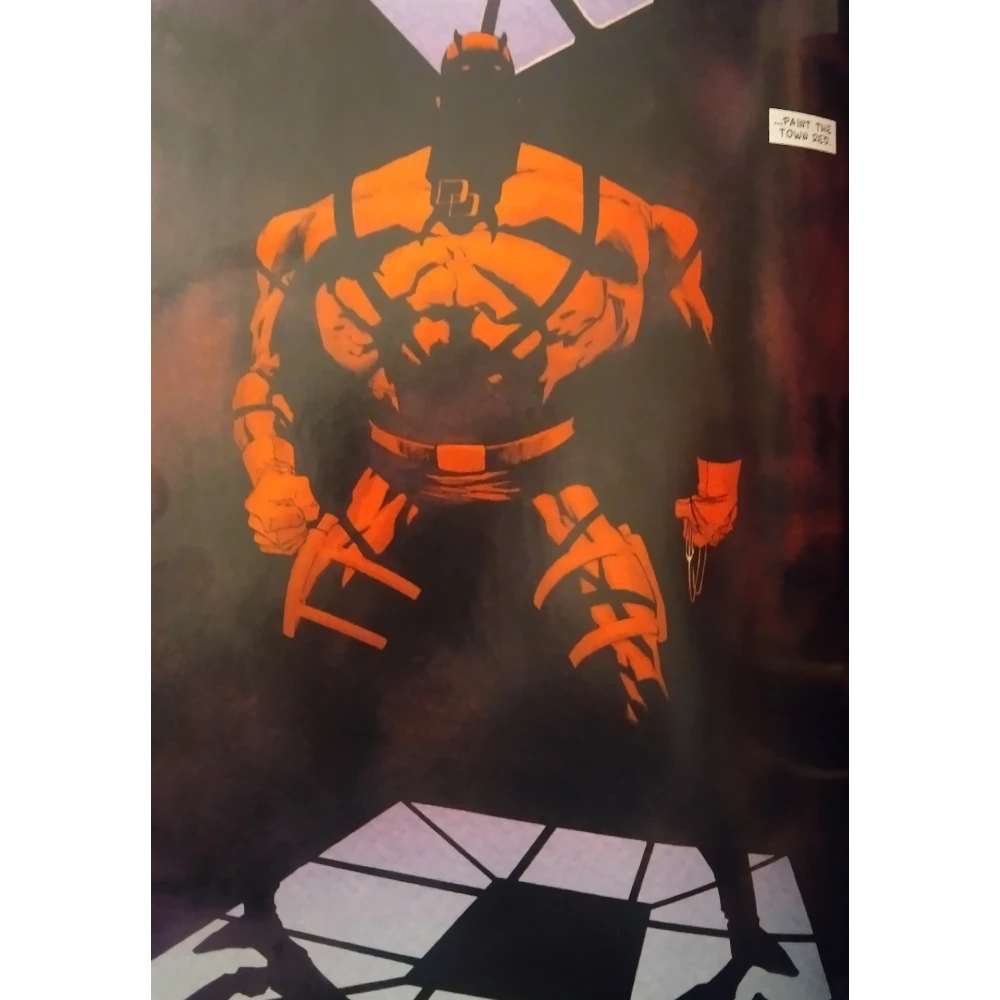
A fairly erratic publication schedule–six issues published across close to three years–is the least of the series' worries. I've read a few fairly other divisive reviews of Father online, with most dipping towards the negative. I tend to be rather pessimistic towards Quesada, so having the "mastermind" behind "One More Day" and its follow-up "One Moment in Time" run late on several issues of a series he wrote and illustrated makes me heave a slight "Oh, of course" sigh. Like it's icing atop my complaint cake. Having read this in trade format, the publishing delays had absolutely no impact on my reading, but it just feels appropriate, like naturally, Quesada couldn't get an issue out per month and instead dragged this on for a few years.
But, as I said, scheduling delays aren't among this series' most egregious sins.
Father didn't leave me seeing red, but that doesn't mean I'm blind to its faults. I'll admit not walking away hating this series or feeling particularly steamed towards it the same way I have felt towards Quesada's most blatantly bad material. I will die on the hill that, as much a travesty as "One More Day" is, "One Moment in Time" is an all-around worse piece of fiction because Quesada wrote it, developing a narrative I would call half-baked only if I were convinced Quesada could even use an oven. Father is a less troubling story, least of which because it hasn't affected Matt Murdock's continuity for nearly twenty years. No massive retcons eliminate parts of his history, though one revelation has seemingly been brushed under the rug, its ridiculous implications damaging our hero rather than providing insight. More on that later though.
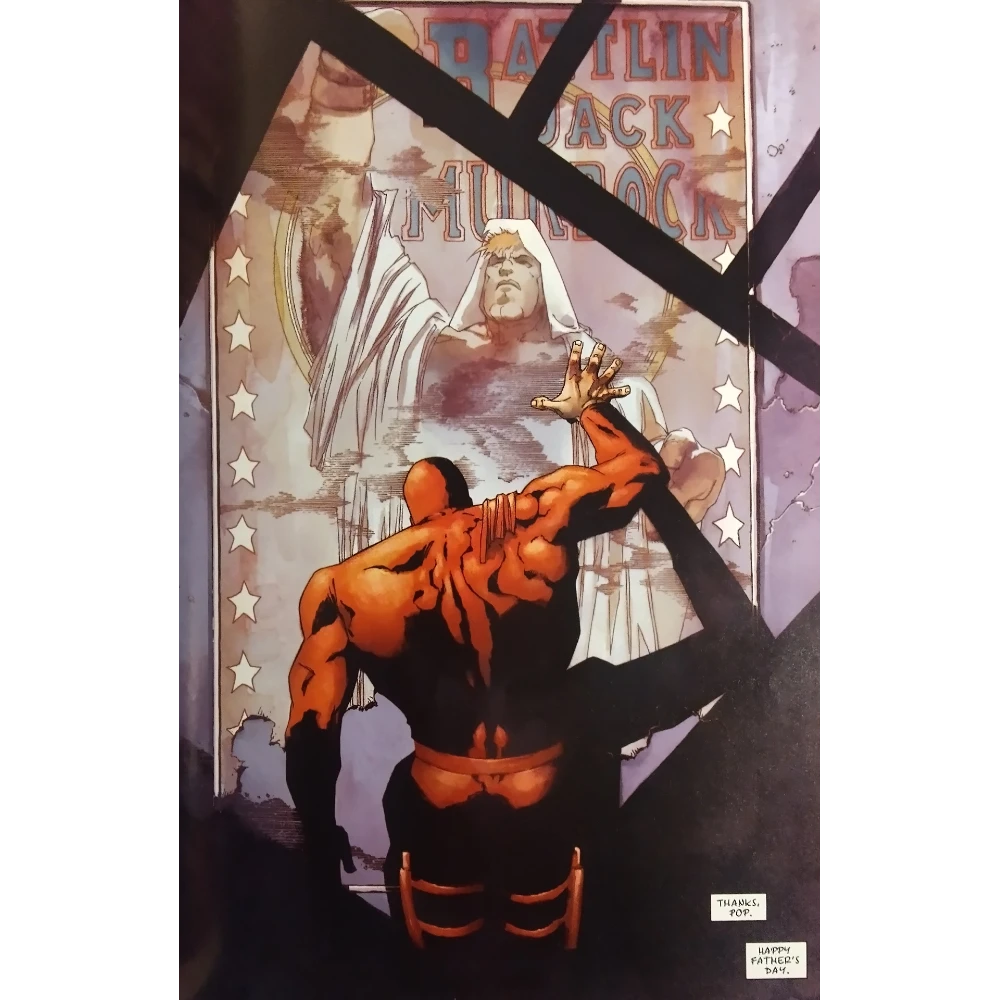
Quesada does come in with a driving concept, a bit of tension woven around our principal figures. The series' subtitle is a dead giveaway to its main conceit, and if you think Quesada is attempting to be poetic or hint at some grander idea behind the title, like Daredevil's relationship with an almighty Father, you'd be wrong. This is a story about dads–yes, "dads," plural, because we have no less than four central characters whose present states all stem from some aspect of their history with their fathers. The concept is solid, allowing Quesada to find connectivity between characters, but the problems begin with that bold, in-your-face subtitle.
Fathers and their legacies, let's call it, form the bedrock maintaining each of the central characters moving through this series. We are shown grown men and women bearing the weights and wounds their patresfamilias left. No one here has a simple relationship with their fathers, from Matt, who idolizes his dad yet recognizes the internal fracturing which led to him to become a thug (shown, I'll note, a bit more intensely in Frank Miller and John Romita Jr.'s wonderful Man Without Fear limited series), to one of Matt's clients, herself a victim of parental abuse. Quesada dedicated the story to his father, and though his depiction of dads is far from rosy, you can tell he wanted to grasp the complexities of father/child relationships, present them from diverse angles.
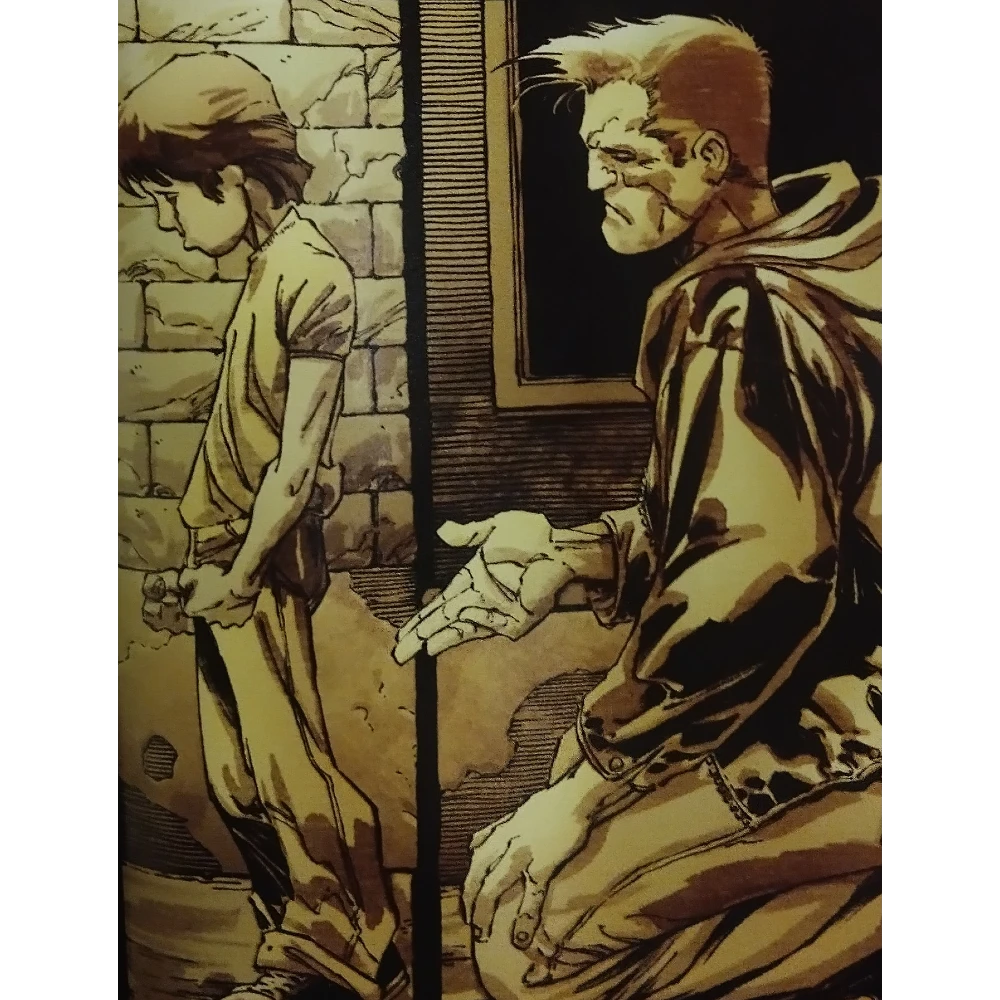
This is a story which should work. The concept of father figures involved in these characters' lives should all give them a measure of relatability that Quesada can tether greater themes to. He tries, he makes an effort, but instead of theming, he provides plot developments. SPOILERS, but we learn that the head of a vigilante group became a costumed crimefighter after his father, whom he admired, was murdered by the very thugs he worked for…ringing any boxing bells? Other father figures are involved in other past altercations that, somehow inexplicably, lead back to Matt Murdock. We're given a series of coincidences, masked as clever plot points, but which all feel sillier the more you think about it.
One twist near the end has caused the most consternation online, from what I've read, and without providing specifics, it's quite a confounding move on Quesada's part. The moment recontextualizes Matt's sacrifice to save a blind man in the accident which cost him his eyesight, yet Quesada skims over the ramifications. He shows us genuine, unforeseen consequences to Matt's actions…and doesn't let those consequences sink in any lower than an inch or two. Most of the online frustration comes from the fact Quesada introduced this little hiccup, and though I'm no fan of the exact outcomes, the idea that Matt's sacrifice had negative consequences for the man whose life he saved feels like an idea worth exploring in full, not just tacking on to a story for the sake of surprise.
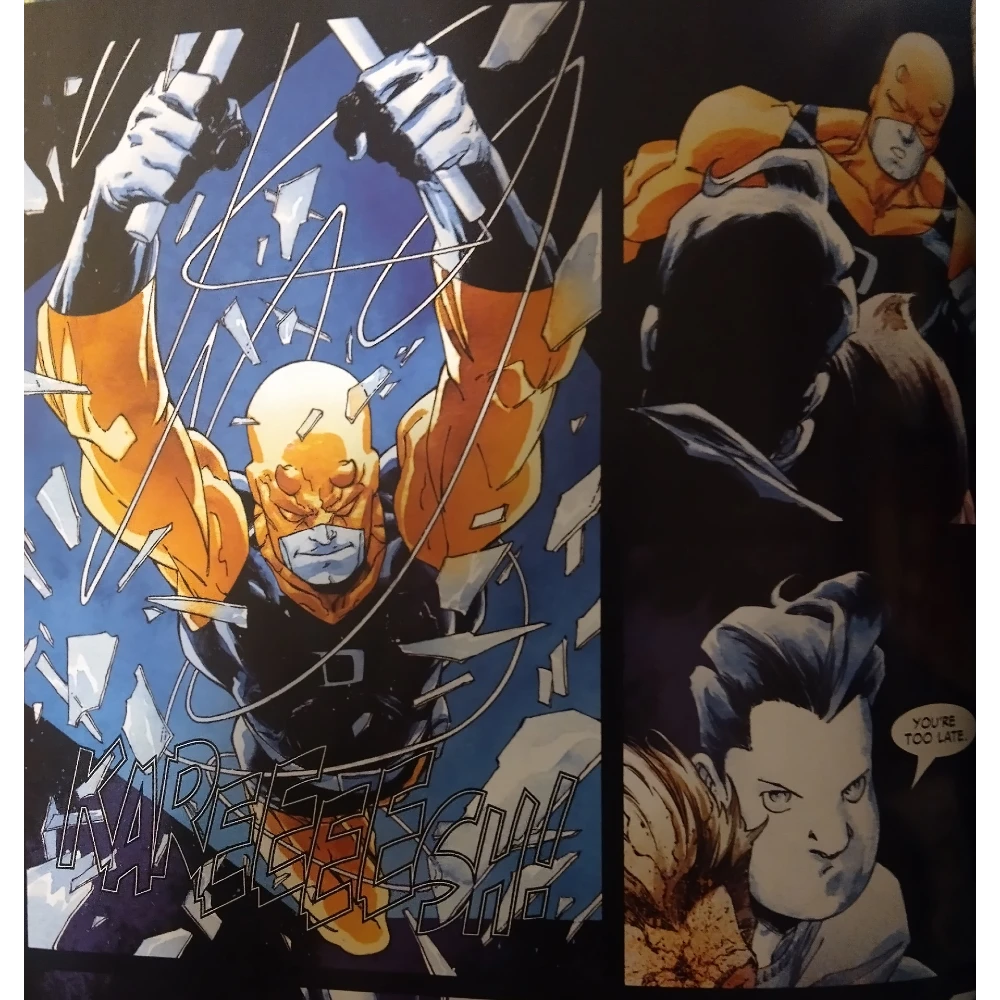
Also of note is how Quesada quickly glosses over a panel where "Battlin' Jack" Murdock hits his son, the first time I've ever seen Matt's dad physically harm the young man. I've not seen another Daredevil comic where Jack hurts his son–part of the brilliance of Man Without Fear is how Miller draws out Jack's darker side as a twisted parallel to how he encourages Matt to live and to contrast the tender care the aged boxer could show his son. Quesada seems to have taken the wrong lesson from Miller through this panel alone, recognizing Jack's more brutish side but failing to see that it was never, as far as I am aware, directed towards his own son.
One or twice, Quesada maneuvers himself into a position where a genuine shocker of a twist occurs. Throughout the series, Matt experiences flashbacks concerning his father, "Battling" Jack Murdock, and one of these repeated flashbacks, visually, is revealed to have weight on the plot as it crescendos. If you can overlook the fact that Matt's flashbacks just happen to be specifically connected to the unraveling plot, you may be somewhat impressed. I appreciated it, at least. Elsewhere, Quesada subverts a fairly obvious solution to an individual's identity, though if you're somewhat pessimistic, you may notice him intentionally setting up the obvious suspect just so he can try and pull the rug out from under you. At the very least, these moments represent a decent amount of forethought, coincidence notwithstanding, that Quesada took a few glances at this story beyond the immediate "I wanna tell a story about dads" threshold. You can tell he's considering where to lay his pieces, even if the final placement of each feels disordered.
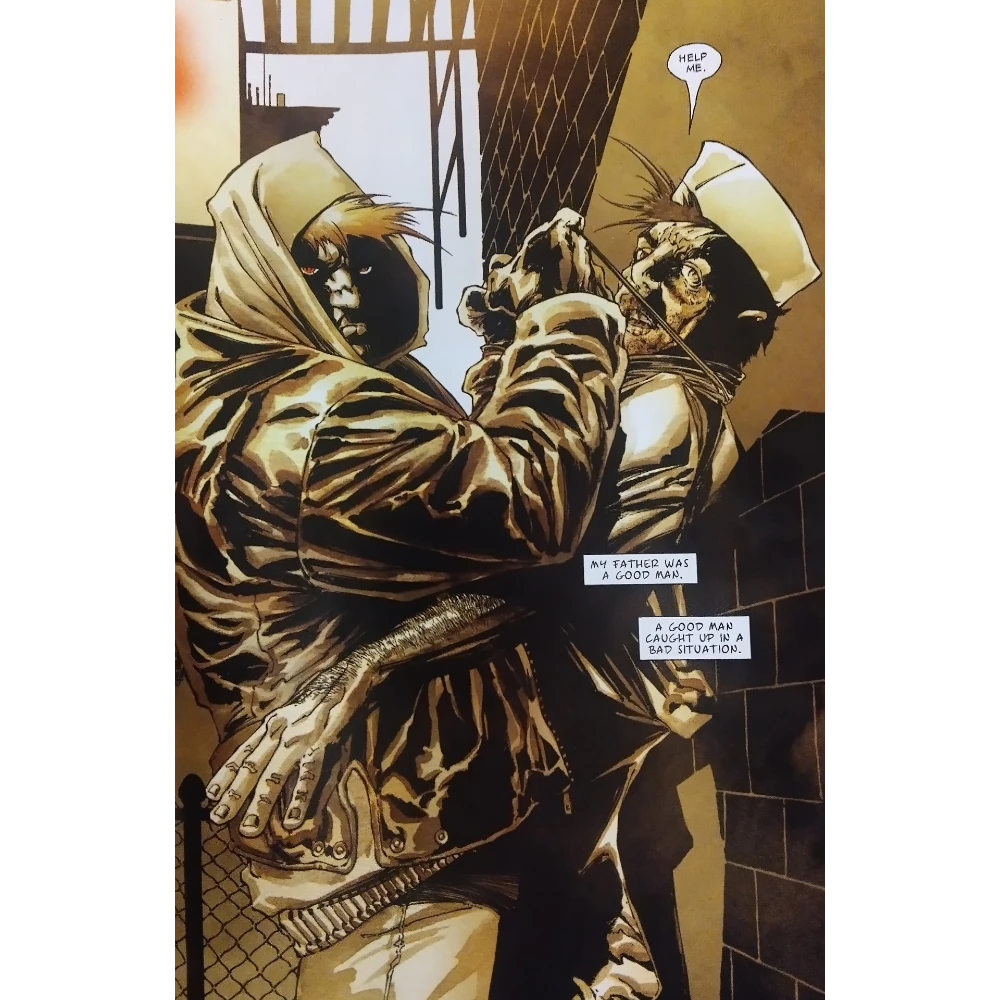
At six issues, the series is a decent length, but Quesada still finds himself working with too much material to pull everything together substantially. We get Matt digging into the case of a female client, a vigilante group honing on Daredevil's turf, and a serial killer stalking Hell's Kitchen…all the while the city is wrapped in a blazing heat wave. Had Quesada set aside a few of these developments and focused solely on one or two, the story would have been a more engaging read. The fact that a few of these developments exist largely outside the others is a bit of a sore spot as well–the serial killer angle and the woman's legal case become the more interesting plots, with the vigilante group and an enigmatic entertainment entrepreneur playing second, if not third, fiddle, having little to no impact on the other plots. The notion of "fathers" plays into all of these narratives, save the heat wave, but that isn't a substantial enough concept to give each individual story proper attention and emotional heft.
There are many, many good Daredevil stories out there, and I implore you to seek out a reading list so you can tackle the best of the best, from Miller's acclaimed work, to early 2000s runs from Brian Michael Bendis and Ed Brubaker, to somewhat later material from Mark Waid. You will probably not find Daredevil: Father on those lists. I said I didn't end the narrative feeling particularly upset, but as you can see from the review, I can't really say I enjoyed it. I would say it's the worst Daredevil story I've read yet, but I don't say that with burning zeal. The dislike stems from the series' rampant messiness and its lack of central direction. Like a bouncing billy club, it ricochets across every imaginable surface, and when it bounds back to Quesada, he lets the story slip through his fingers. Not poorly conceived, just poorly executed. And compared to the giants which tower above it, Daredevil: Father exists in a tremendous shadow out of which I'm not even sure radar sense could guide it. So go and check out those stories I referenced. In creative endeavors, you'll find Daredevil has several other better fathers than Joe Quesada.