Spider-view: Lethal Foes of Spider-Man
Though nicely connected to continuity, this limited series leaves something to be desired in terms of characterization
—by Nathan on January 25, 2026—
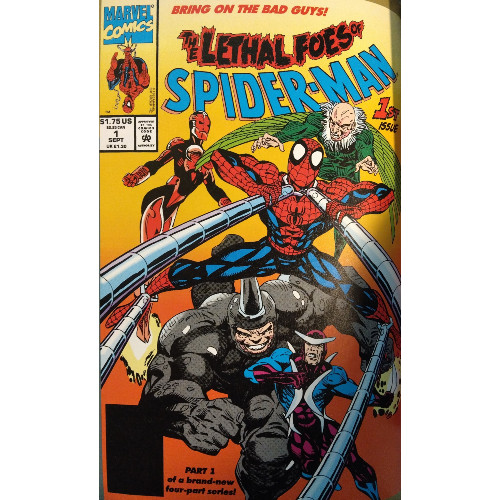
A few years back, I reviewed Danny Fingeroth, Al Milgrom, and Kerry Gammill's Deadly Foes of Spider-Man limited series, a celebration of sorts of several B-level supervillains such as Boomerang, Speed Demon, Hydro Man, and the Beetle. It's an amusing, somewhat lopsided series, predicated on showcasing these criminals as the heroes of their own stories. Spidey was ultimately relegated to the status of perpetual nuisance, popping up whenever these guys thought they were about to get away with a crime.
At some point, somebody decided the series deserved a sequel, and so Fingeroth, this time with a few other artists, came up with a follow-up, directly involving several of the same characters included in the last series. If you appreciated Fingeroth's emphasis on backstabbing bad guys trying to work as a team but ultimately squabbling over their own individual agendas and plotting simultaneous betrayals, than you may enjoy this even more, because all of that squabbling, plotting, and betraying is increased in this series, potentially to a lethal amount, as even more supervillains stumble into these panels.
Lethal Foes of Spider-Man
Writer: Danny Fingeroth
Pencilers: Scott McDaniel, Keith Pollard, David Boller
Inkers: Brad Vancata, Frank Turner, Ian Akin, Keith Aiken, Jim Amash, and Mike DeCarlo
Colorists: Dave Sampson and William Hodge
Letterers: Diana Albers, Sergio Cariello, and Susan Crespi
Issues: Lethal Foes of Spider-Man #1-4
Publication Dates: September 1993-December 1993
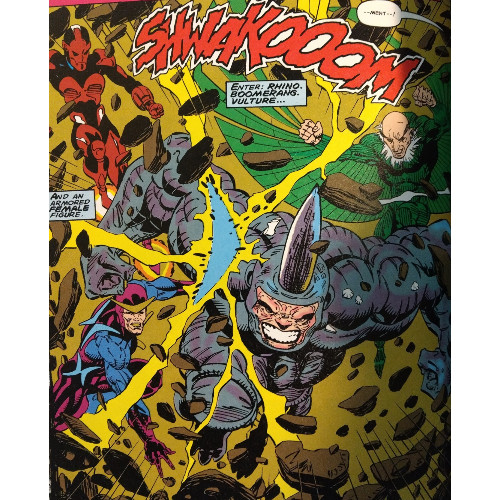
The most entertaining aspect of both the original series and this sequel is its focus on the villains. Spidey has the greatest rogues gallery of all time, so much so that seeing even a C-list thug like the Answer or Stegron the Dinosaur Man gets me to grin a little (even if I have some narrative qualms, which I will touch on later). Lethal Foes is all about the bad guys, watching how they manipulate events, maneuver people like chess pieces, and constantly plan on how to get ahead of everybody, enemy and ally alike. I compared the first series to Nick Spencer's Superior Foes of Spider-Man, even noting the similar names, but specifically discussing Spencer's penchant for having his crooks upstage and backstab everybody around them. Fingeroth's narrative is quite similar…to a somewhat lesser impactful degree.
It's the hallmark of the supervillain team-up: someone, at some point, will give into their irrevocable sense of greed and decide to steal something, hurt someone, or trick somebody to gain the upper hand. And that's what motivates the bulk of this specific narrative, that constant notion of forced camaraderie and the willingness of basically everyone to turn on someone else. What it means is that it leaves most of our cast–made up a team consisting of the Vulture, Boomerang, Rhino, and newcomer Hardshell; a pairing between Doctor Octopus and the Answer; a paired Beetle and Stegron; and the living bee-man Swarm (for some unfathomable reason)–in this one-note loop of make a team, turn on team, and then find another alliance.
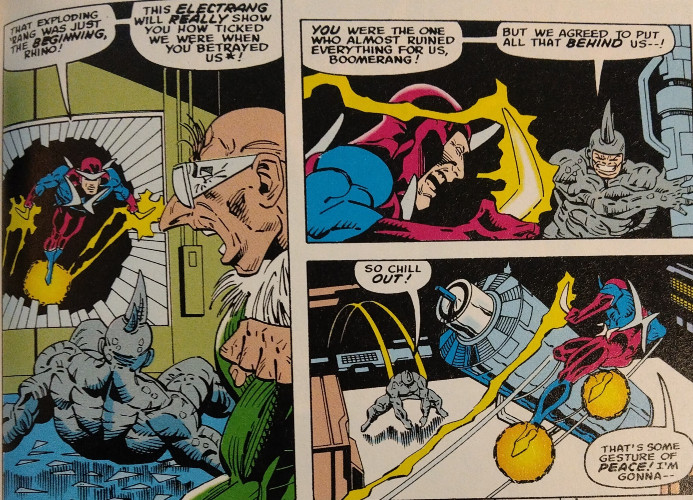
Yes, it's the kind of narrative you'd expect from these guys, but the fact that pretty much everyone, at all times, is determined to pull off some scheme or another makes it all feel very samey in terms of flavor. When Doc Ock allies himself with a incorporeal Answer–who's been that way since encountering the bad side of Dagger in a Spectacular Spider-Man arc from a few years earlier–and immediately starts planning to betray him, it makes sense. But when the Vulture considers stealing from his teammates, and the Beetle agrees to join forces with Stegron while already planning his partner's downfall, you begin feeling like you're on a carousel where the animals have been replaced by supervillains. Didn't we just see this scene, have this interaction, read these thoughts? I often wondered.
Simultaneously (and maybe a little incongruently), I do really like having villains present for much of the series, particularly as they're illustrated by Scott McDaniel. He creates some gorgeous panels with the Answer and Stegron, for example, breathing detailed life into characters who have never really received much exposure. The use of the Answer is very rewarding, as he's a character I genuinely enjoyed during my readthrough of the "Alien Costume Saga," and I was glad to see him return and play a very integral role in the whole series.
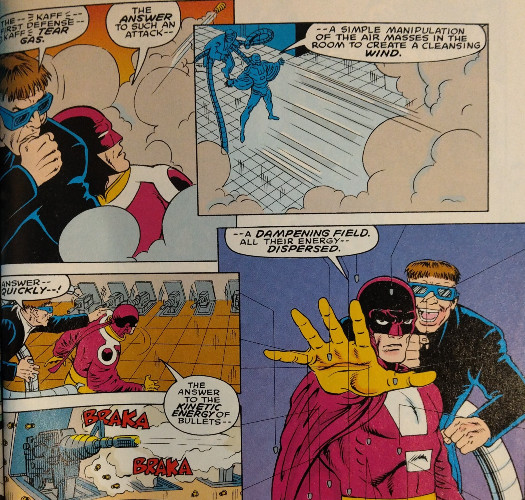
"Role" is a good word to distinguish how I felt about certain characters–when villains had a specific part to play, I appreciated them. Stegron's introduction felt forced and somewhat cheap, and I assume he was included to throw another lower tier villain into the mix, but he ends up playing a significant part in the ensuing battles between characters. Swarm, conversely, adds nothing to the narrative, his inclusion completely coincidental and his impact minimal during a final battle. He does nothing for the story, has no real part, and thus I question Fingeroth using him. But other characters' inclusions are received better, particularly the Vulture, who has the most of an established "arc" out of everyone in the series, seeking to rid himself of the cancer he was diagnosed with in an earlier Spectacular Spider-Man issue. His motivations align well with his character and his narrative direction, which is more difficult to say for other characters.
I also appreciated Fingeroth's ability to weave continuity throughout the series, with each character largely feeling like they're continuing previously established story arcs. Doc Ock, for example, struggles with the loss of the adamantium arms he used against Spider-Man during a more recent Sinister Six scheme (just don't ask how adamantium arms were destroyed). The Answer's appearance is tethered to that last "Alien Costume Saga" arc he appeared in; Boomerang and the Beetle carry on a vendetta established in the last series; and Hardshell is connected to the original series as well as another character last seen during Mark Gruenwald's Captain America run who makes a surprising appearance here. Heck, Doc Ock even visits Empire State University and mentions Sabretooth's recent attack there, which was covered in a graphic novel Scott McDaniel also illustrated. The series as a whole feels indebted to the recent past, whether developed by Fingeroth or others, slotting it neatly within then-current Marvel continuity and carrying on personal stories for several characters.
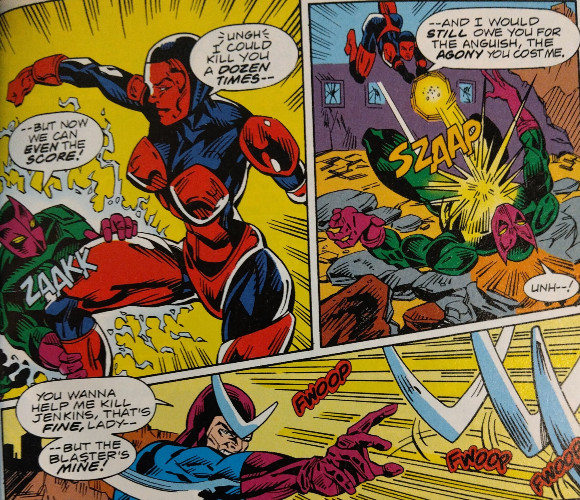
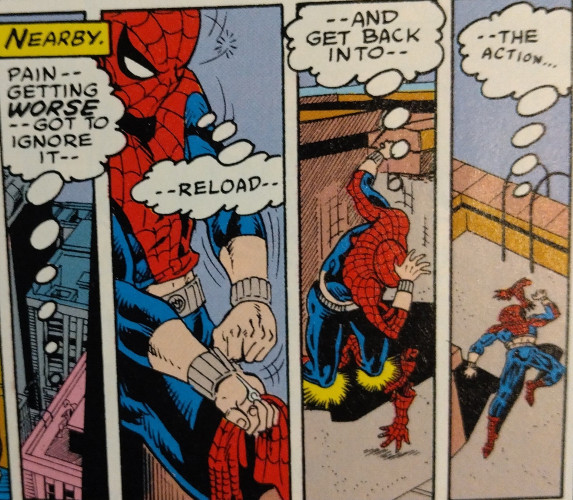
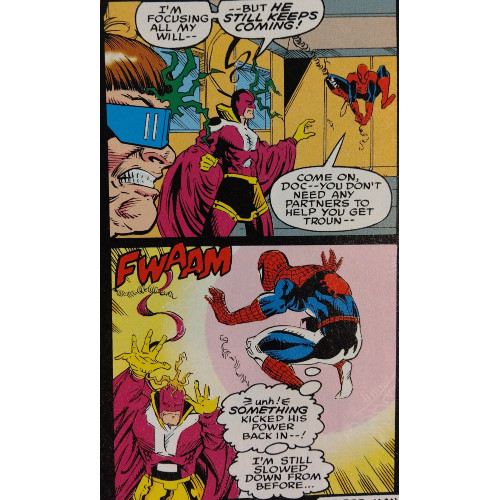
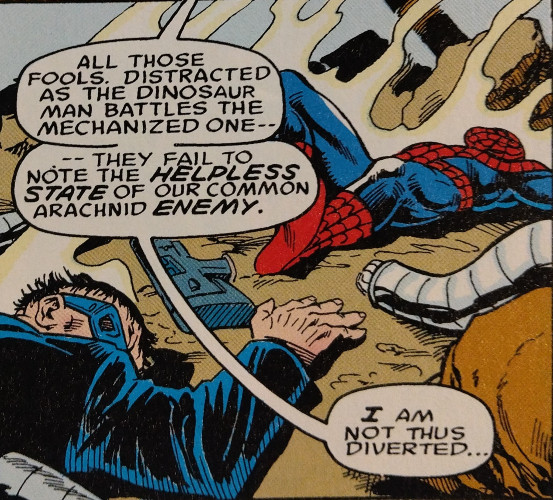
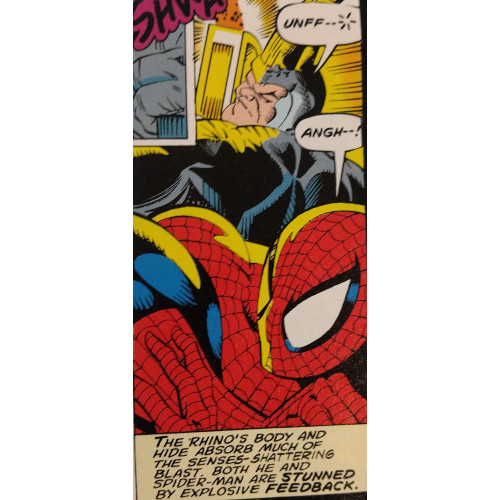
The individual whose story is impacted the least, somewhat surprisingly, is Spider-Man himself. I complained in my review of Deadly Foes that Spidey was used conveniently, popping up sporadically in a "right place, right time" fashion to engage our villains. The focus, naturally, is on the bad guys for both series, but I wanted Spidey to feel a tad more integrated. His appearances here don't feel as coincidental, but what is annoyingly convenient is how often the dude gets knocked around and knocked out. He loses pretty much every battle he's in and spends much of the series imprisoned, injured, or unconscious (see the "photo gallery" below). You almost feel led to believe Fingeroth is including such consistent defeats as an intentional running gag to stress that this is a series about the villains foremost. Understandably, Spidey webbing up his lethal foes for the cops early on would defeat the series' purpose, but as a result of that little storytelling trick, Spidey's impact on the proceedings is minimal. I just wish he was allowed the opportunity to do more.
I noted I enjoyed Scott McDaniel's work on this, even if he stays for only half the series. But Keith Pollard and David Boller do a fairly smart job picking up where McDaniel leaves off, aside from a few glaring design errors where a character or two randomly switches costumes between issues. Boller specifically endeavors to ape McDaniel's style across these issues, specifically with faces, to make the switch seems incongruous, but the change is notable. I won't say the art in the second half is lessened–I did appreciate several "shots" of the Answer, Stegron, and the Rhino that Boller illustrated–but I always like it better when an original artist can finish a story. The "B team" does a good job carrying the story on, aside from those aforementioned issues, minimizing the jolt in changing styles to a small bump.
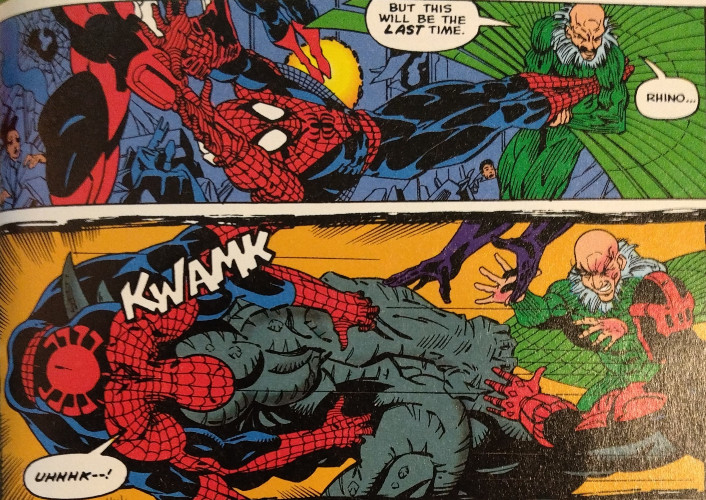
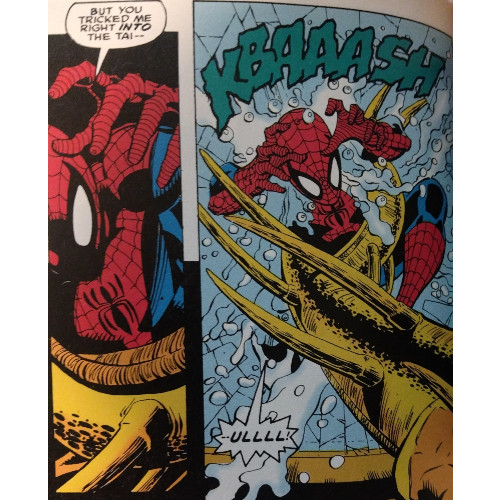
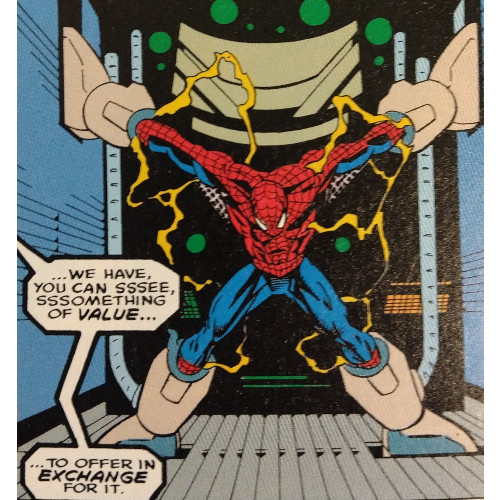
Like its predecessor, Lethal Foes is not without its problems, though nothing bad enough to render it a particularly frustrating reading experience. It all boils down to character–when Fingeroth and his artists tap into a central character, use them well, the story is engaging. The Vulture, Doc Ock, the Answer, even Beetle to a somewhat lesser extent provide well-crafted arcs for a four-issue series. But folks like Stegron, Hardshell, the Rhino, and especially Swarm are left to pick up the crumbs of development, whatever leftovers they can fend for once the central characters are established. And Spider-Man? He's left holding an empty plate, wondering how the heck he became a punching bag and a bargaining chip in a series that uses his name. Yeah, his name's part of a prepositional statement used to describe whose "lethal foes" we're considering here, but that shouldn't make him any less important to the narrative. #JusticeforSpider-Man.