(Strand)om Stories: Captain America: Bicentennial Battles Review
A tad dated, these issues still provide Jack Kirby an opportunity to celebrate the spirit of America through her staunchest Marvel defender
—by Nathan on July 4, 2026—
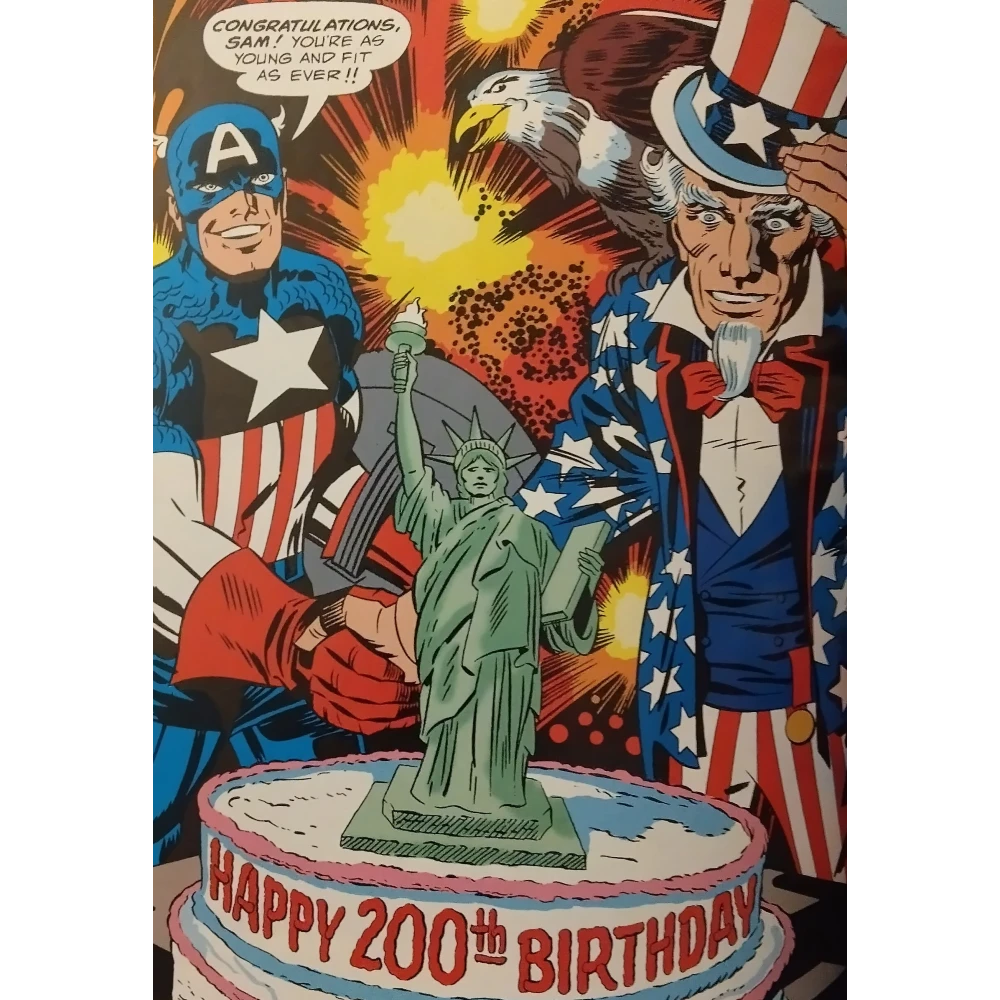
Happy 250th Birthday, America!
As has been customary the last few years on this site, we're celebrating another Independence Day by exploring the many adventures of Marvel's premier patriot, Captain America. This year, marking the nation's semiquincentennial, feels weightier in some respects, even if it's just to commemorate one of those ends-in-zero anniversaries. And what better way, if you're a comics fan, to observe this special year by diving into a narrative created to celebrate the bicentennial, fifty years ago?
I tend to not get political on this site, even when discussing culturally relevant comics such as Cap's, but I will at least note the current climate heading into this 250th anniversary of the U.S.A.'s establishment. Several articles I've seen commenting on the spirit of the 1976 bicentennial indicate a lack of those same celebratory qualities this year and how polarizing the official semiquincentennial celebrations look to be. Leading up to today's holiday, the vibe is different. Off. There doesn't seem to be the same rah-rah energy or the same spirit in celebrating.
I don't necessarily consider myself educated well enough in current events to fully agree either way, but the point of this blog isn't to give a thumbs-up to or pick fights with pundits. We're here to talk comics, and while your interpretation may vary with mine on how comics speak to the current culture at hand, I hope we can agree that the medium is certainly a strong pop cultural lens for exploring our country's history and themes and the natures of her people.
That's what Jack Kirby was trying to do here, anyway, with the special one-shot reproduced in this volume, along with a few other issues comprising part of his 70s Captain America run. Kirby had returned to Marvel following a stint at DC, and as he built to the bicentennial in Cap's own book through a wild conspiracy thriller, he also produced this issue. Originally published as an 82-page, treasury-sized issue, the special has been reprinted individually and in other volumes, where it's been, obviously, shrunk to fit the collected edition size. That's the version we're reviewing today, along with those other issues, to see how Kirby painted the America of 1976 through the escapades of a superhuman soldier.
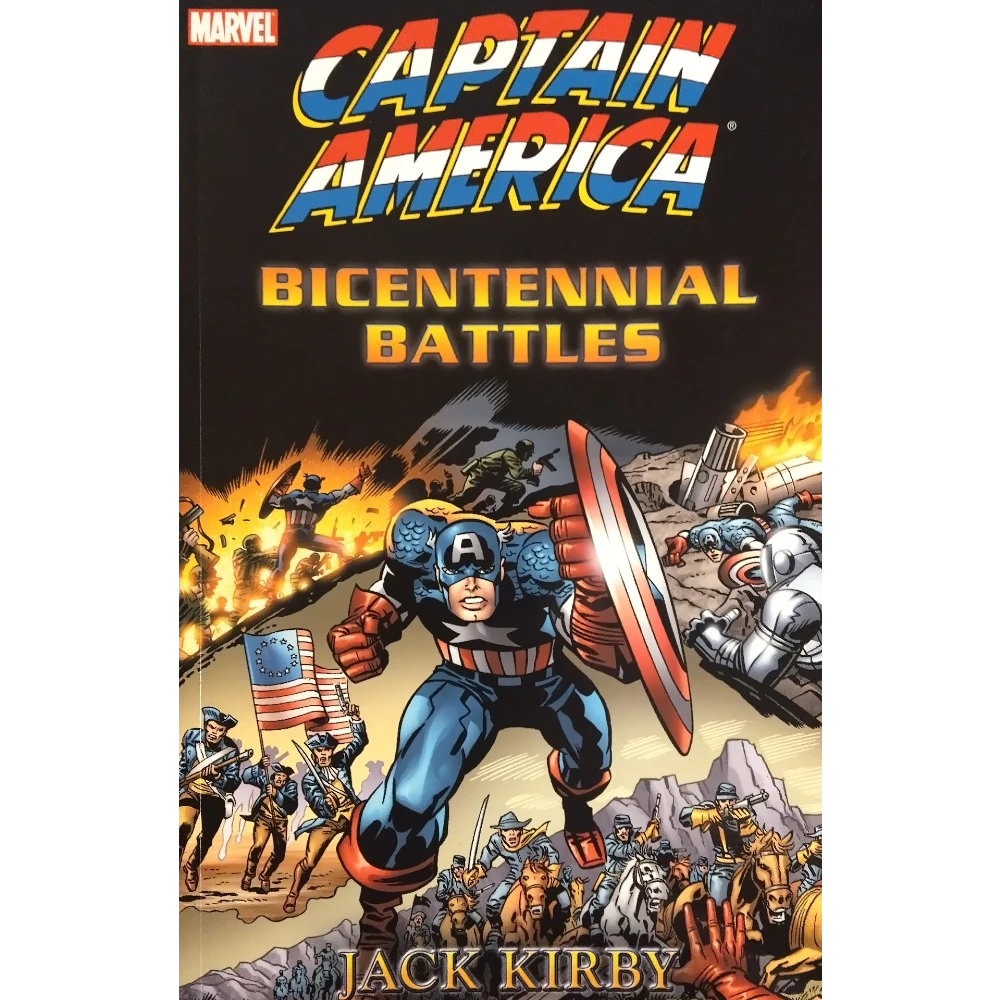
Captain America: Bicentennial Battles
Writer: Jack Kirby
Penciler: Jack Kirby
Inkers: Barry Windsor-Smith, Frank Giacoia, and John Verpoorten
Colorists: Phil Rachelson, George Roussos, Hugh Paley, Janice Cohen, and Michelle Wolfman
Letterers: John Costanza, Gaspar Saladino, and Jim Novak
Issues Collected: Marvel Treasury Special Featuring Captain America's Bicentennial Battles and Captain America #201-205
Volume Publication Date: July 2005
Issue Publication Dates: June 1976, September 1976-January 1977
In Kirby's mind, the best way to have Captain America celebrate the bicentennial was to have him revisit various points in America's two-hundred-year history as a united yet independent nation. The treasury special's plot is simple: Cap encounters a mystic named Mister Buda (later refashioned as Elder of the Universe the Contemplator), who believes Steve Rogers needs to come to a better understanding of himself and the nation through encountering its history firsthand. To that end, the Contemplator slaps a magical talisman on Cap's hand that whisks the super-soldier through time and space, popping him in and out of the past and even casting him into the possible future of the United States.
The concept is ambitious. If you're reading this, you're reading it because Jack Kirby has turned a history lesson into a story. Though he doesn't cover every important moment in America's development up to the mid-1970s, nor does he do so chronologically, he hits several events and introduces several important historical figures. In detailing these dramas, however, he's more interested in the spirit grounding and guiding those moments. As Mister Buda himself mentions, Cap needs to witness the nation's history through the eyes of those who lived it. We're not just given a bunch of names and dates to remember. Cap encounters a runaway African American slave, Native Americans about to engage the U.S. Cavalry, and citizens of Chicago fleeing the fire caused by that dang cow (allegedly, Your Honor!).
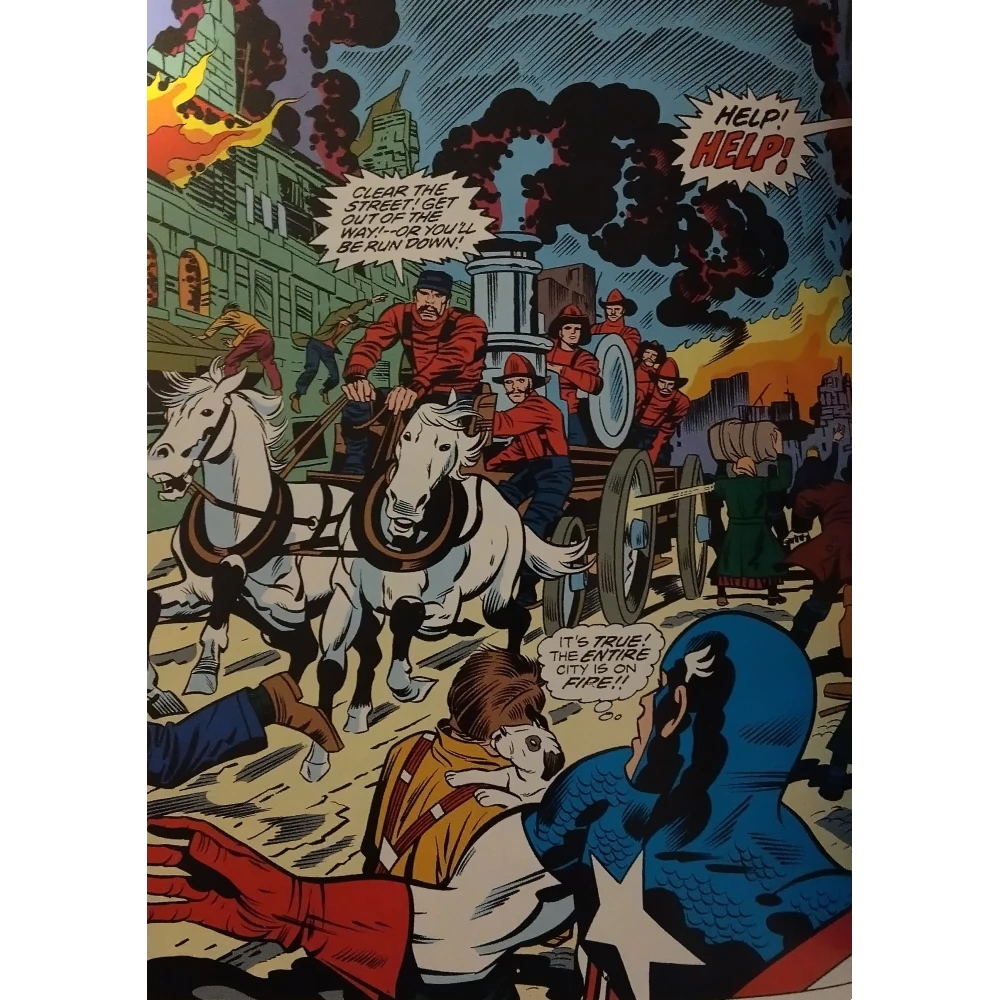
Each stop in time gives Kirby the opportunity to provide his own distinctive flair on different periods, whether that's through colonial era horse-drawn carriages, late 19th century horse-drawn fire engines, or World War I fighter planes (not flown by horses). He lingers on the realistic details, yet that unique Kirby style is always present. Ever wanted to see an atomic test rendered with illustrious "Kirby crackle"? How about Kirby's vision of a future where America has decided to colonize the moon? Here's your chance. Bonus content in the back of the issue sees Kirby drawing Cap as if he appeared in important American eras, such as the Revolutionary War (with the Red Skull popping up as a Hessian!) or the Space Race, adding a fun flair after the narrative concludes.
If ambition exists in how Kirby illustrates this special edition, that ambition extends to how he writes this as well. Kirby's writing has always felt a tad more solid to me than Stan Lee's, given over to a slightly less hyperbolic fashion. Kirby attempts to tap into the heart of America here, what the country is to people and what it should mean. He's judicious in delivering a take which feels largely fair, painting an optimistic picture tempered by reality. He draws attention to those historical tragedies, such as slavery and violence against Native Americans, placing Cap in the vulnerable position of helping where he can yet largely filling a passive role. The ultimate message is a positive one, with Kirby cheering on the country's enduring rhetoric of opportunity and the peace afforded by those opportunities.
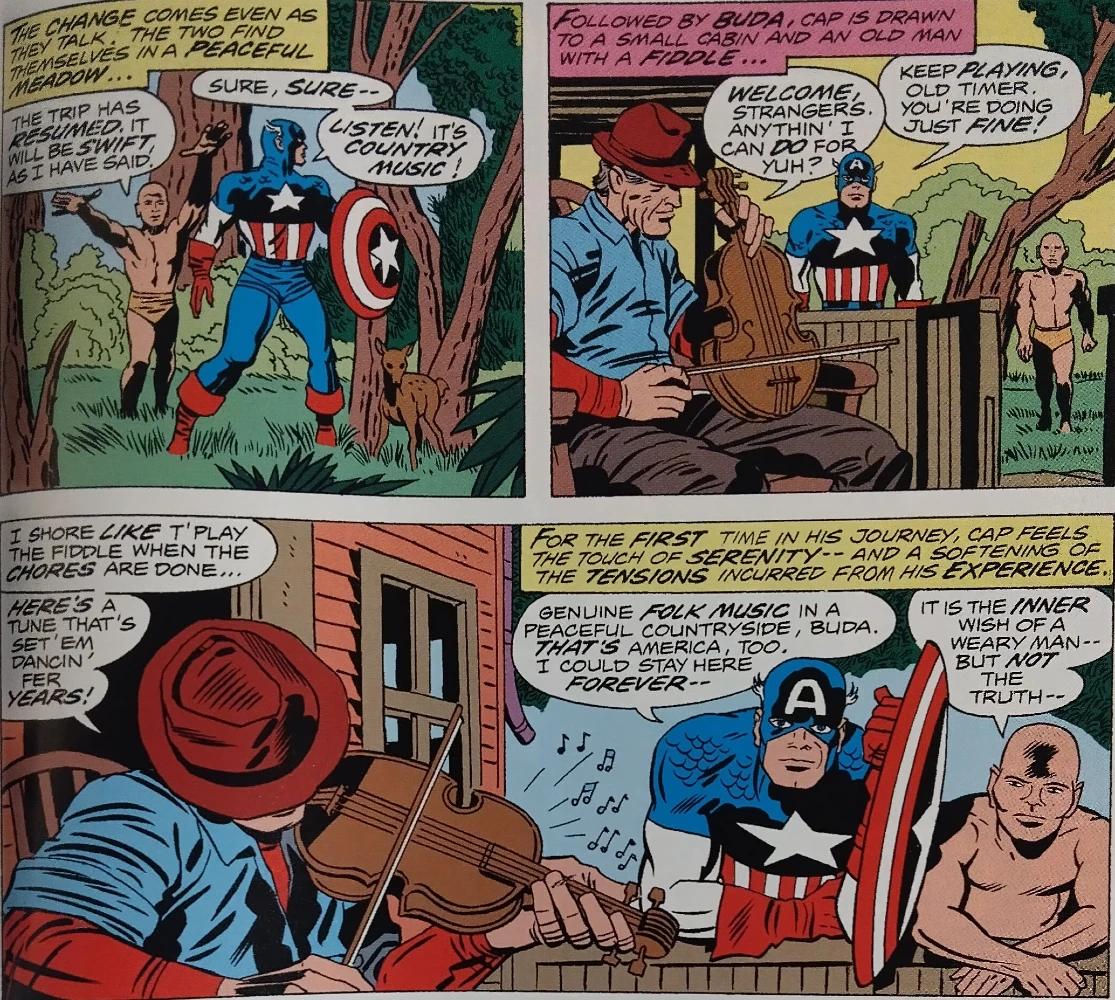
Some may note a brief nod to folks without certain opportunities as vague, drawing a small, unsatisfactory amount of attention to the country's continued problems while holding higher that positive note (and even putting a positive spin on the negative by having Cap declare that people without those opportunities just need the fortitude to create their own). I can see why Kirby skirted around those matters. If you're creating a celebratory comic, I would think your attention would be turned mainly towards the positive. Again, Kirby isn't being overly optimistic or all that pretentious; this space just isn't the place to vocally condemn continued practices or highlight lingering inequalities. Still, people may find themselves validly disagreeing with some of Kirby's takes.
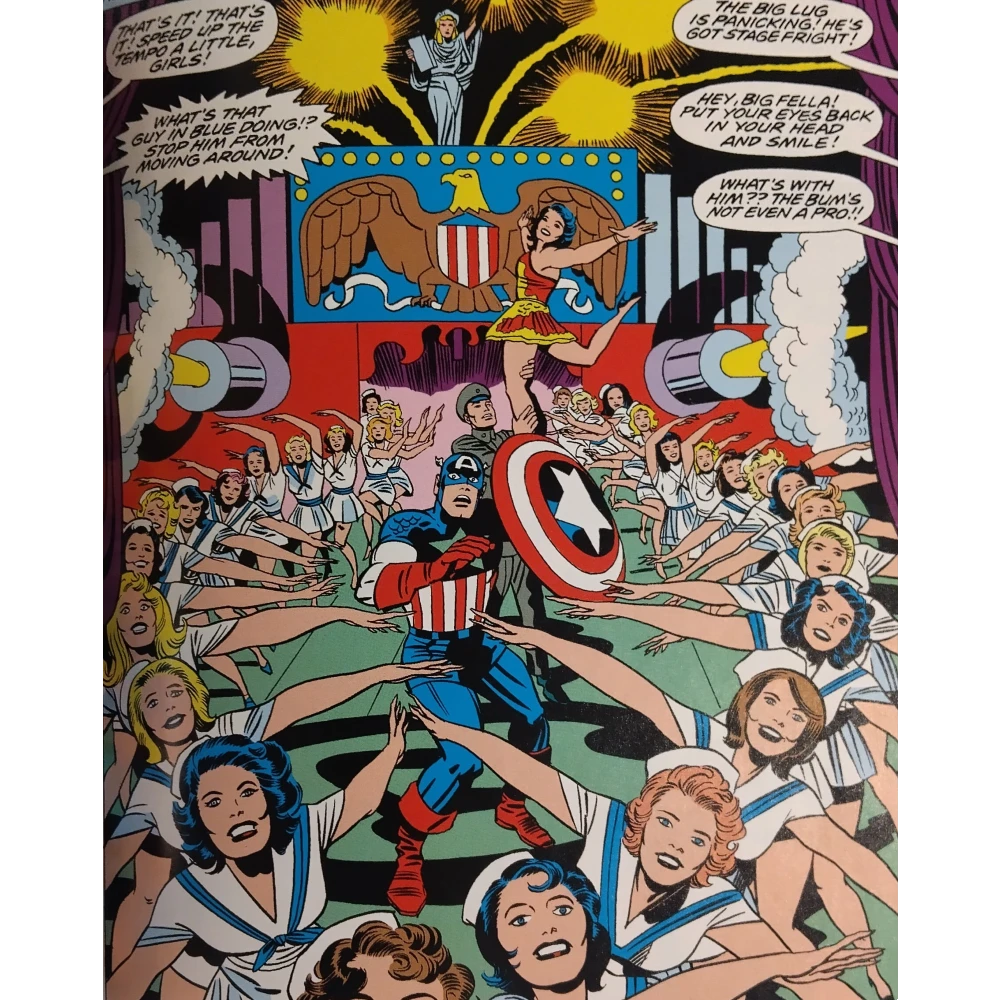
If anything, we can likely agree with Kirby on two points: one, we've not overcome all threats to peace, internally and externally. Two, this country is more than just pageantry designed to celebrate ideals. One of Kirby's best sequences lands Cap in the middle of a patriotic movie scene dripping with red-white-and-blue iconography. It's Kirby's most visually striking scene and his most symbolic; where other moments may rely a bit too much on dialogue, this scene dramatizes his theming as Cap must wrestle with the sheer absurdity of condensing the country down to a filmed musical number. Whether you ultimately agree with Kirby or not, he at least has Cap tear through the surface level fabric of meaning to find something true and tangible to celebrate.
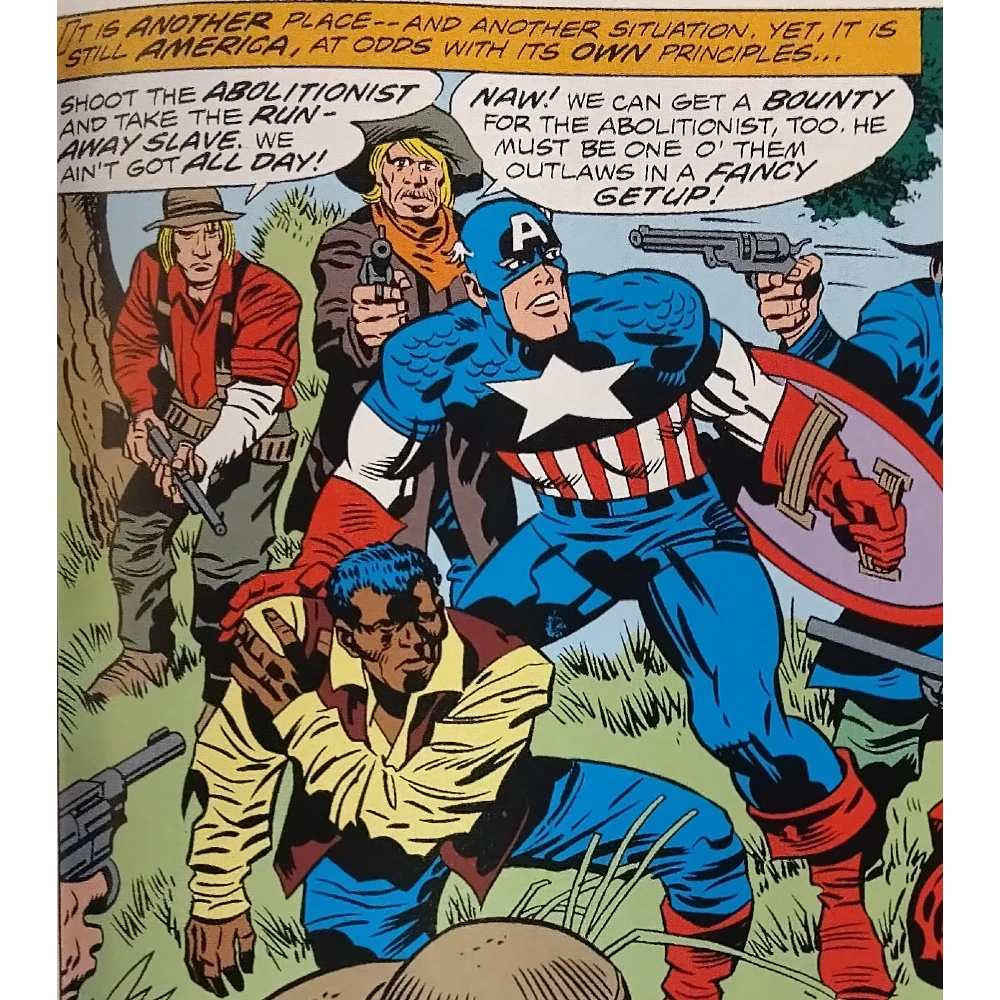
If only the same could be said for Cap himself. I noted him as "passive," which feels fair. He does help beat back some white bounty hunters tracking a runaway slave and confronts the Cavalry members sweeping down on Native American fighters, but his role is largely as a drifting observer. Kirby doesn't really ground Cap's journey in any particular need–other than the Contemplator's say-so, we're not given much of a reason for why Cap needs to take this journey. The Elder just kinda forces Steve Rogers on a trip through time for Kirby to make his broader message.
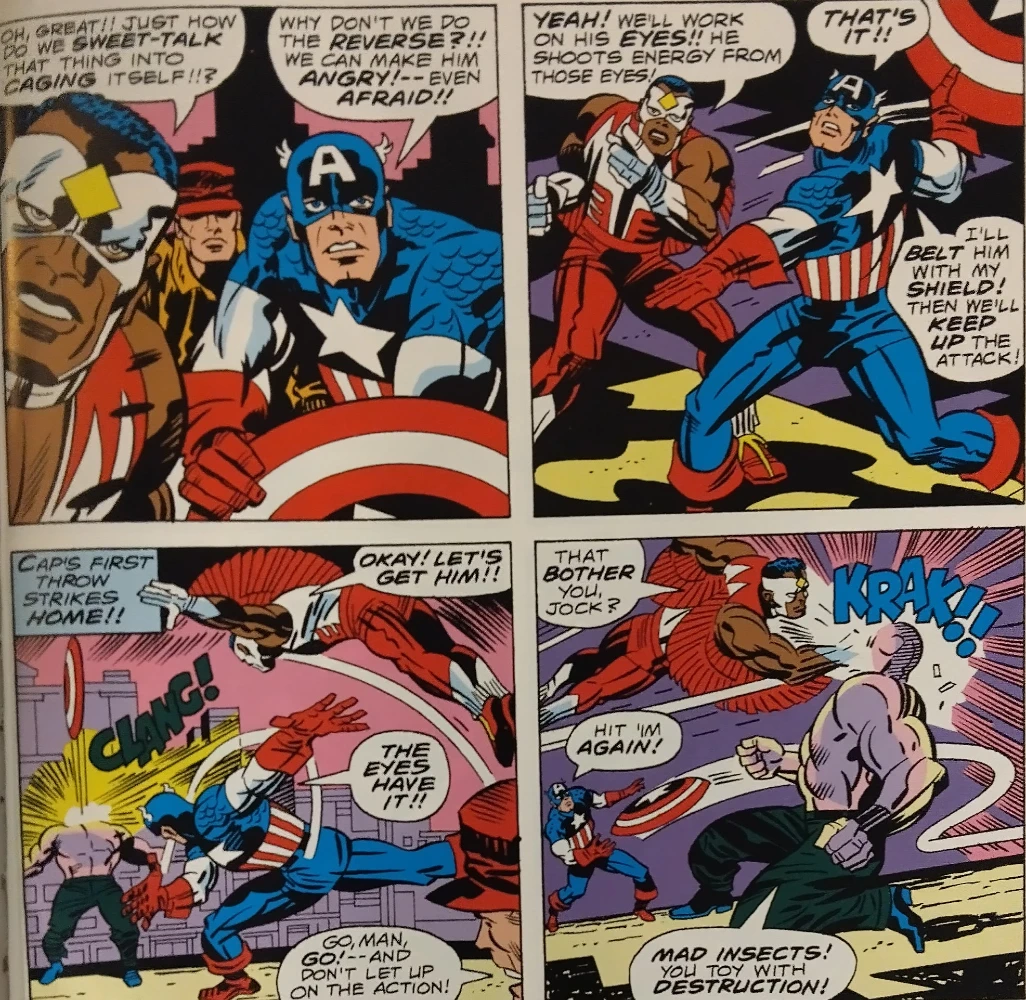
Fortunately, Steve is allowed greater agency in the other issues Kirby writes and illustrates, teaming up with his pal Falcon to take on a few alien monsters, a hulking behemoth powered by the consciousness of a violent gent from the future, and some mental hospital patients. Cap dives into the action here, and while none of the narratives are spellbindingly brilliant, he at least shows up physically. Unlike dealing with bounty hunters in the 1800s, Cap can make an impact here, Kirby showcasing the First Avenger's vaunted heroism foremost.
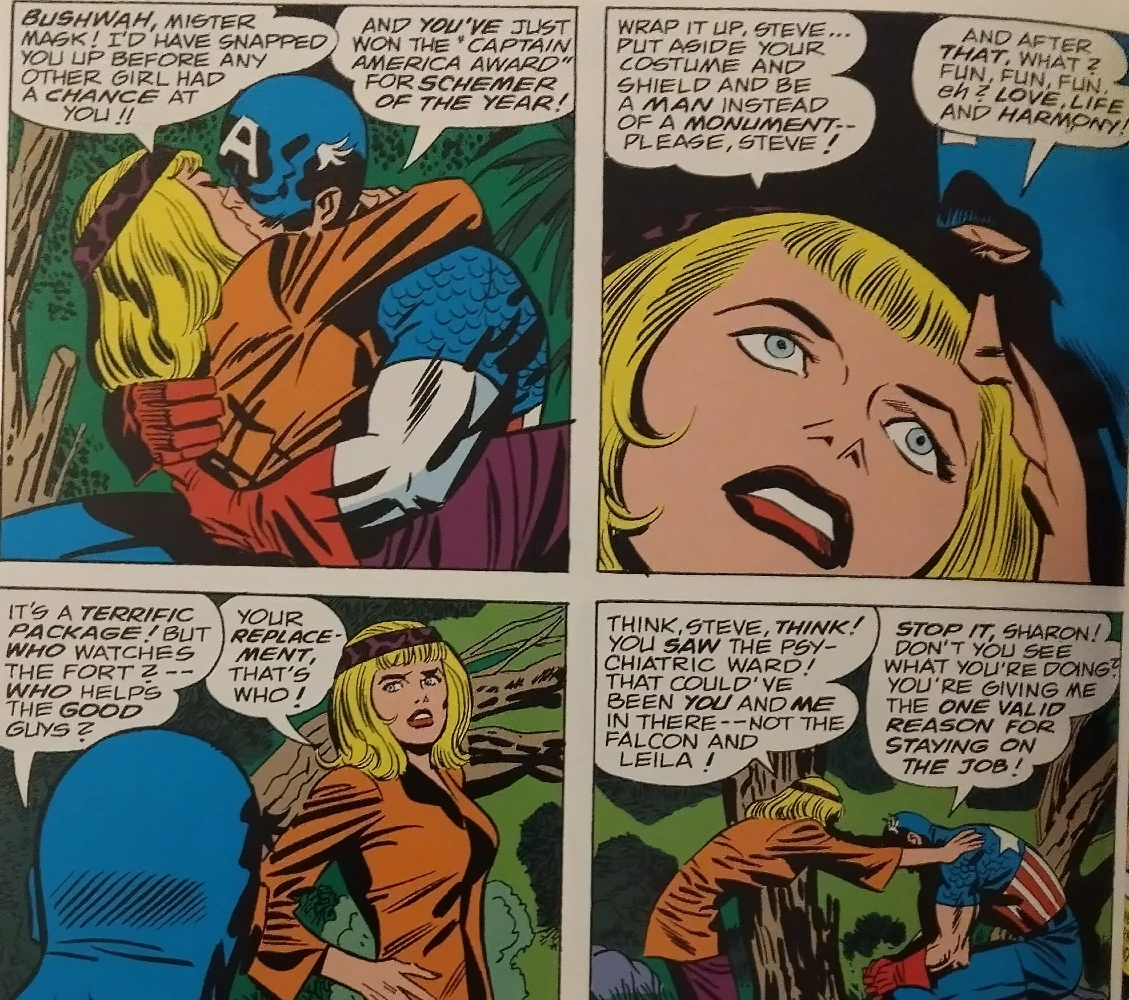
Kirby tries his darndest to wrangle a heartfelt conflict within Steve Rogers the man as well. Across a few issues, Steve finds himself conflicted with his own identity and how his continued adventures rankle his relationship with Sharon Carter. It's the classic "guy dips out to save the world" bit, with the added emotional benefit that Sharon knows Steve's costumed identity. A couple of pages feel genuine in how Kirby grapples with the concept, with Steve weighing the pros and cons between continued superheroism and potentially setting aside his star-spangled supersuit…
…even if Kirby leverages some awkward tension to make his point. Cap, sitting by the phone awaiting a call from Sharon during a late issue, blatantly refuses to help SHIELD out with a disaster until the last possible moment, evidencing a level of selfishness you rarely see from Steve Rogers. Is he allowed his personal wants and needs? Absolutely. Kirby just fails to provide the scene with a level of logic. Elsewhere, it's clear that Kirby, while a step-up writing-wise from contemporaries like Lee, is still a man embroiled in his heyday. I'll likely discuss this in more depth in the third and final volume I'm reviewing, but some of Kirby's plot points and his choice of villains feel dredged up from the 60s, the writer/artist's style feeling somewhat stuck in an earlier time.
(I also can't review this volume without referencing my favorite sequence: in a scene where Cap meets Ben Franklin in the bicentennial special, Franklin instructs Betsy Ross to sew a flag…based on Cap's costume! Cap bolts, completely flummoxed that he served as the inspiration for America's flag, which is the exact symbol that inspired his own uniform! Kirby dismissively makes a "chicken or egg?" type reference, but he largely forgoes the paradox he's just deliberately invented. So I'll pose the question to you readers: which star-spangled swatch of material influenced the other?)
There's no denying Kirby was a master of his craft, and I find that an arc like "Madbomb" shows he could construct narratives which were thoughtful for the time. But he was writing Captain America in an era where Chris Claremont was introducing multiple story arcs and character subplots in X-Men, Jim Starlin was careening the cosmos and exploring identity with Adam Warlock, and Don McGregor was crafting a sophisticated portrayal of a certain Wakandan king. These issues, heartfelt as they are, lack that sophistication. There's material here to enjoy–I find the treasury special a perfectly balanced portrayal of the American spirit, even if Cap feels like a static participant–but there's also a sense these issues are a tad dated, a strange combination for narratives written to celebrate a nation's continual growth. Ultimately, even though Kirby's portrayal of American history is a unique venture framed by his recognizable style, "Madbomb" proves the stronger bicentennial-based narrative if you're looking to read some of Kirby's 70s output as a way to celebrate this 250th birthday.
Now get out there and launch some fireworks.