(Strand)om Stories: X-Men: Onslaught Aftermath Review
Post-Onslaught characterization battles for supremacy against mediocre plotting in this collection
—by Nathan on August 31, 2026—
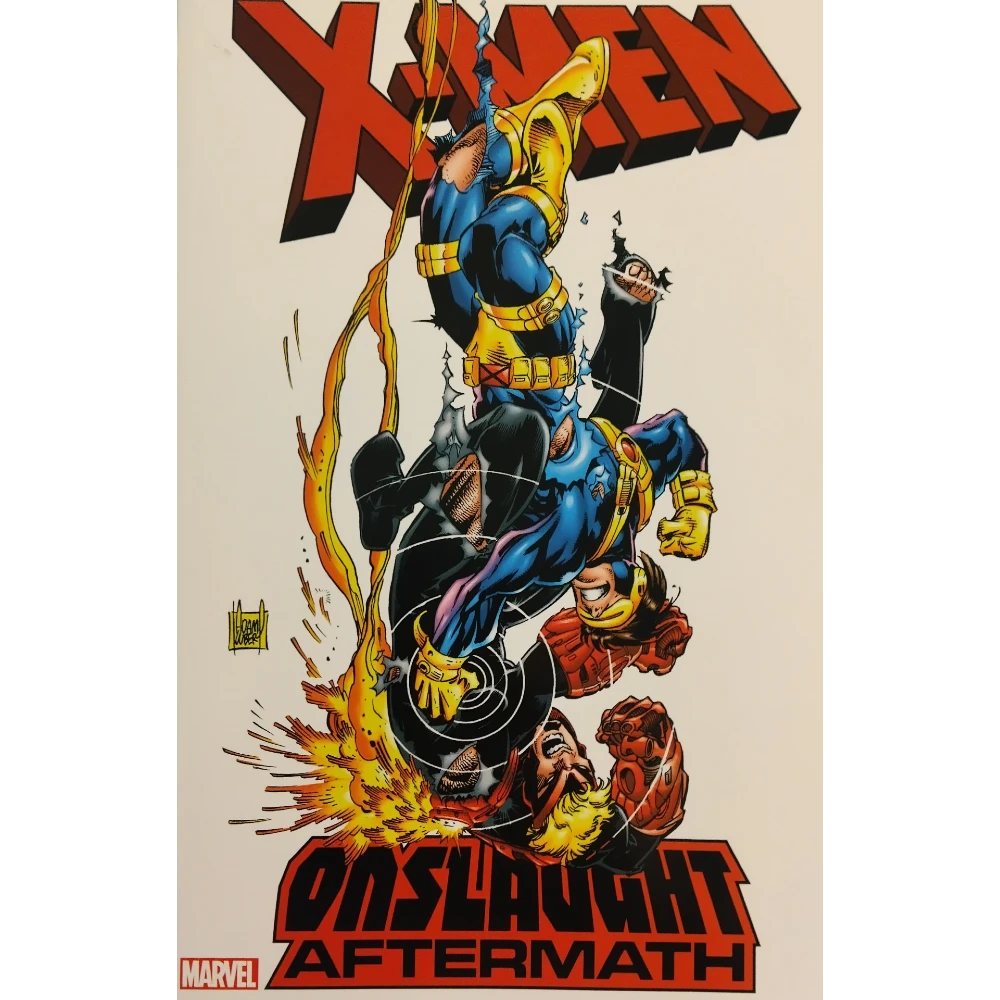
Exactly a month ago, we examined the universe-altering crossover event known as "Onslaught." Marvel shook their world to its foundations by introducing a psychic supervillain whose defeat required the seeming deaths of several heroes (who, in reality, were ushered into a pocket universe and revamped by some returning Image Comics' founders) in a final showdown for the ages.
At least that's what Marvel wanted you to think.
I'm sure "Onslaught" has its fans. I cannot number myself among them. The format I read, at least, told a somewhat disjointed story that has a lot of build-up for a fairly disappointing payoff. Heck, as I mentioned in that post, I wasn't originally planning to review "Onslaught" in my examination of some of these 90s Marvel stories. I wasn't planning on picking up this volume either. But, as they say, in for a penny and all that…
"Onslaught," though not a fulfilling epic by any stretch of the imagination, piqued my interest by proposing a question other stories often have done: where do we go from here? What's next? One of comics' many joys is that it is a sequential artform, promising a never-ending cavalcade of stories to explore. With each ending, there generally comes a new beginning. Thus, with the finale of "Onslaught," there come consequences.
The good folks at Marvel have been kind enough to pack those ramifications into the volume we're reviewing today. This collection doesn't quite pick up where "Onslaught" leaves off–I'm missing a few epilogue issues, including one where Professor X turns himself over to the authorities–but as the title touts, it contains more than enough material to explore how our mutants navigate these new days.
X-Men: Onslaught Aftermath
Writers: John Francis Moore, Scott Lobdell, Terry Kavanagh, Howard Mackie, Ralph Macchio, George Perez, and Jorge Gonzalez
Pencilers: Steve Epting, Joe Madureira, David Perrin, Nick Gnazzo, Bernard Chang, Cedric Nocon, Andy Kubert, Eric Battle, Duncan Rouleau, Jim Cheung, Ariel Olivetti, Salvador Larroca, Adam Kubert, Jam Calafiore, Darick Robertson, and Greg Land
Inkers: Kevin Conrad, Tim Townsend, Art Thibert, Harry Candelario, Jon Holdredge, Al Milgrom, Chad Hunt, Mark McKenna, Dan Green, Andrew Pepoy, Troy Hubbs, Ariel Olivetti, Vince Russell, Jesse Delperdang, Scott Hanna, Mike S. Miller, and Rob Hunter
Colorists: Marie Javins, Steve Buccellato, Kevin Somers, Joe Rosas, Glynis Oliver, Tom Smith, Brad Vancata, Malibu, Team Bucce!, and Graphic Colorworks
Letterers: Richard Starkings, Comicraft's Kolja Fuchs, and Albert Deschesne and Co.
Issues Collected: Uncanny X-Men #338-340, Uncanny X-Men Annual '96-'97, X-Men #58-61, X-Men Annual '97, X-Men Unlimited #12-14, and X-Factor #130
Volume Publication Date: April 2019
Issue Publication Dates: September 1996, November 1996-March 1997, May 1997 October 1997
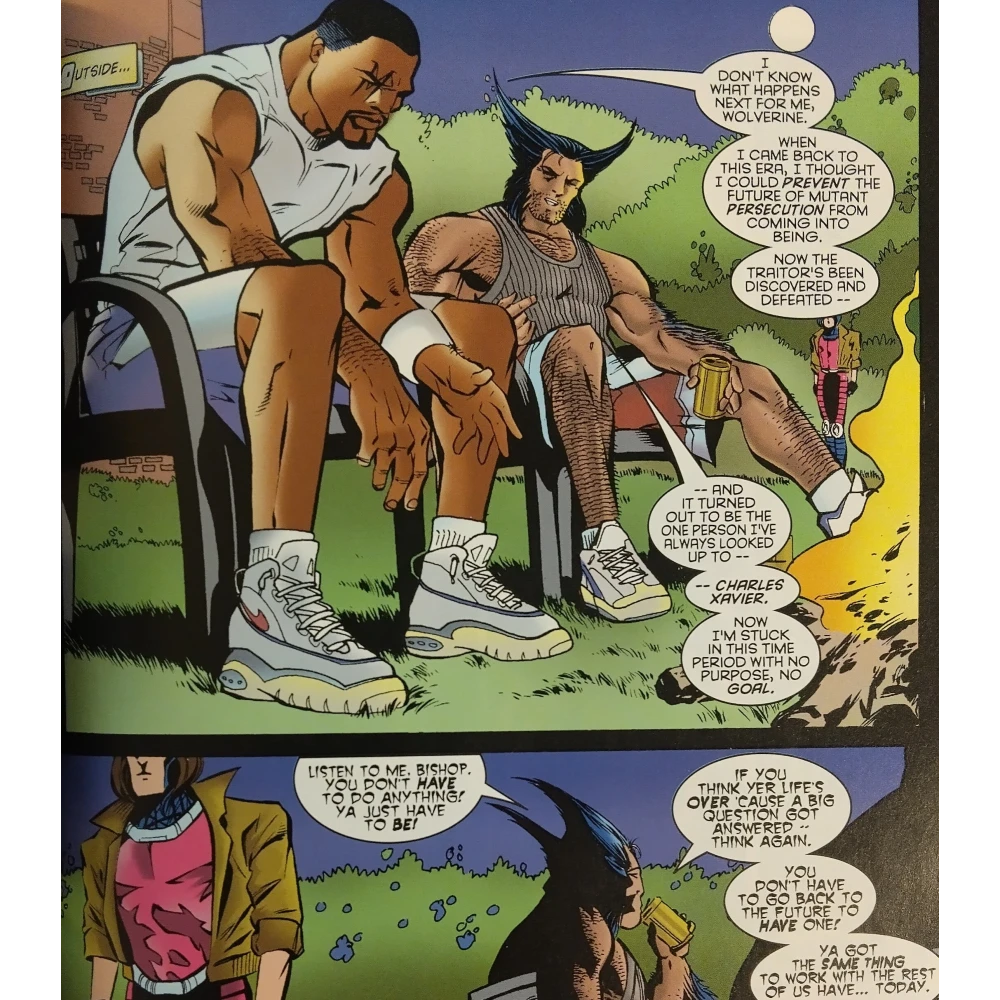
One seeming sin I am trying to forgive this volume of is its somewhat muddled attempts at cohesion. The issues here are laid out, more or less, by publication date rather than by series, meaning you get some gaps between story pieces and character appearances that would make more sense if you were reading individual series on a monthly basis. Writers try to establish some continuity, but the effect of reading this full volume is somewhat jarring.
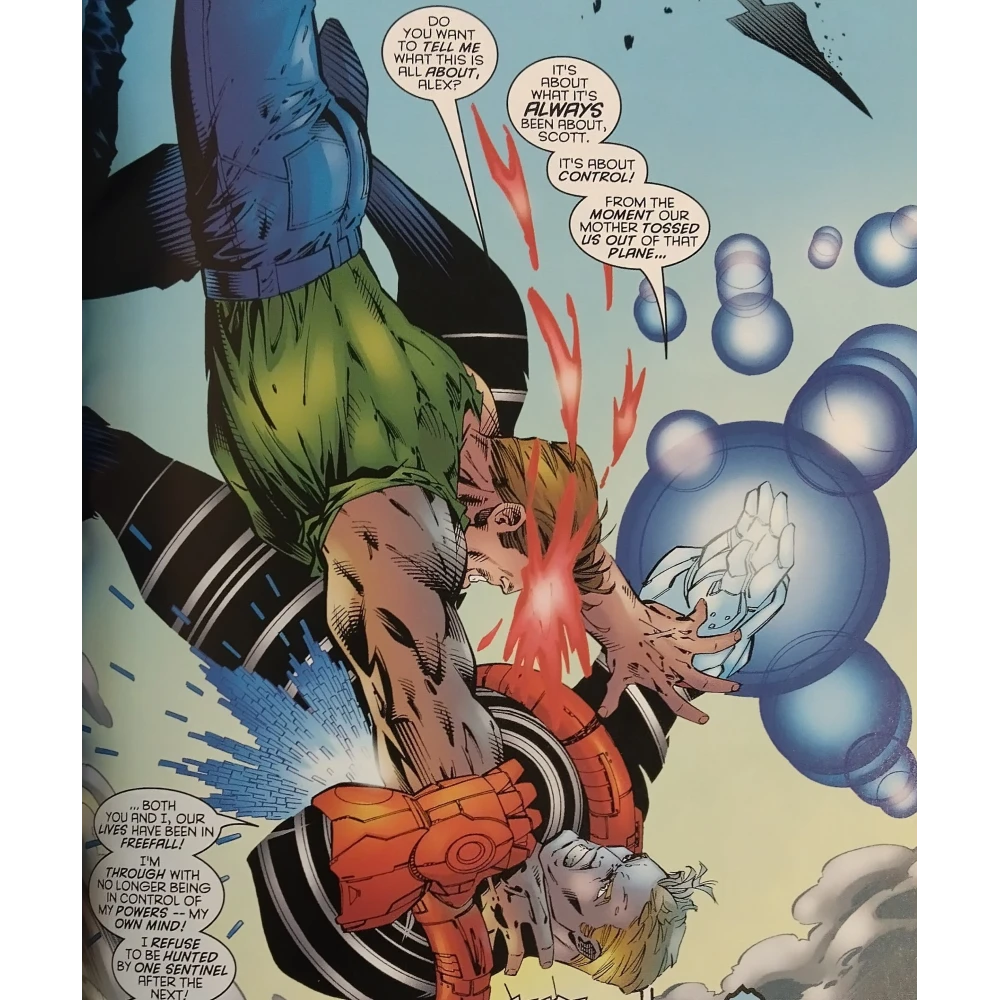
Case in point: X-Men #38 and X-Men #39 bookend Uncanny X-Men #339, an issue which takes place largely on a flight heading to London. Yet both X-Men issues are set in New York, and though writer Scott Lobdell pens all three issues, there's little-to-no explanation, other than a few asides, as to the jarring shift in setting. I would even argue Lobdell sending several characters overseas momentarily really has little bearing on the plot, other than to stage a visually engaging aerial battle between some folks.
So come into this collection prepared to be tossed around a bit like any passenger experiencing turbulence on a flight inhabited by super-people (it's bound to happen). We're not necessarily in for the smoothest reading experience. If you're able to deal with the air-sickness from such jostling, you'll find yourself deep in a volume trying to make sense of the post-Onslaught shape of Marvel's mutant corner of the universe. The efforts are valiant, the effects debatable. Of course, that's the entire point of a review like this, isn't it? The writer, debating with what's been written.
Looking at the volume as a single unit, we're tasked by our writers to deal with the impact Onslaught's rampage has left on the world, specifically on that mutant corner. Other series, as far as I am aware, dealt with the "missing heroes" aspect of the aftermath; though these issues touch on that, they're far more interested in seeing how our mutants navigate a world where Professor X has been imprisoned and anti-mutant sentiment is at an all-time high, thanks in part to the political ambitions and machinations of one Graydon Creed. Therein, you get conflicts sewn, such as Havok and his increasingly bitter outlook against the ever-stalwart Scott Summers, Alex having abandoned Xavier's dream and pitting his frustrations against Scott's continued faithfulness (Alex, by the way, is responsible for that aforementioned aerial battle). Their disagreement is a philosophical one fought through physical means, and though a wholly different issue sees Alex's new Brotherhood of Evil Mutants team up with some X-Men temporarily, he and Scott more often trade both barbs and blows.
Our writers endeavor to sew a theme through stories such as these, maintaining that sense of unraveling Lobdell and others introduced in "Fatal Attractions." In the wake of a creature birthed by Xavier's actions, it seems natural for his very mission to be called into question. Our writers unpack that here, through the Havok/Cyclops kerfuffle, old foes taking advantage of our mutants' current position, and other mutants who find themselves affected by broken relations between their kind and the humans who blame the X-Men for Onslaught.
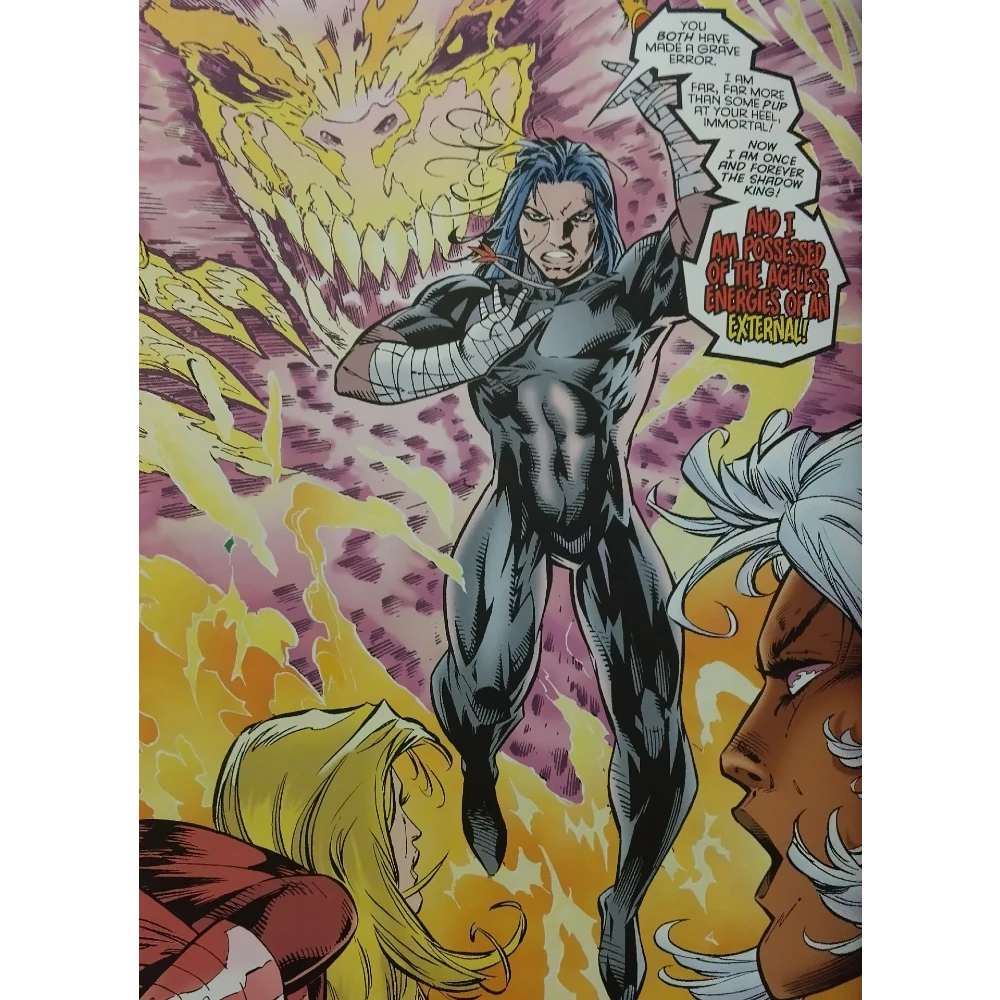
The effect straddles a line between direct and subtle, our writers not wanting every moment of every issue to scream "Remember what happened with Onslaught???" at their readers. In sequences such as the Havok/Cyclops conflict, it works decently, which I'll chalk up to our writers stressing their characters over circumstances. When the narratives themselves come into play, stories feel somewhat divided in terms of quality and how well they convey this central conflict. One annual has no mention of the Onslaught event, instead focusing on a misadventure primarily starring Carol Danvers during her time as Binary. A multi-issue arc featuring Storm facing the Shadow King steers away from current conditions, which would be fine if it weren't a fairly dull read. Maybe I'm being presumptuous by believing that the content of a volume called "Onslaught Aftermath" should completely deal with the fallout from said crossover event (or...maybe I'm not...?). Pieces of it do, and they're the strongest pieces, but the issues which don't tend to falter.
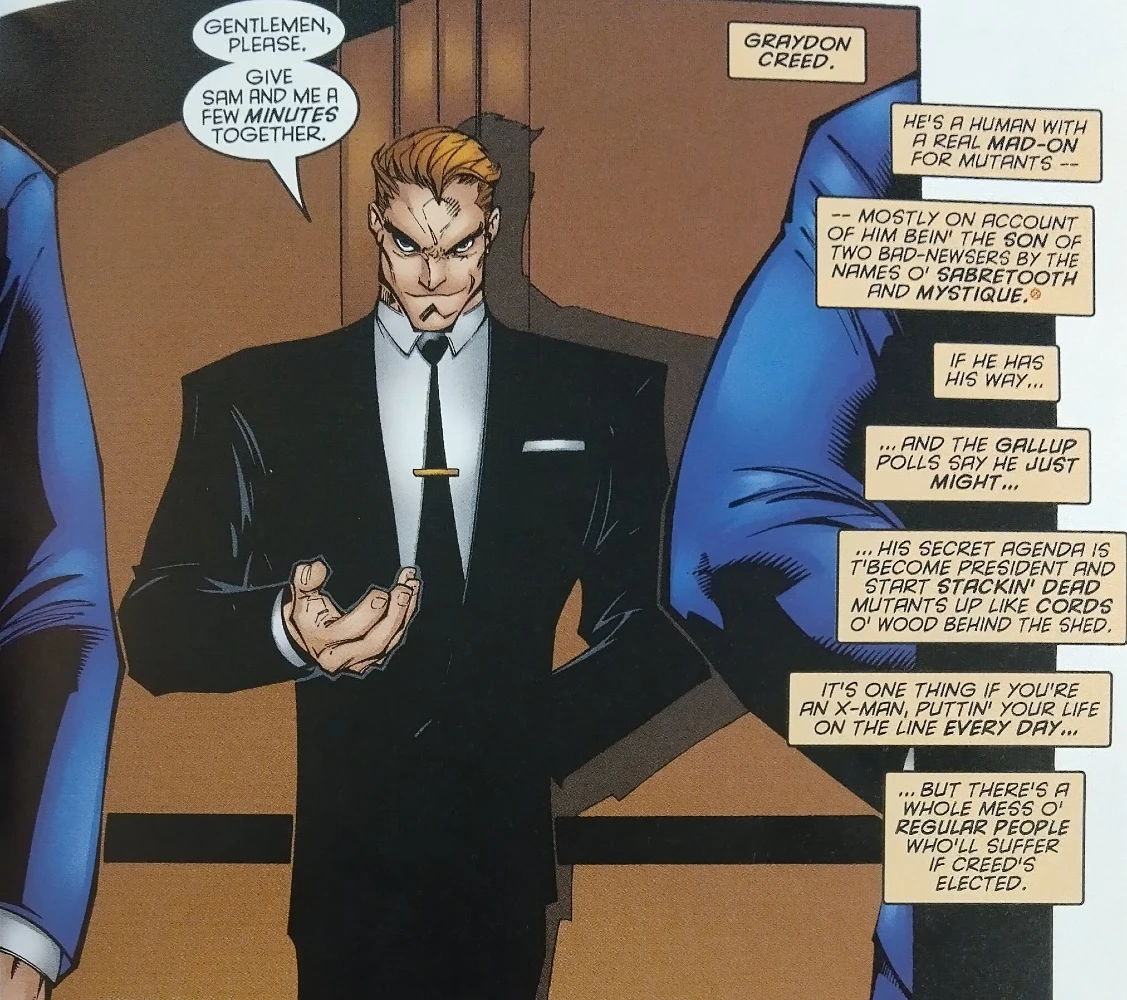
Better utilized are background elements which help move along that rising anti-mutant sentiment. A good chunk of this volume deals with the presidential candidacy of the aforementioned Graydon Creed, a former adversary of Sabretooth's and–oh, yeah–Victor's son. Woven through details and references across a handful of issues, the Creed arc represents the new status quo fairly well, tapping into the anti-mutant hysteria with a bit of political discourse that's only heightened when his mother gets involved. Graydon's own arc gets its own "aftermath," referenced in some additional issues which help it feel like a fairly principal throughline to this post-Onslaught era. This subplot is the kind of writing I appreciated about the volume: subtle at first, teasing an ongoing arc, before asserting its importance and culminating in a way which promises further repercussions.
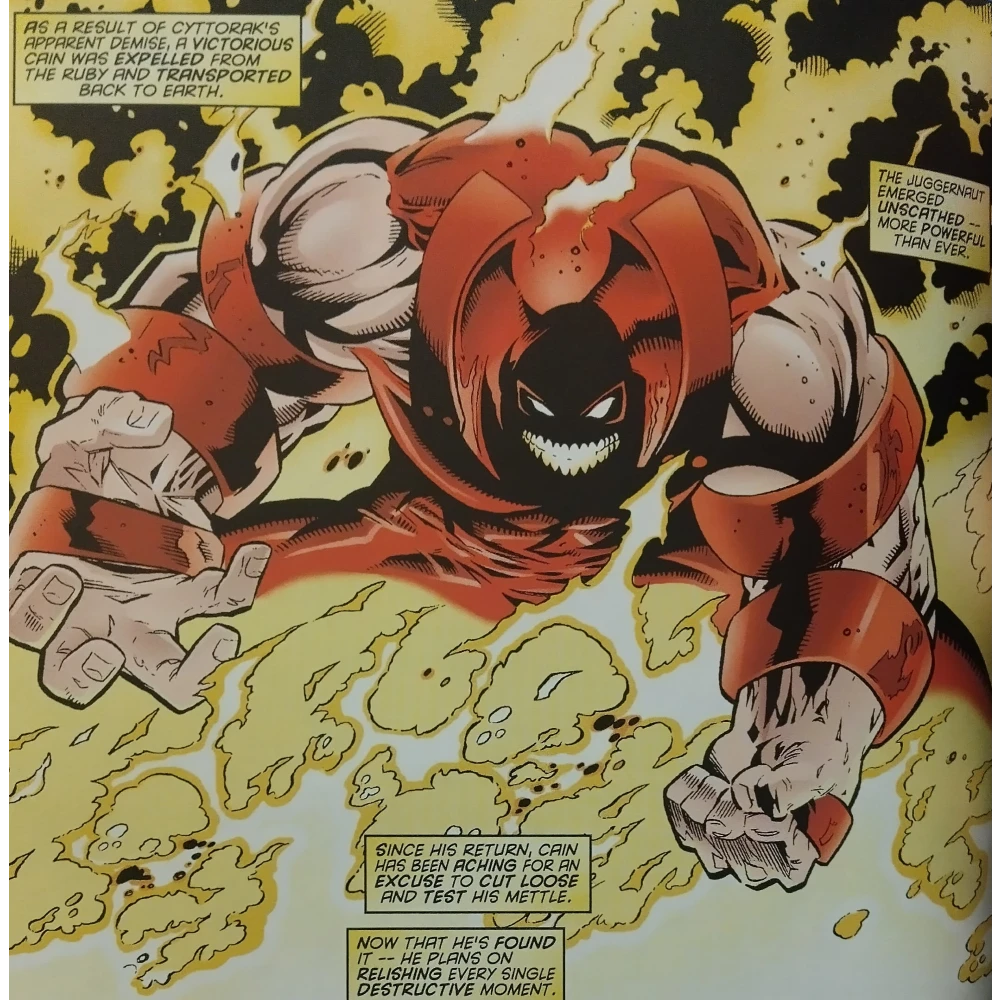
Even more interesting developments occur when our writers plant our favorite mutants at the forefront of these issues and have their characters carry the narratives. I've already mentioned the Cyclops/Havok spats, but other characters are allowed to plumb these post-Onslaught days themselves. The Juggernaut, trapped in his own Gem of Cyttorak, is given a whirlwind tour of his life, finding his strength again in the wake of an utterly humiliating defeat; a later issue doubles down on Cain Marko's return as an unstoppable engine of destruction. Across a few issues, Bobby Drake handles his own emotions as public tempers flare and drag his father into the conflagration; Joseph, a clone of Magneto, is asked to wrestle with his former self's legacy as he strives to be his own (X-)man, wondering just how different he is from the villain who pushed Xavier over a moral precipice; Storm is presented with mistakes in her leadership of the X-Men, held accountable by others as she attempts to make certain amends.
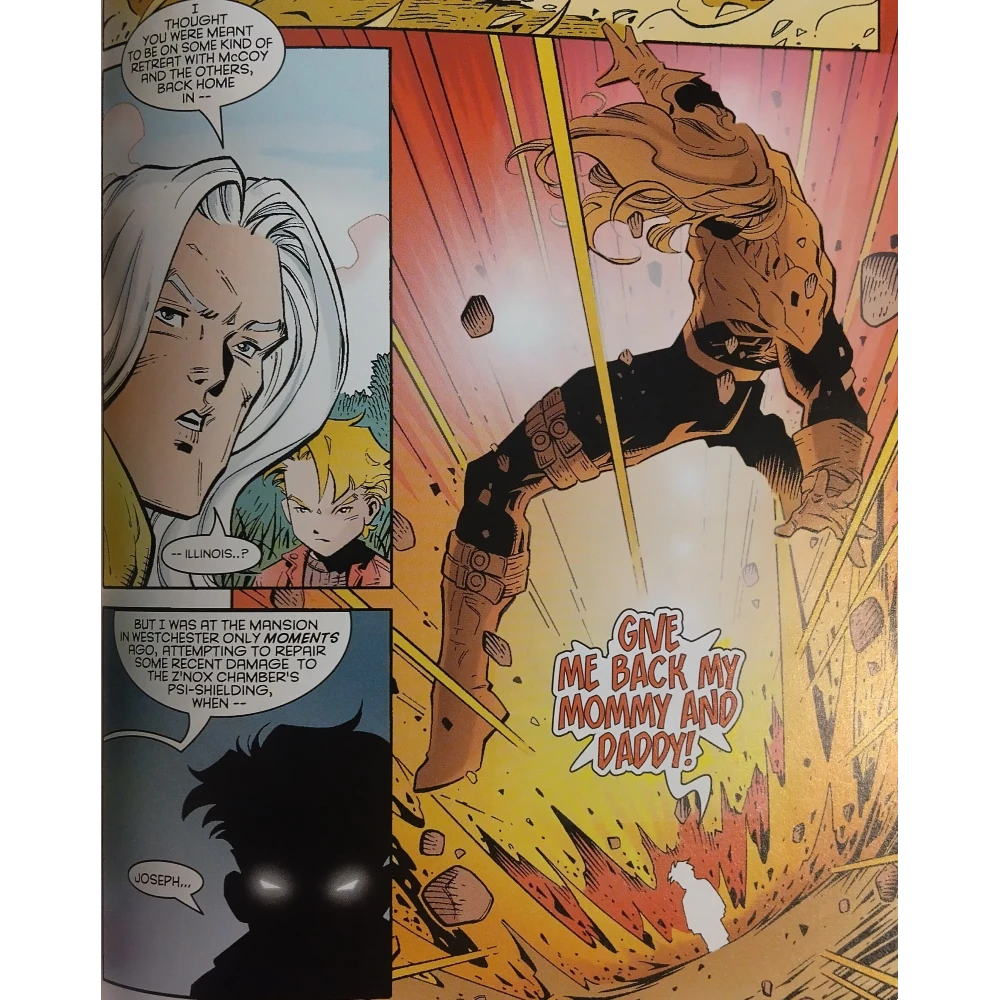
These elements–exploring the post-Onslaught era, the anti-mutant sentiment, tapping into engaging characterization–come to a head in the volume's strongest issue, focusing on Franklin Richards. Terry Kavanagh and Jim Cheung's X-Men Unlimited #14 is a standout; it's actually the volume's back cover art, depicting Franklin on that issue's cover, which convinced me to buy the trade. Franklin, having lost his parents, just sits with his head down. Kavanagh and Cheung adequately explore Franklin's own life in the wake of Onslaught, living with Hank McCoy's parents in Illinois. He feels lost without his parents, friends of his are targeted by mutant haters, he fights Joseph, believing him to be Magneto and holding him responsible for the FF's seeming demise. You feel the anguish the young boy experiences as he tries to come to terms with this new, tragic status quo.
I wish other issues in the volume were just as strong, nicely tapping into that intersection of character moments and ongoing plotting where we find our not-so-merry mutants. If one constant is present here, it's that life is darn tough. Not that it hasn't always been that way for mutants, but it seems especially true now. Why else would Iceman and Cannonball go undercover to work for Creed's campaign? Why else would mutants come to blows with each other over how to face this ever-uglier world? One of the other better issues in this volume cleverly sets up a seeming mutant paradise, causing some fiction within the reader as they try to reconcile the reality they've been previously reading with this status quo shift, before ripping the rug out from under them. The darkness and evil are there, ever present in this world that seems to be drifting further from Charles Xavier's dream. And he's not there to lend a hand.
You can call this volume disjointed, if you'd like. It has some strong elements, especially when it draws its characters to the forefront of the action and allows them to represent the status quo. Franklin as the poster child for the Onslaught tragedy, Cyclops and Havok as dueling talking heads, Juggernaut finding himself after his brutal defeat at Onslaught's hands, or Joseph as a man seeking redemption for the real Magneto's crimes. When these issues follow plots simmering in the background, it can make for an engaging read. Yet you set those aside, you're left with a mishmash of tales tumbling over each other, some of which are less interesting than others. Though I suppose, if you promise an "aftermath," the reader shouldn't expect anything too neat and orderly, especially in the wake of a dude whose name is synonymous with a violent bombardment.