Distinguished Critique: Twilight Review
Obscure characters are updated for a sci-fi saga that seeks, somewhat shakily, to probe the depths of human nature
—by Nathan on July 1, 2026—
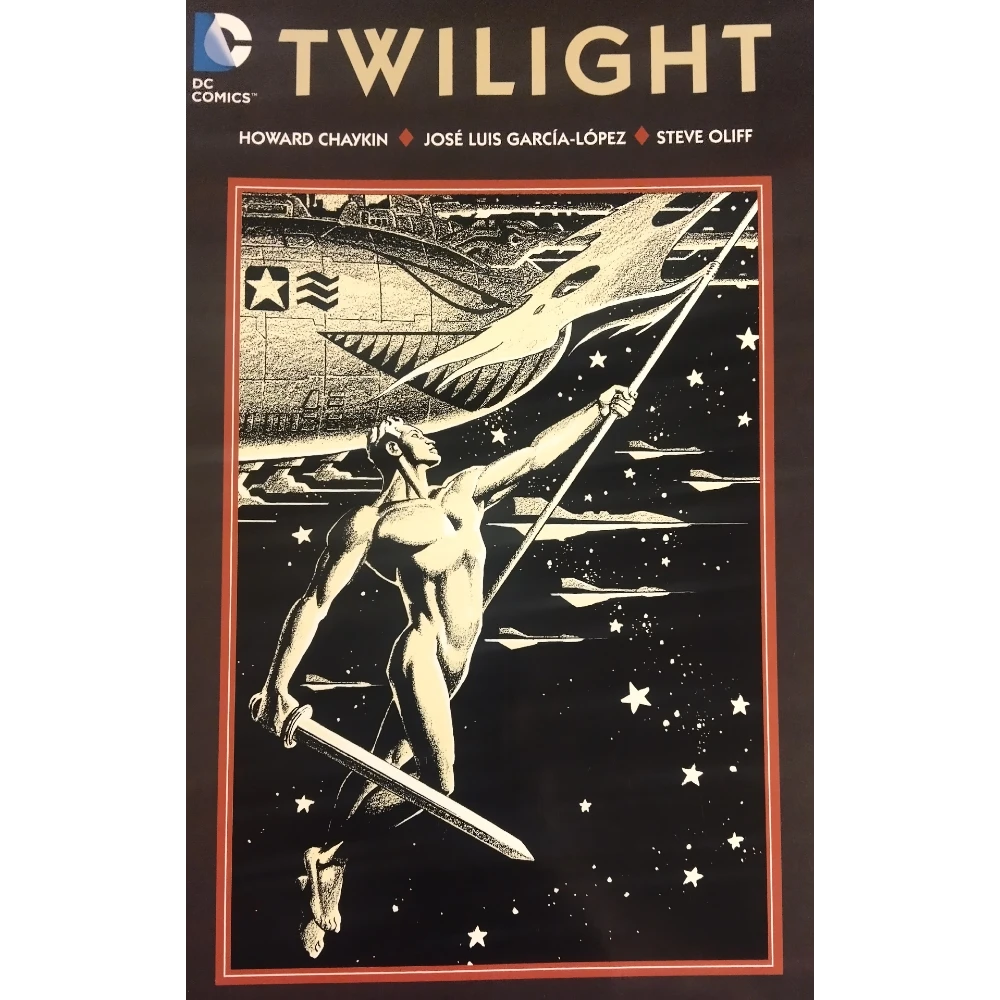
Today's review has nothing to do with vampires.
This is not a blog reviewing a DC Comics adaptation of a popular series of young adult fantasy novels (though DC has tackled vampires before). Several years before Stephanie Meyer sprung her vision of a teen romance starring immortal bloodsuckers on the world, Howard Chaykin provided a somewhat different narrative encapsulated by a single word defined by the last vestiges of light before nightfall.
If anything, the title of the limited series we're reviewing today points more dramatically to a different kind of "twilight." As in, Twilight of the Gods, the final opera in Richard Wagner's The Ring of the Nibelung cycle. As in, "Ragnarok." As in, the end of all which was once known.
Not to put too dramatic a point on it.
But this is not an adaptation of that twilight either. No Norse pantheons perish here. Leave that to Marvel. That general "end of all things" concept is what should sit most deeply with you. Chaykin and José Luis García-López craft a space opera that ushers in humanity's final days…but in a more metaphorical way.
Before I get too ahead of myself, let me note I'm reading this for the artist involved: García-López's pencils graced both a DC/Marvel crossover I reviewed starring the Hulk and Batman and, on a more serious note, a four-issue limited series dealing with characters bonded by the tragedies of the Vietnam War. Today's review surveys a series which echoes both the bombast of the former with the more soul-stirring tensions of the latter. A controversial author and a stellar artist pull their individual geniuses together to create something truly unique in the annals of DC Comics history.
Twilight
Writer: Howard Chaykin
Penciler: José Luis García-López
Inker: José Luis García-López
Colorist: Steve Oliff
Letterer: Ken Bruzenak
Issues: Twilight #1-3
Publication Dates: May 1991-July 1991
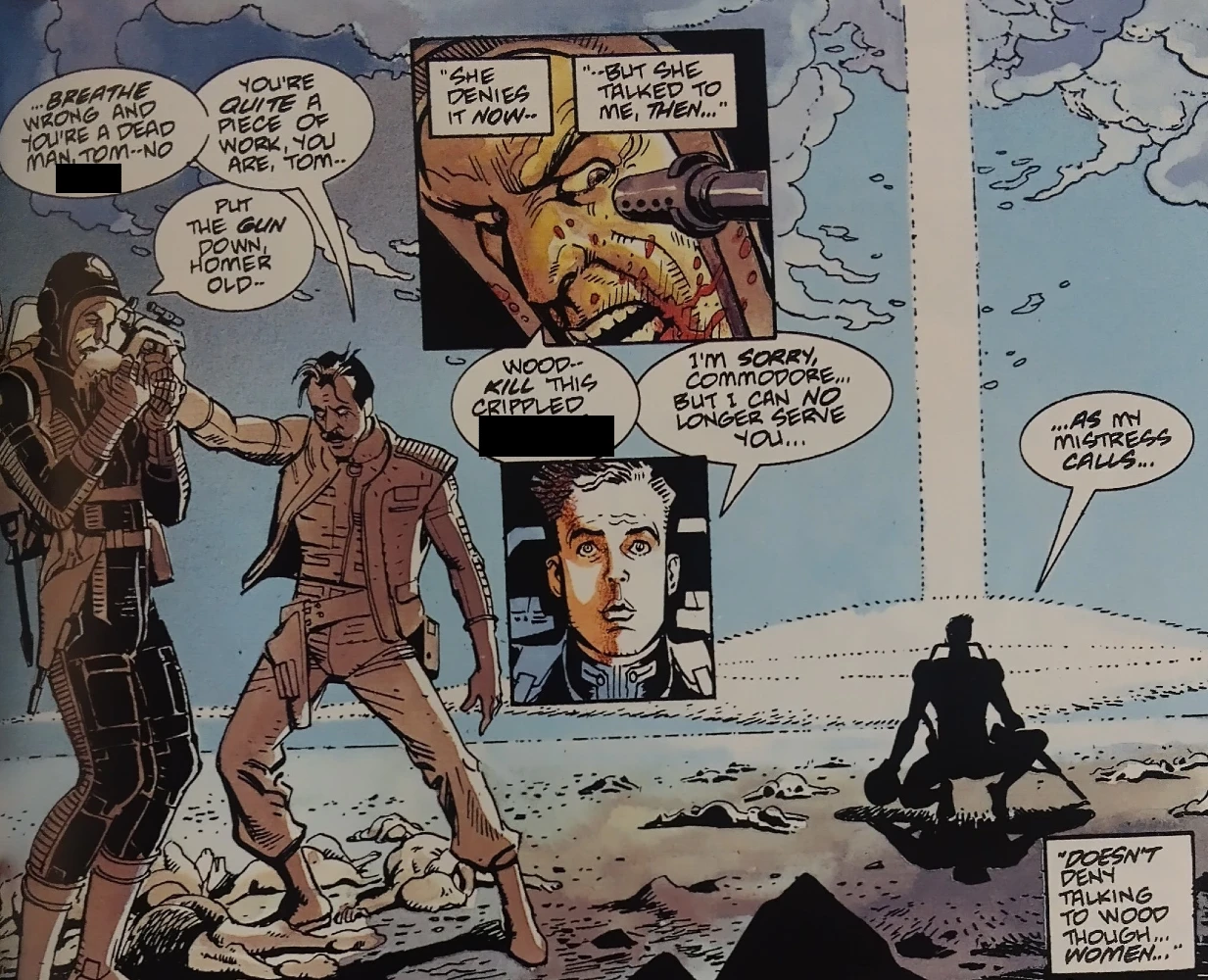
Three years (basically, to the publication month) after working with Gerry Conway on Cinder and Ashe, García-López lent Chaykin his impressive draftsmanship. I've reviewed little of Chaykin's bibliography on this blog, save his violent, conflicting take on The Shadow, released a few years prior to this series. For Twilight, Chaykin plays a similar game, reaching back into DC's storied past to take hold of what the collected edition touts as "DC's classic space heroes of the 1950s" and give them a post-Crisis freshening-up.
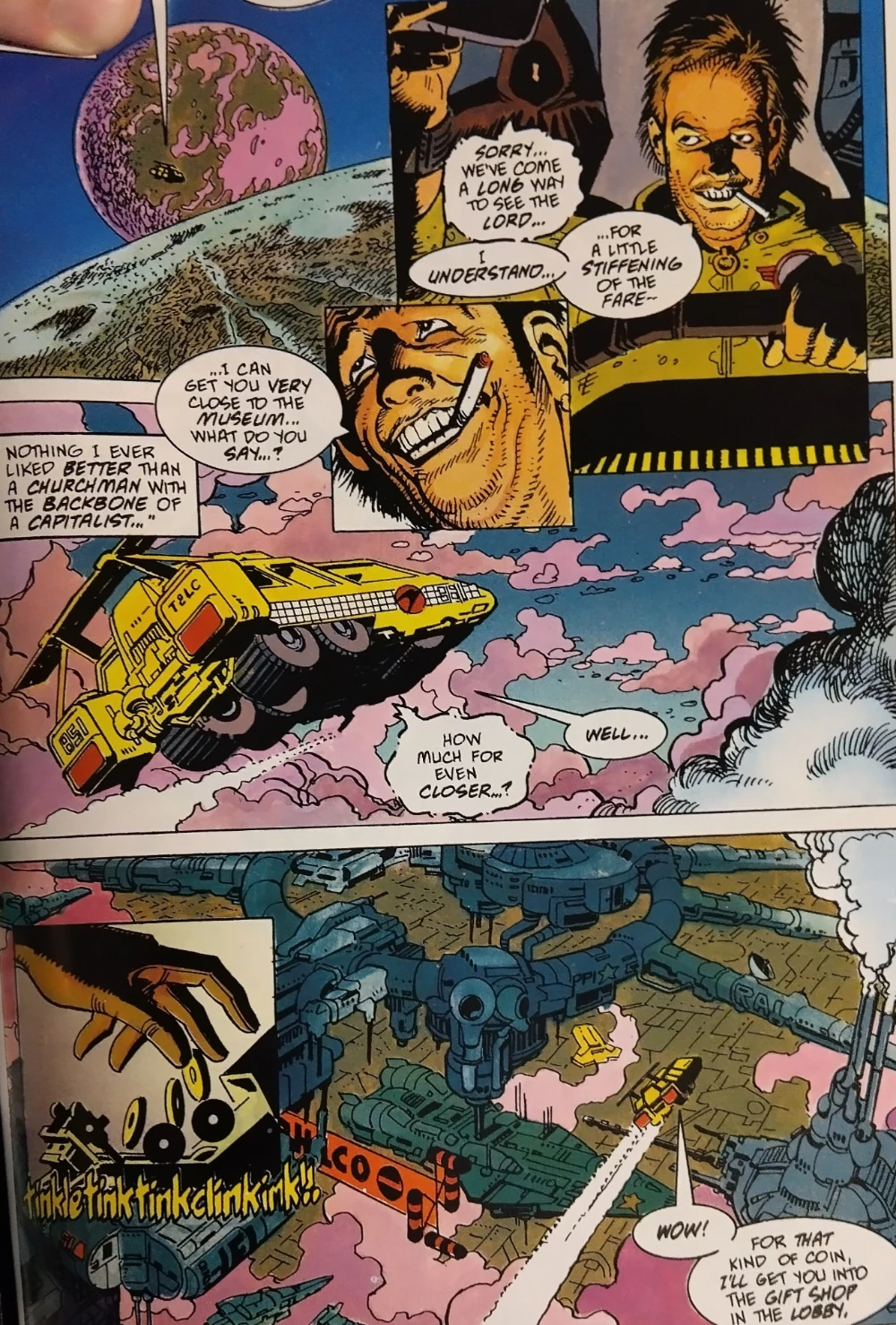
I barely read any comics from the 60s, let alone the 50s, so I entered this series blind as a Batman whose eyes have been gouged out without being radioactively replaced by radar sense. I knew nobody in this series. There's no Adam Strange, no Green Lanterns, no Hawkpeople. Just a bunch of characters I've never heard of, including a taxi driver named "Space Cabbie." He's never named "Space Cabbie," but that's who he is. Wikipedia says he was a character created in 1954. And no foolin'.
I'm not knocking Twilight because it's filled with characters I've never read in a single comic. That's on me. What it means is I didn't enter this the way I've entered other post-Crisis comics, in the hopes of seeing how various creators updated and rejuvenated classic heroes and villains. This series was a blank slate, allowing me to dive in with fresh eyes and no context. The resulting reading experience made for quite a ride, via taxi and otherwise.
Not knowing about any of these characters previously meant I had no immediate reason to care for anyone or hope Chaykin and García-López did these modernized versions justice. I found I needed to rely on how Chaykin situated these characters within the narrative itself, whether he could ground them in relatable circumstances and personalities I could draw some level of interest from. Though those situations quickly become cosmic in scope, there's a core humanity strung throughout the limited series which helps Chaykin keep his characters at the fore.
At its core, Twilight is about the downfall of humanity by fulfilling a great desire: immortality. An accident between several central characters and a race of long-lived aliens bestows those characters with eternal life, and a method is quickly found to synthesize alien blood into a solution for the rest of humanity. Oh, you can still die. It's just that old age and a failing ticker won't get you. Manufactured eternity for all humanity, explored specifically through the experiences of Chaykin's central cast For Karel Sorenson, the accident accelerates her to the head of a new religious order which treats her like a goddess. Reporter Homer Glint becomes, for lack of a better word, her publicist. And Tommy Tomorrow, the only one of the bunch who actually wanted to live forever, is determined to steal Karel's godhood from her and reshape the universe in his own image.
Y'know, like any good sci-fi villain.
When I say "downfall," I don't mean "absolute devastation." The Visigoths don't overthrow Rome. Society is not rent asunder. Chaykin and García-López use these events to explore a moral downfall, as humanity is at once divorced from a very important aspect of itself–its finite lifespan–and yet is clearly unable to handle its newly bestowed longevity. Karel becomes a god, yes, but she operates out of a space museum that's more tourist trap than temple, surrounded by iconography of herself. She needs a publicist, for heaven's sake. She hums her own hymns! Graft on whatever godlike longevity you want to, but those base instincts appear impossible to remove.
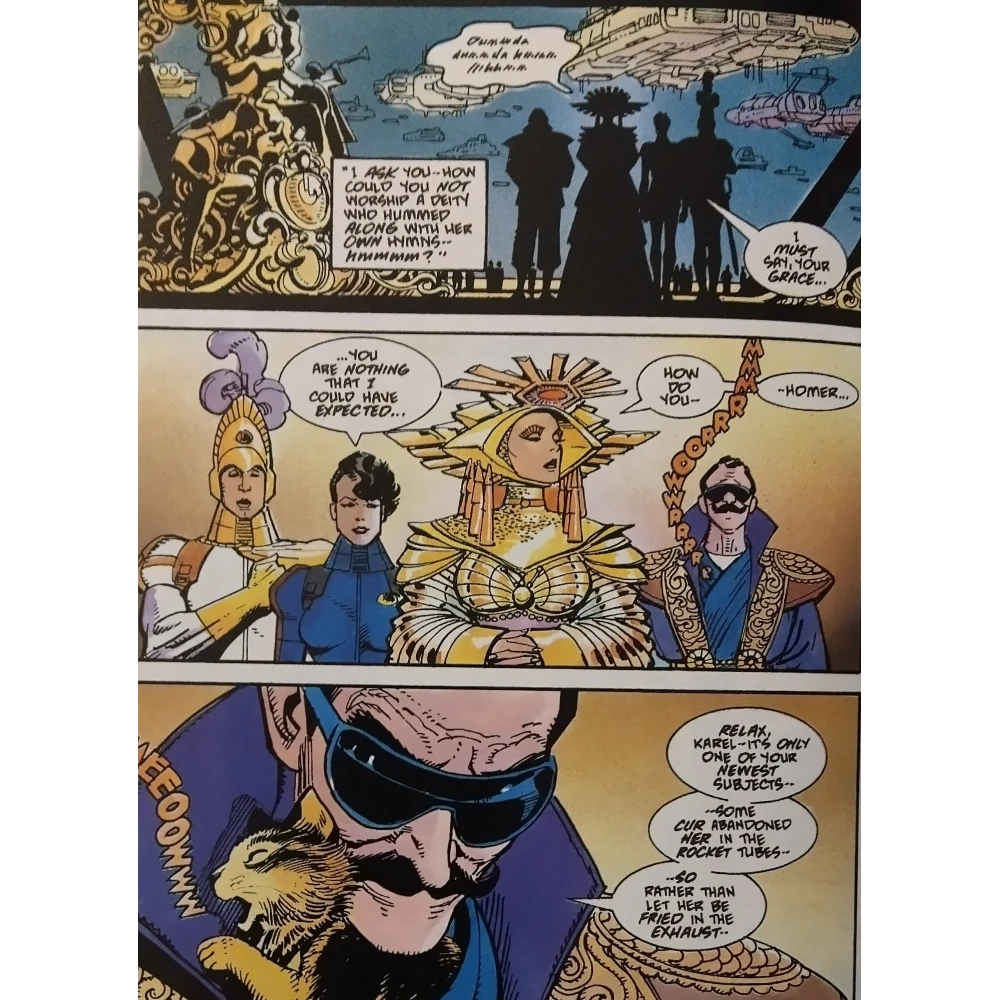
This extends to the rest of humanity and seems to be the driving theme of Chaykin's narrative: if we were blessed with immortality, our inherent imperfection would find a way to mess it up. Instead of conquering new worlds, making new discoveries, or pursuing new artistic endeavors, the masses of Twilight continue moving along a jagged path. They seek temporary relationships with robots, engage in gambling and cockfighting, and continue waging wars between factions who deny Karel's legitimacy as a goddess and undying believers who have sworn oaths of fealty and celibacy in her name. Selfishness, hubris, and other internal vampires leech away the potential of living forever. There's a pettiness we couldn't leave behind.
If that makes this sound like a fairly cynical comic, it's because that's the vibe Chaykin intends on delivering. This is at once a critique of organized religion and people who blindly follow certain authorities or their own misguided intentions. I think pointing out a natural bent towards depravity is only fair for a narrative dealing with immortality; I don't disagree with Chaykin that people, if allowed to live in our fleshy forms forever, would likely use our time poorly. What's the rush, anyway? Let's indulge for a few thousand years and then, maybe, we'll turn our attentions to more admirable pursuits.
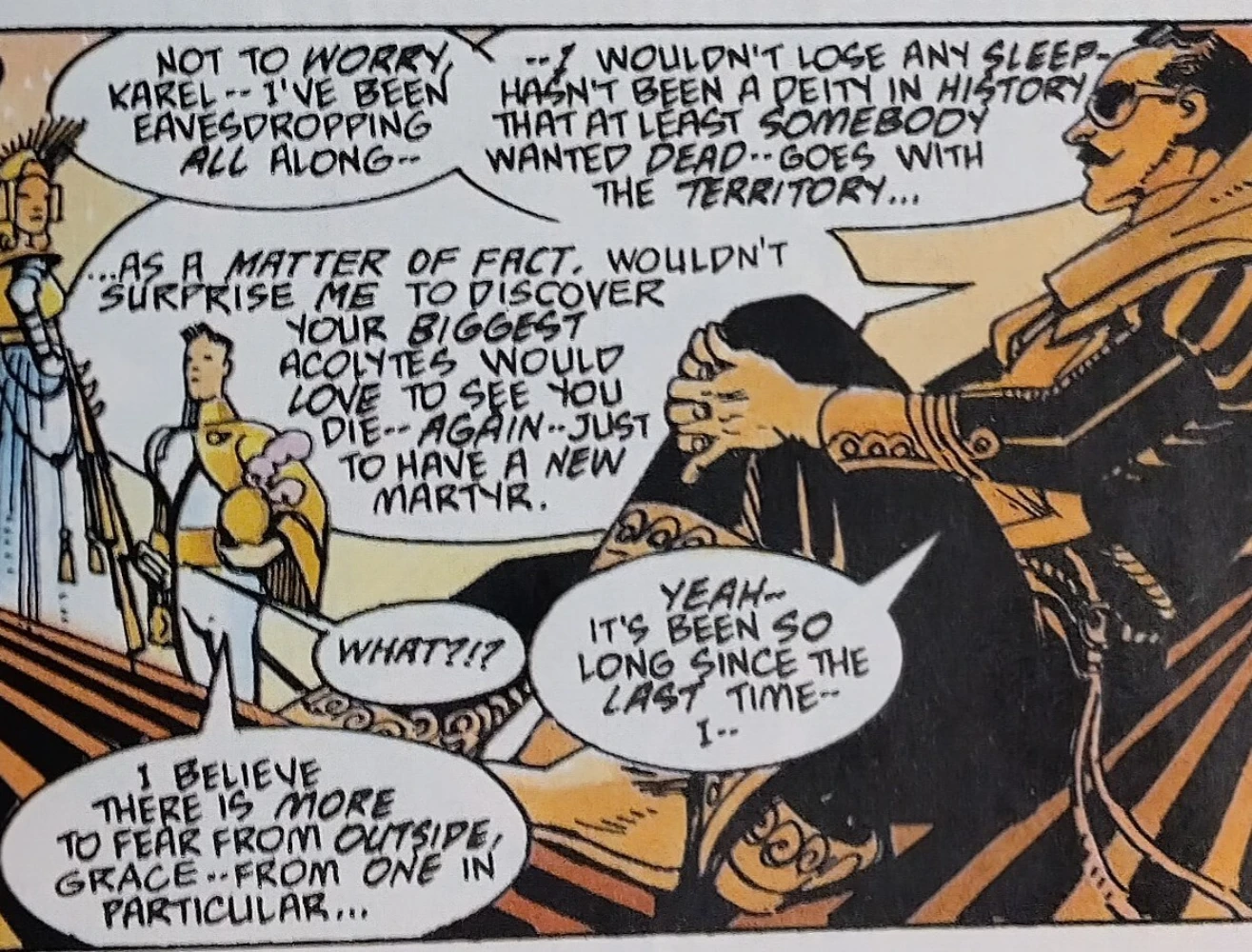
And yet there's something exceedingly critical about Chaykin's take that it becomes difficult to find much hope anyway. A mantra woven throughout the series is that Homer, narrating these events years after they happen (and isn't it appropriate for a dude named "Homer" to recall humanity's last odyssey?), realizes that this "twilight" occurs in the middle of the story, not the end. This indicates there's more to come, perhaps an upturn of events. Old Homer doesn't seem to be doing too poorly for himself, so you have to imagine some better future beyond this "twilight." While Chaykin doesn't provide a cripplingly depressing ending–villains get their comeuppance and what not–we don't get enough of a "Happily Ever After" to convince the reader of humanity's potential to provide an upswing. If humanity, even with immortality, can't rescue itself from its basest urges…what then? Chaykin doesn't hint at a solution.
The series, then, is more of an interesting thought experiment than a satisfying narrative. Chaykin juggles lofty ideas, delving into humanity's self-interested ideologies, painting people with broad brushstrokes of potential and failure both. Characters have their place–Tommy serves as an ever-grasping antagonist, brothers Axel and Jon Starker represent the most human individuals in all this, zealous Brent Wood experiences a deep crisis of faith after believing he betrays his goddess. Arcs are present, including a somewhat bizarre love triangle, and for at least one Starker, Chaykin maneuvers enough pieces to provide a fulfilling conclusion. But our actors feel more important for what they represent than who they are.
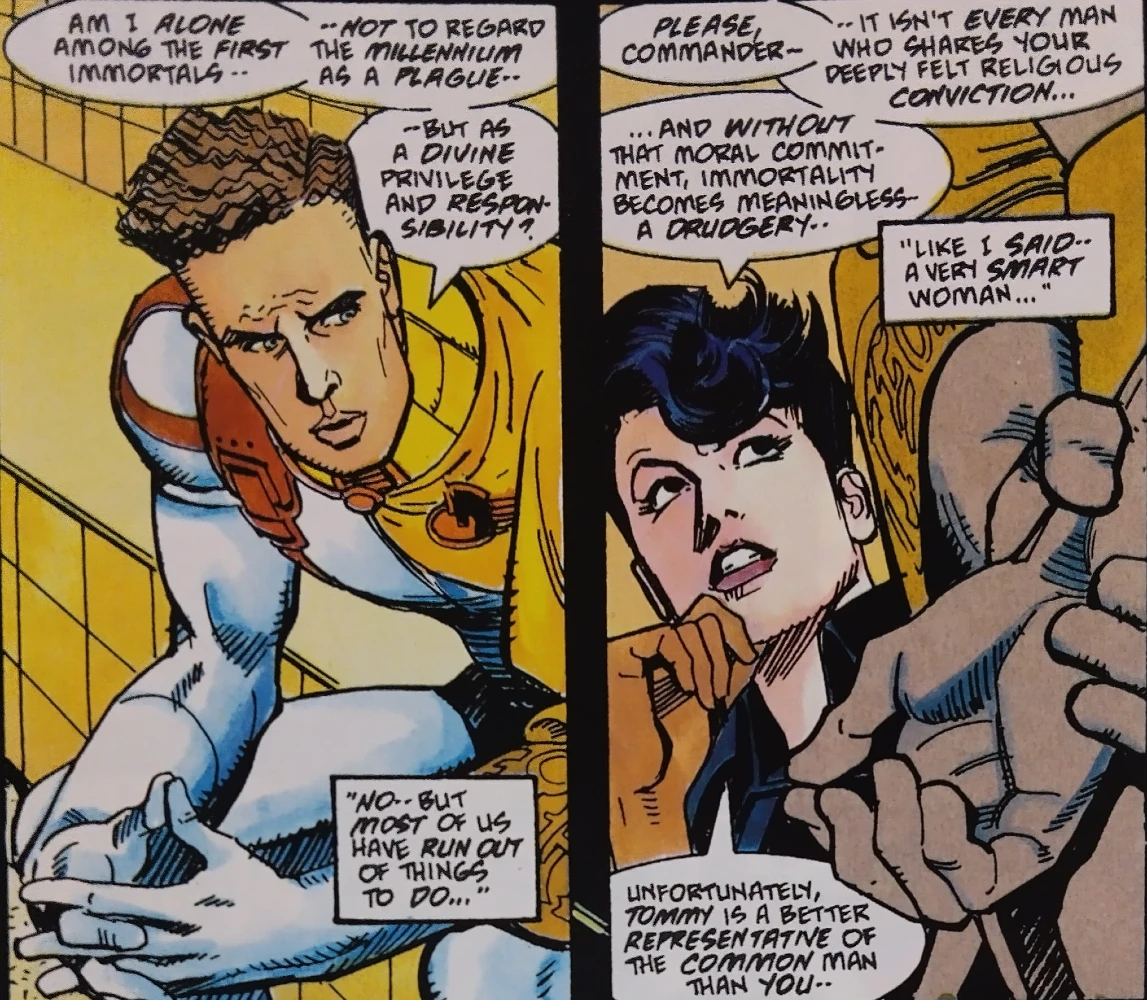
And Karel herself? True to Chaykin form, she feels cold and distant. Part of this may be critique in her role as a goddess, her identity skin deep even when blessed with ascendancy. But I feel Chaykin's long-held misogyny, seen in The Shadow and (from what I've read) other narratives of his, can be blamed as well. He makes Karel a goddess yet renders her fairly shallow and ineffective (though, in Chaykin's defense, a male character who later assumes a similar position doesn't fare much better). His treatment of other subject matter may turn some folks away as well, and while I can't say I escaped wholly unbothered, I felt any objectionable material just came with the territory of reading a Howard Chaykin comic.
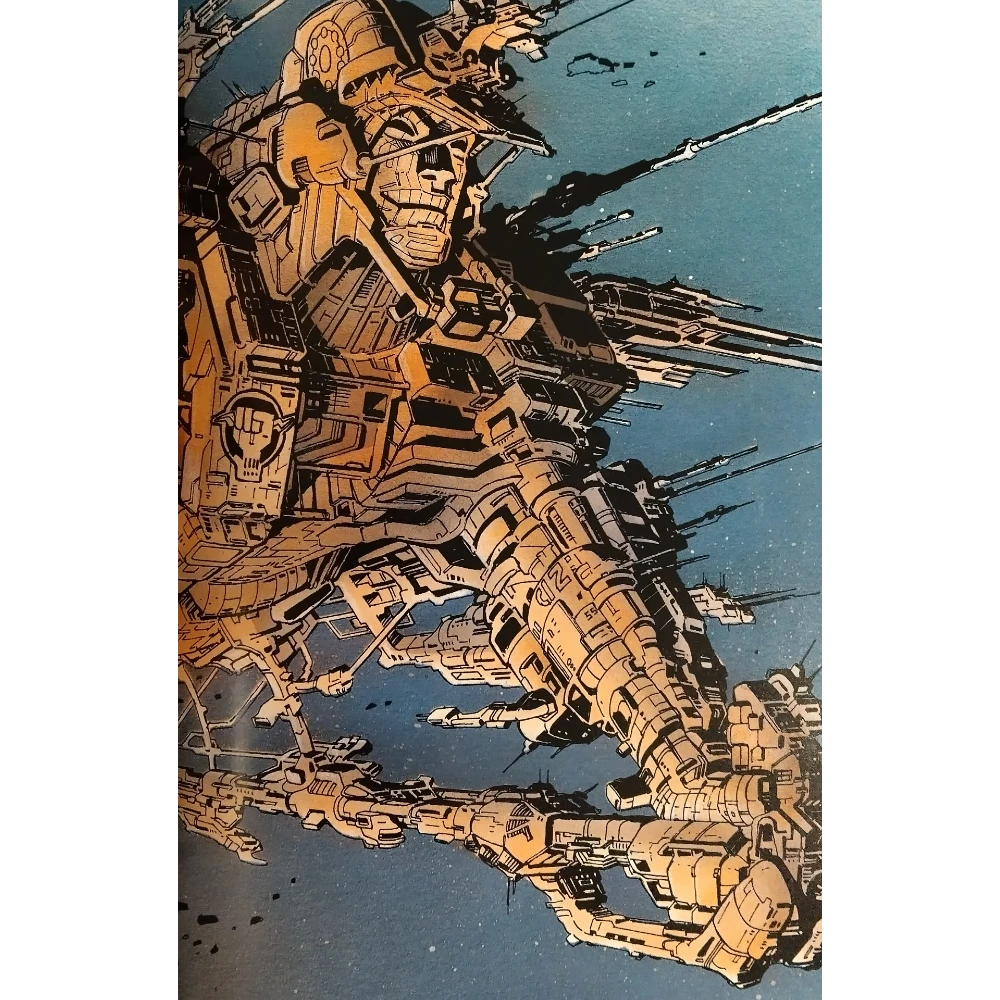
What isn't objectionable is this series' art, rendered in fairly glorious detail by García-López. He's responsible for bringing this crazy world Chaykin has created to life, and he does so with energy aplomb. García-López provides his best images when he takes the normal and ordinary and translates them into fantastic imagery. Want a mall? How about a massive spaceport that looks like people have just been adding whatever they want to it like poorly-considered and mismatched additions on a house. You like cats? Maybe you'll appreciate a talking feline that has devices jutting from its head to serve as an old blind man's eyes while it still scampers about hunting for prey.
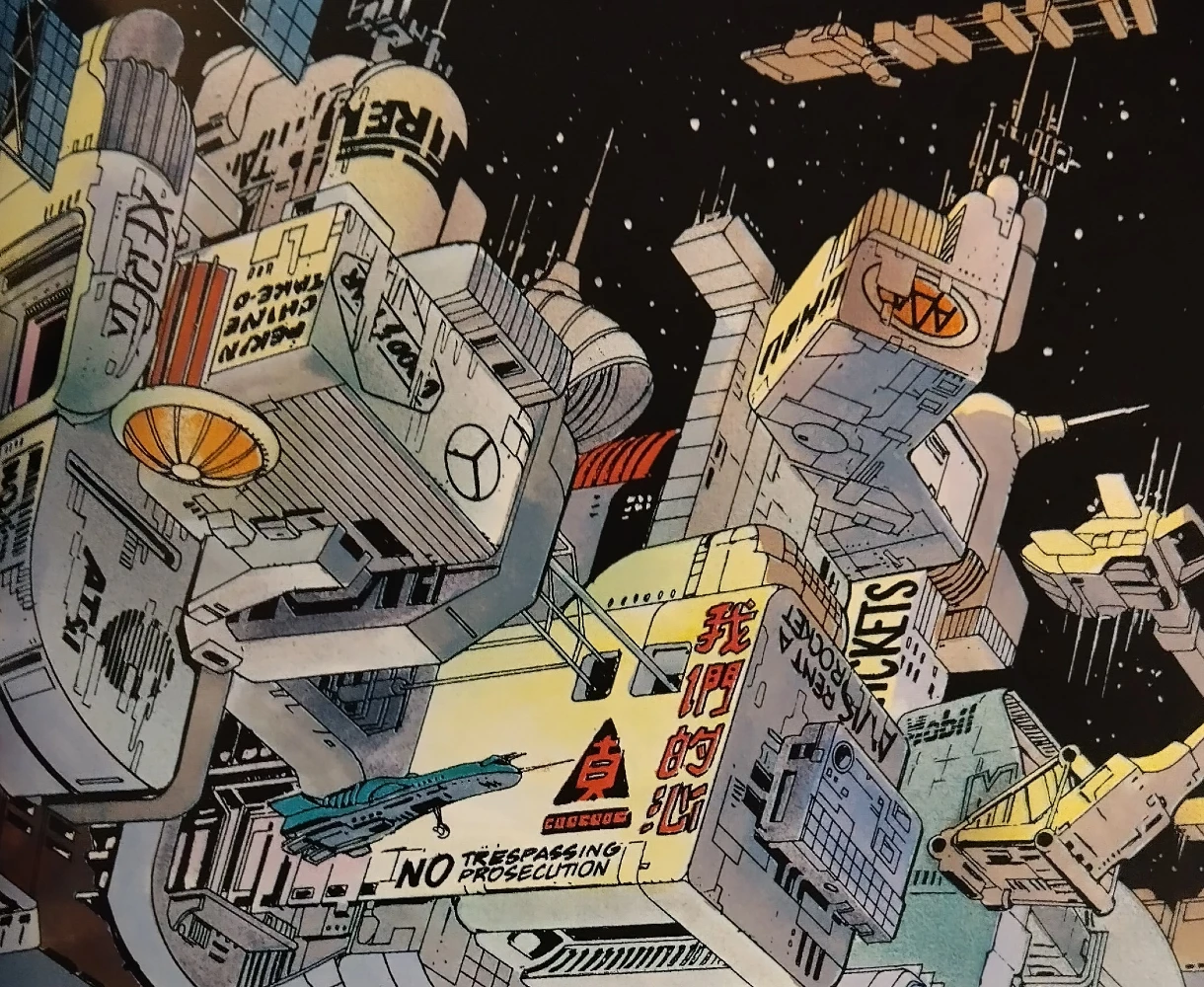
The blend of grandeur and simplicity help make Twilight unique. Together, Chaykin and García-López fashion a series that grants humanity a sense of longing fulfilled–life everlasting–while continually exposing our most basic instincts. It doesn't matter that Homer Glint is bestowed immortality; he's struck blind and decides to have a cat see for him. It doesn't matter that Karel is a goddess; she surrounds herself with her own iconography. People still wage wars, attend underground cockfights, seek affection from synthetic shells. If you're looking for Chaykin's answer for how we escape all that, you'll be as blind as Homer without his seeing-eye-cat. Ongoing life, in this universe, just means more time following those same old devils. Yeah, it's a cynical take if you choose to approach it that way, but it can be a thoughtful perspective from a series that updates guys like Sky Cabbie for the then-modern reader.