Random Reviews: Tarzan: The Beckoning
Interesting themes and ideas work well when they don't take a backseat to some jumbled plotting
—by Nathan on October 3, 2026—
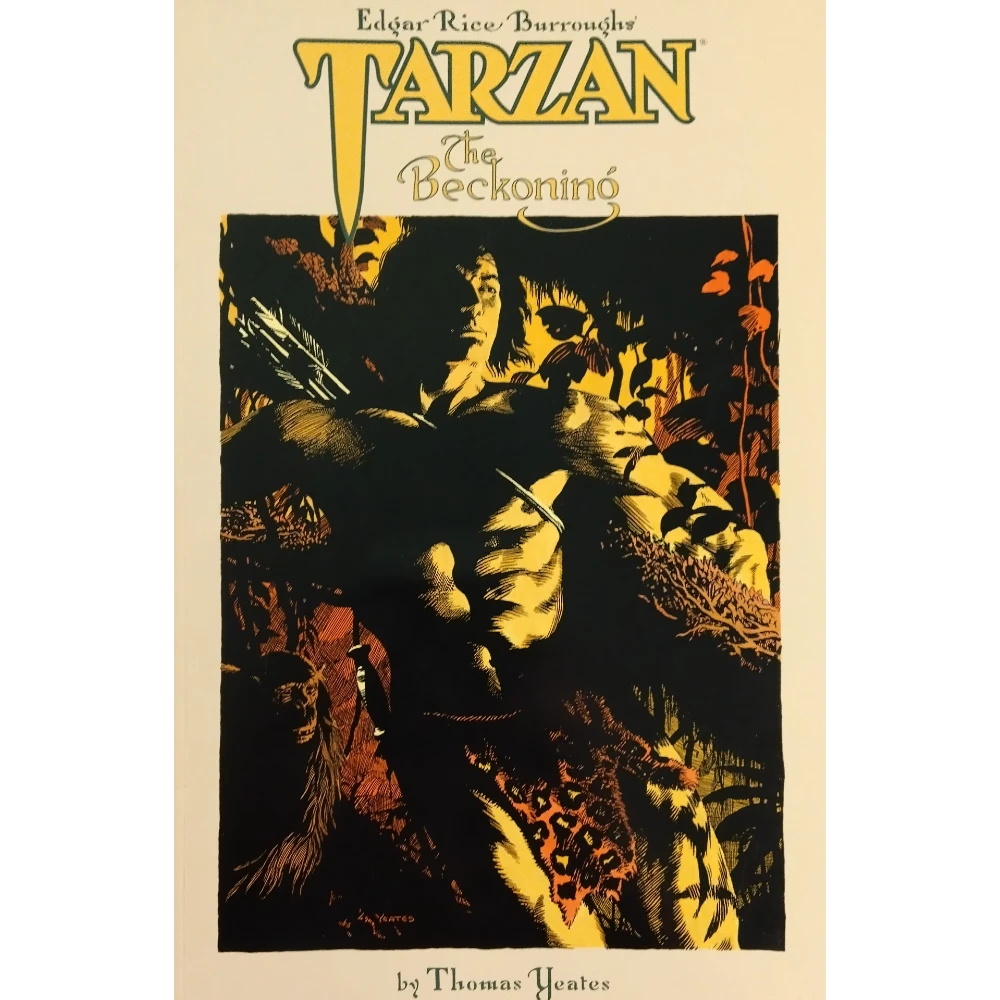
When she was a kid, my sister's favorite movie was Disney's Tarzan.
The colorful animated film from 1999 captivated her attention; she'd watch it on repeat when she was sick, nudging my dad awake as he slept on the basement floor to rewind the VHS tape. For Christmas one year, after our VHS tapes became obsolete, I gifted her the Blu-Ray, and though it's been a few years since I've watched that version, the movie is the only context I'm bringing into this comic.
I've never read the character's appearances in the original Edgar Rice Burroughs novels nor explored his media appearances outside written materials. But when I stumbled upon a digital version of this comic series, originally published by Malibu in the early 90s, I decided to check in on the adventures of one John Clayton, otherwise known as "Lord Greystroke." Intrigued by the first few issues, I elected to pick up the physical collection, finally giving it a read after enjoying the comic book escapades of a different "jungle man."
I'm also not very knowledgeable of Tarzan's other comic appearances, outside of knowing he existed for years in strips illustrated by the likes of Russ Manning, Gil Kane, Mike Grell, and others, as well as comics by both DC and Marvel, such as those illustrated by Joe Kubert. In the 90s, Malibu published a handful of series, including the one we're reviewing today, a more introspective look at the Lord of the Jungle.
One thing's for certain: Disney's Tarzan, this is not.
Tarzan: The Beckoning
Writers: Thomas Yeates, with Henning Kure
Penciler: Thomas Yeates
Inkers: Thomas Yeates, Alonso Haque, Stan Woch, and Ken Hooper
Colorists: Kathryn Mayer, Damon Willis
Letterers: Brian Clopper
Issues: Tarzan: The Beckoning #1-7
Volume Publication Date: September 2016
Issue Publication Dates: November 1992-June 1993
Publishers: Malibu (original issues); Dark Horse (collected edition)
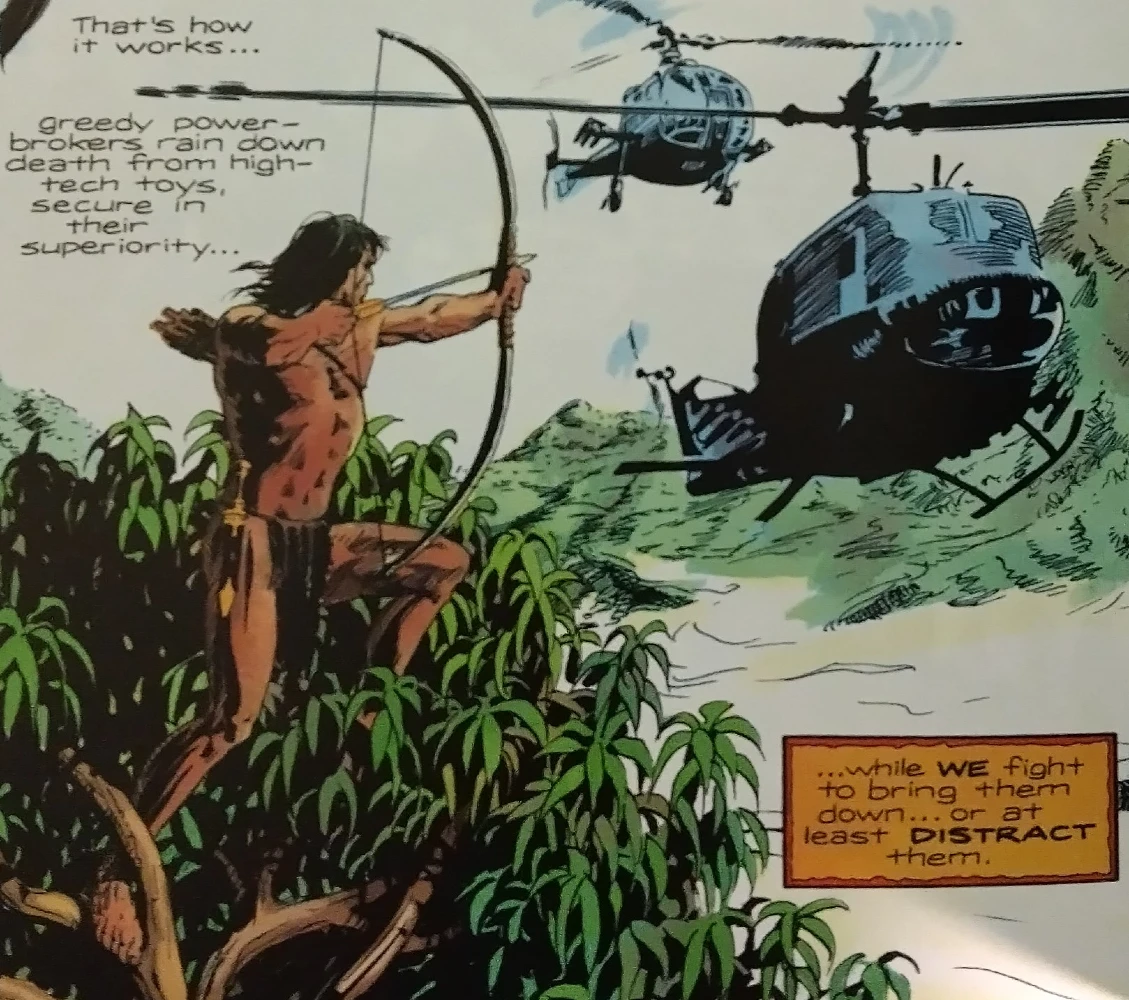
I cannot tell you if this story serves as an unofficial sequel to any of Burroughs' original material. Given the author passed away in 1950, he never really had the chance to imagine his popular creation as a vigilante targeting illegal ivory dealers in early 90s San Francisco. But that's the route Thomas Yeates, with some support from editor Henning Kure, takes in this series, at least in its opening chapters.
In an introduction, Yeates notes he and Kure clashed over the series' direction initially, eventually discerning a plot which incorporated both Kure's desire for "Tarzan in civilization" and Yeates' interest in exploring the character's traditional African setting. From a purely subjective perspective, I found I appreciated the series' opening chapters more than the latter half, with Yeates honing in on this dichotomy of a man raised in the wilderness working, and failing, to acclimate to Western existence.
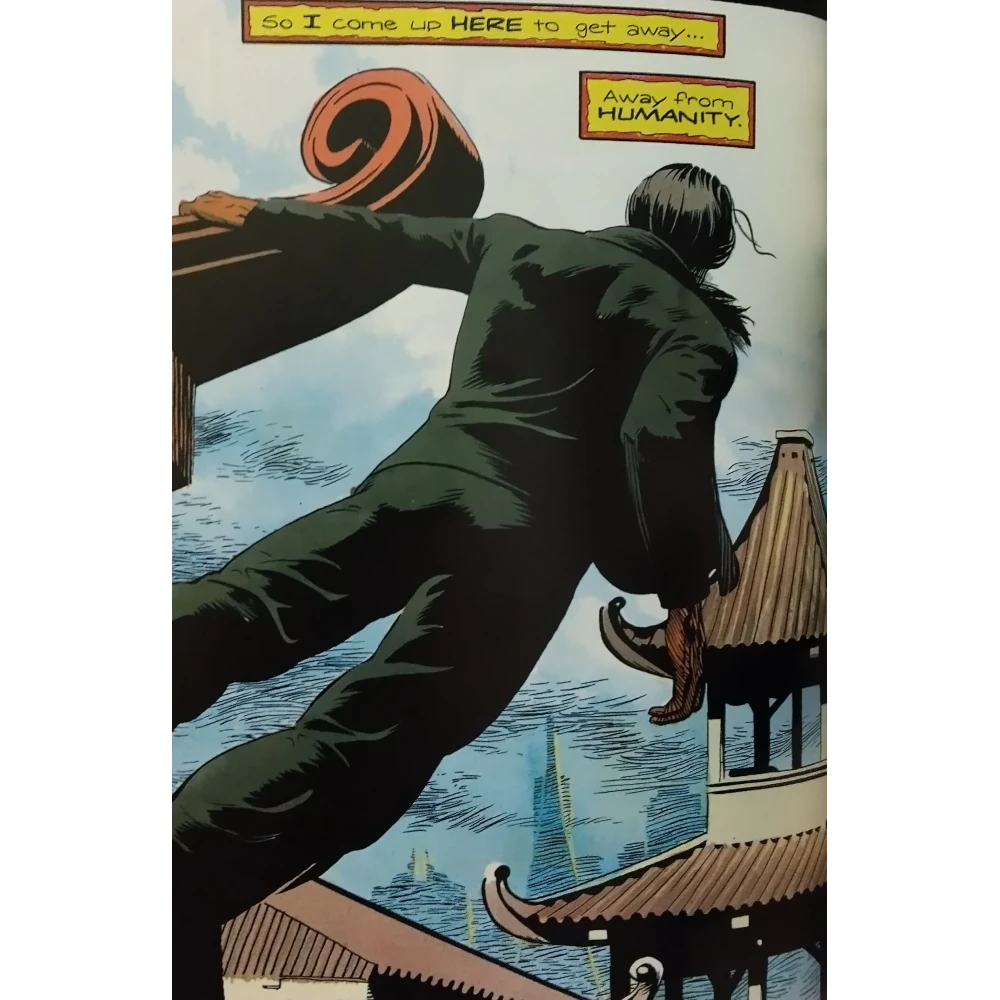
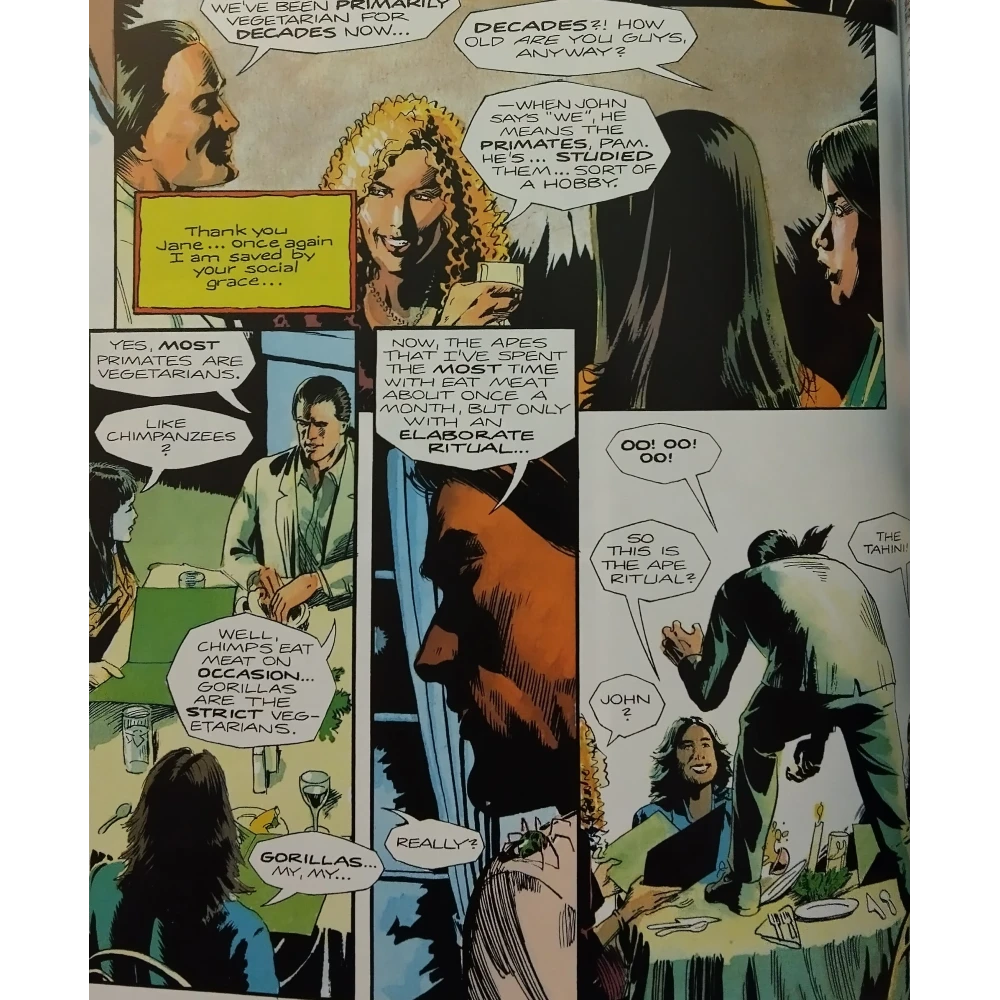
The point is, obviously, that Tarzan was not made for high rises and bougie eateries. Even in San Francisco, the man can hardly keep his feet on the ground, swinging on whatever trees he can find, scaling fire escapes, and leaping across rooftops like the West Coast's answer to Spider-Man (not discounting, of course, Marvel's wall-crawling member of the California-based West Coast Avengers and Force Works). Something inside him is stirring, and in these early issues, at least, Yeates allows this to become a point of conflict within and contention without. The Lord of the Jungle, going by John Caldwell, can try his best to assume a level of Western dignity and poise, but a calling tugs at his heart.
The "vigilante targeting illegal ivory dealers" is a smart move on Yeates' part and makes for a few thrilling issues. It gets to the heart of this notion of Tarzan adapting, or trying to adapt, to a different lifestyle. If he can no longer swing through trees and aid the plight of his forest friends, he may as well take to concrete canyons and mete out justice in the only way it seems he can. Without giving him a costume or codename, Yeates effectively makes Tarzan like other crimefighters such as Batman and the Shadow, a regular dude on a mission, taking to the night to fulfill some form of sworn purpose. Yeates doesn't give Tarzan the full vigilante makeover, which is more than fair. That the bit only lasts a few issues speaks to the deeper purpose the writer/artist drives at.
It's in the latter half of the series, as Yeates moves Tarzan back to his true home, where I found myself a little more lost and uninterested. It could primarily be because, as far as I can tell, Yeates is reliant on aspects of Burrough's Tarzan mythology that I'm unfamiliar with, such as references to ancient cities and relationships with animal friends whose names I recognize from the Disney film (such as Tantor and Kerchak) but have no literary context for. It could also be a result of Yeates' plotting, which not only attempts to explore Tarzan's struggles with identity but exterior conflicts as well.
The identity aspect, in serving as an overarching theme for the series, works fairly well. What kind of man is Tarzan supposed to be? The son of a British nobleman, raised in a jungle knowing he's different from his hairy "brothers," brought to America to become more civilized, yet drawn to the jungle again. There's a lot to pull apart here, and to an extent, Yeates allows an adequate exploration. We're not talking armchair psychoanalyzing the guy, but as a character, Tarzan has room to determine for himself, based on his long-lived past, the direction of his future.
There is, admittedly, some convenience drawing us there. Reading this, I was worried we'd wind up with a Superman: Lost scenario, wherein writer Christopher Priest provided a gripping examination of a non-continuity Superman wrestling with some daunting emotions before bungling the ending by allowing Clark a convenient way out of his troubles. Without spoiling that arc, Priest gives himself an easy "have his cake and eat it too" conclusion, discarding the honest struggle he'd created so far. Yeates, I feared, was going to use the same tactic, particularly with Jane, who undergoes what seems a personality reconfiguration late in the series thanks to a fairly blunt incident.
Fortunately, Yeates steers himself away from that path–somewhat obviously, you recognize quickly which direction he favors, yet he doesn't wrench us completely down that path. Jane is, by time the series ends, provided a hint of agency I was concerned the aforementioned incident removed. If anything, Yeates constructs a decent middle-of-the-road option which balances aspects of identity while offering both Tarzan and Jane a suitable finale.
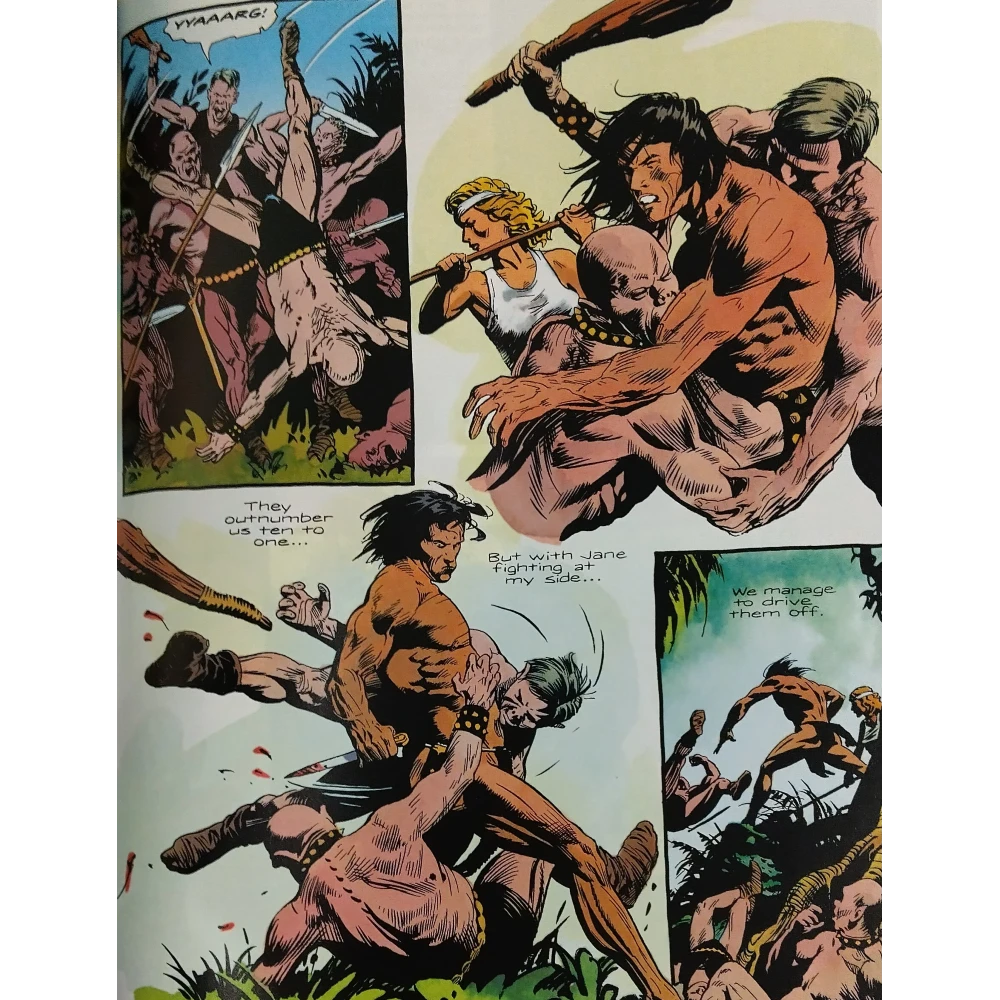
Yet the path to reach there isn't a simple swing through the trees, Yeates grabbing the occasional snake instead of a vine. Though Tarzan's identity remains the series' core, Yeates tosses in various other plot points, including additional conflict with the ivory trade, a witch doctor and some mystical elements, even a few creatures that wouldn't be unwelcome in a Ka-Zar or Warlord comic. Again, it could be I'm missing context, but all the pieces don't seem to sit comfortably together. Perhaps if I were a Burroughs' fan, I would be delighted to watch Tarzan square off against a dragon-looking monstrosity or primitive precursors to modern man in a hidden valley. But the blending of all these elements–modern civilization, an ancient society, the seeming existence of magic–feels clunky and undercut the narrative's emotional crux.
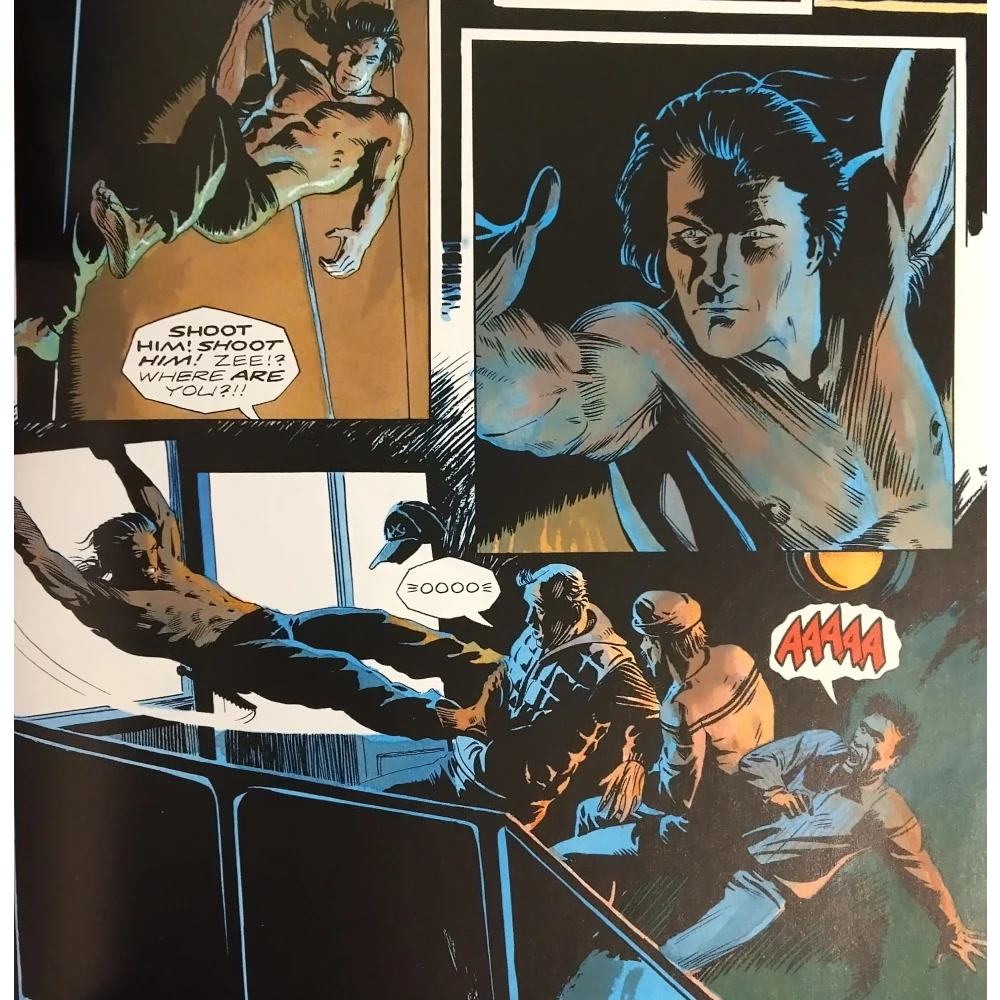
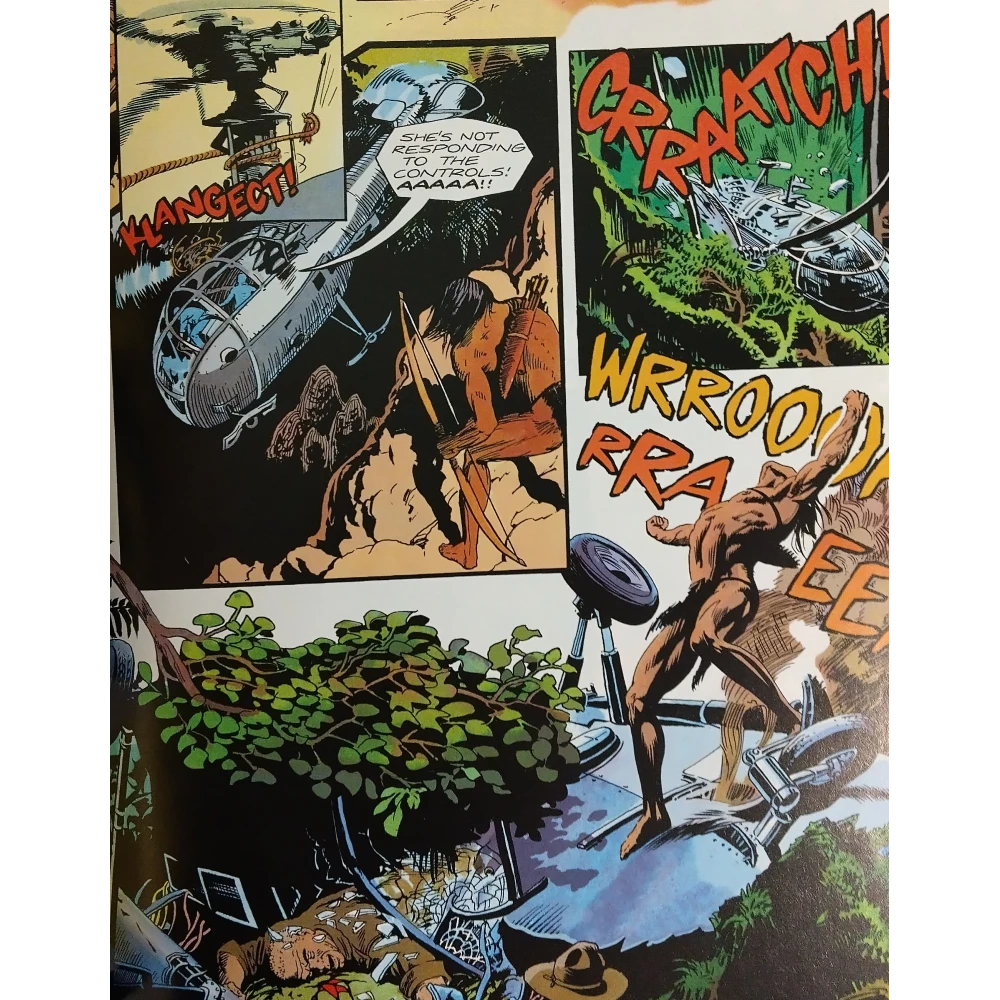
The series is bisected between the urban aspects and African aspects, and as much as I wish Yeates blended the two ("urban jungle"?), he illustrates both halves well. Yeates feels just at home crafting the jutting skyscrapers of San Fran as he does the deepest, darkest forests. The moments where Yeates can create an intersection between those halves–such as scenes where Tarzan battles smugglers on a ship, stares at oncoming helicopters from a tree canopy, or engages gun-toting mercenaries with the aid of an African tribe–help create the feel I hoped would permeate the entire series. It's why, I'd argue, you'd want to tell a modern Tarzan story–how does the Lord of the Jungle live among humanity? Where can connections between the worlds he calls "home" be created? Where does conflict arise?
We have a story being told, and we have the backdrop against which that story is being told. Neither are completely satisfactory. Blame my ignorance or unfair expectations. Yeates takes Tarzan on a hunt for identity, a search to find himself both in and apart from a world so unlike the one he knew growing up. That core is understood here and, in ways, nicely impacts Tarzan, Jane, and their surroundings. I think I would have appreciated watching our ape-pal protagonist endure some additional agonizing over that identity within the confines of a concrete cage before moving back home to the safety of his beloved trees. It's an interesting series to run through my mind a few times, but with all due respect to Phil Collins, it probably won't be in my heart.