(Strand)om Stories: Thor: The Lost Gods Review (Thor-oughly 90s, Part 5)
Based on a unique premise, this arc graciously deepens previous stories while struggling with its own identity
—by Nathan on September 15, 2026—
In my last "Spider-view" post, I discussed an issue that acted as an epilogue to a large crossover event. Peter David and Rick Leonardi provided a closing chapter to the 2099 Universe's first overarching epic, "The Fall of the Hammer," an event based on an ongoing subplot involving the followers of Thor and the seeming return of their long-awaited messiah.
Today's review isn't necessarily an epilogue, but the series we're discussing explores the aftermath of a different narrative involving the Norse God of Thunder.
I have, in periodic posts, discussed Thor arcs leading up to the universe-rattling X-book-centric event known as "Onslaught." Warren Ellis and William Messner-Loebs led the charge in bringing Thor to Onslaught's doorstep, and other writers, such as Mark Waid and Scott Lobdell, brought the front door crashing down. With the giant-sized Thor #500 in their rearview mirror, Messner-Loebs and Mike Deodato Jr. paid homage to the character's history, partnering him temporarily with Red Norvell, one of those other guys who once wielded godlike power before being gifted with his own enchanted weapon.
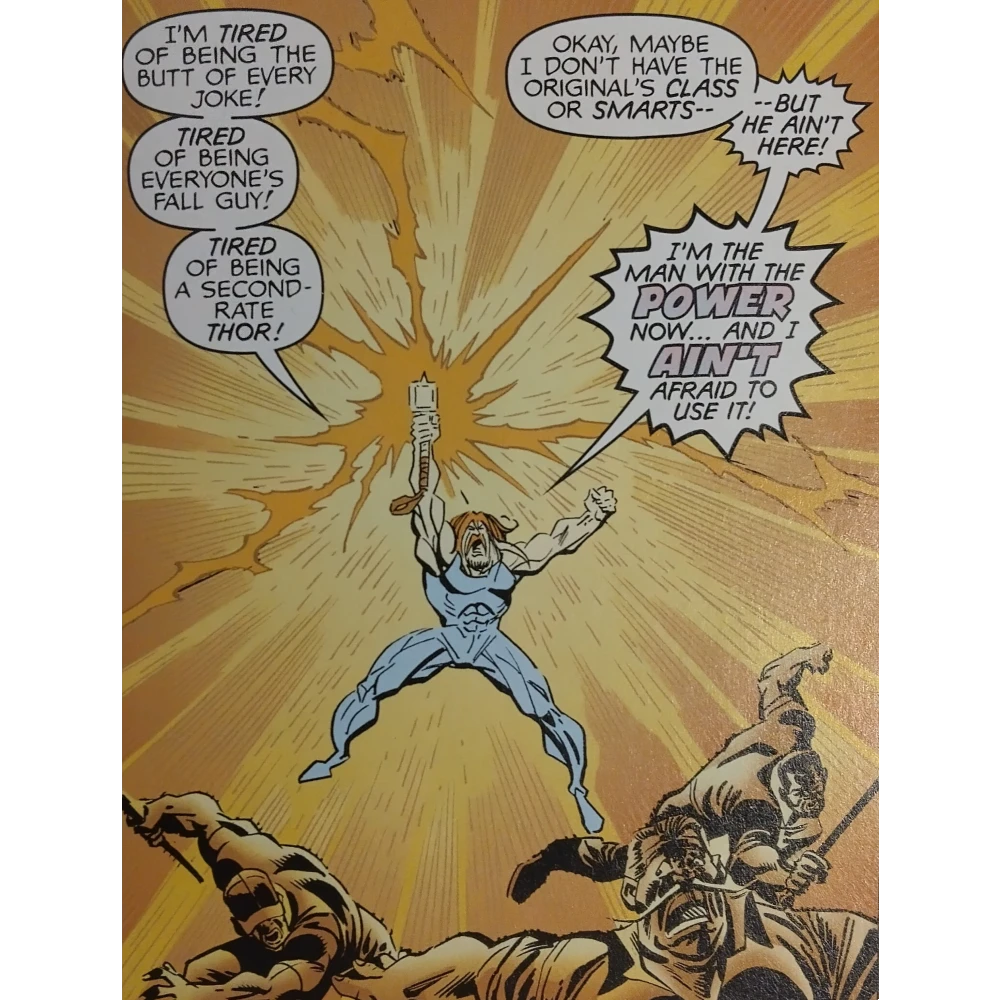
But now Thor is seemingly dead. And with Eric Masterson also dead at the time and Beta Ray Bill currently unavailable, no one other than Red is around to heft a heavy hammer in the name of Odin and justice and all that jazz. His first act as Thor-lite, bequeathed to him by a Norse Allfather still in the guise of a drunken derelict, is to find the other Norse gods in a little game of cosmic hide-and-seek.
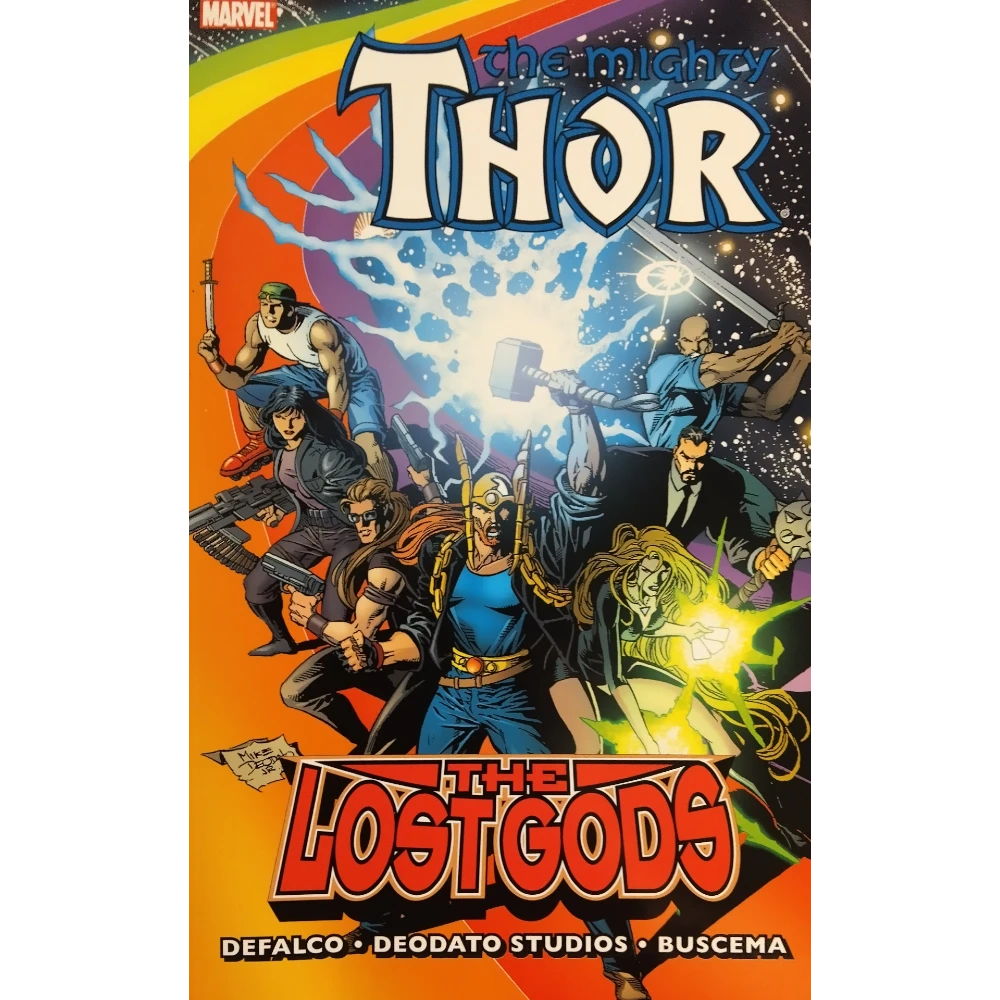
Thor: The Lost Gods
Writer: Tom DeFalco
Pencilers: Mike Deodato Jr., Carlos Mota, Rene Micheletti, Marc Campos, Eddie Wagner, and Sal Buscema
Inkers: Eddie Wagner, Rene Micheletti, Al Milgrom, Marc Campos
Colorists: Marie Javins, John Kalisz, Scott Rockwell, Michael Higgins, Chris Sotomayer
Letterers: Jon Babcock, Chris Eliopoulos, and John Costanza
Issues Collected: Journey into Mystery #503-513
Volume Publication Date: May 2011
Issue Publication Dates: November 1996-June 1997, August 1997-October 1997
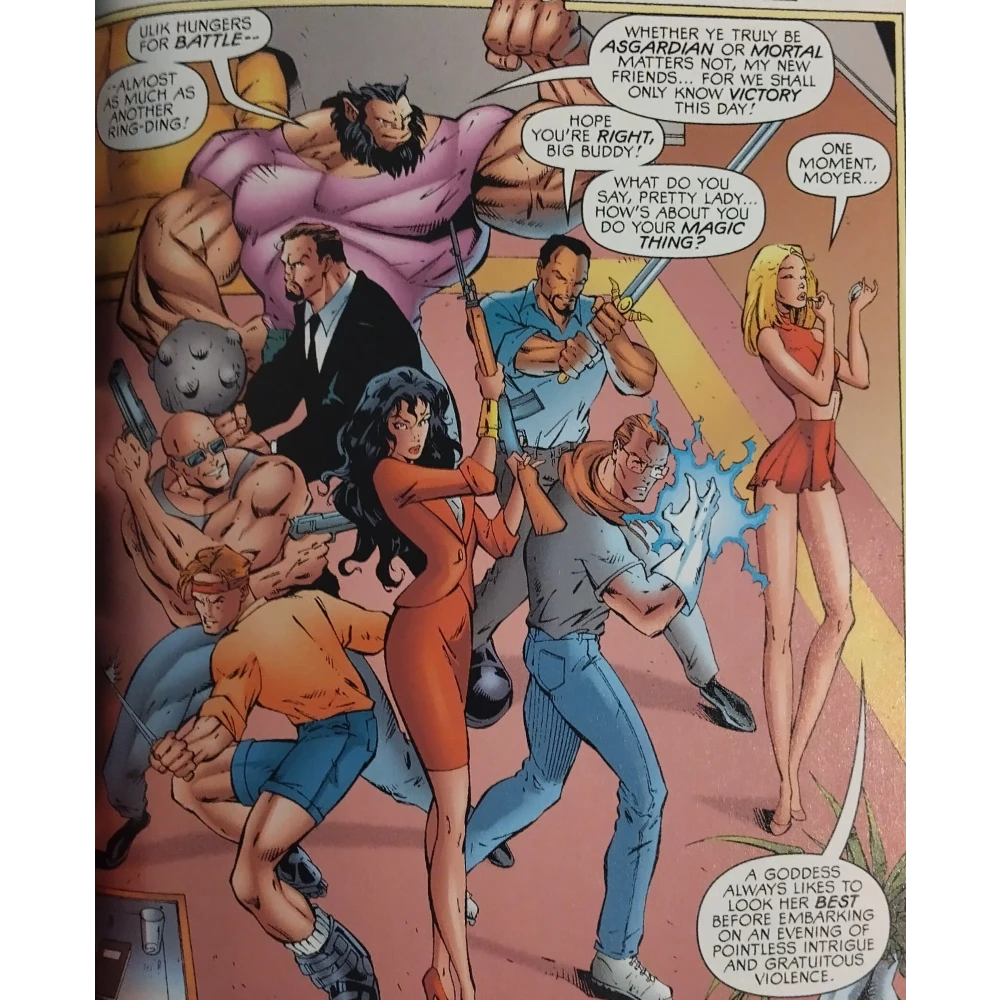
Thor's own title may have been cancelled, along with Iron Man's, Captain America's, and the Fantastic Four's, but Norse magic still flowed, thanks to DeFalco, Deodato Jr., and a few others. With Thor gone from the main Marvel Universe for the time being, Journey into Mystery was relaunched to provide a story blending previously established concepts with what I assume was DeFalco's own original direction.
I do have complaints I'll share about this smattering of issues, but I want to first note how pleasantly surprised I was when I started reading this volume. Messner-Loebs had, at least, teased a continuation of Red Norvell's story in those few issues preceding "Onslaught," and though DeFalco handles Red differently than I would have anticipated, he does offer a unique idea elsewhere. With Ellis having generated a false "Ragnarok" during his brief run and Messner-Loebs establishing the fall of Asgard, DeFalco melds the two together to craft a story about "lost gods" and the renewal of the once-shimmering Realm Eternal.
Ellis' narrative had been far too short, introducing a high-concept plot and a never-before-seen villain as the architect of a cosmic conspiracy in far too few issues to allow certain ideas to breathe. His story felt truncated. DeFalco works to rectify this by cleverly weaving elements of Ellis' story into his own, expanding on some of the highbrow concepts Ellis introduced and utilizing an additional villain to make the conspiracy feel much larger. Is it slightly clunky? Does it smack of rectonning? Yes and yes. The execution isn't the most natural, but I was more than happy for DeFalco to run with an idea that I had thought dead in the water post-"Onslaught."
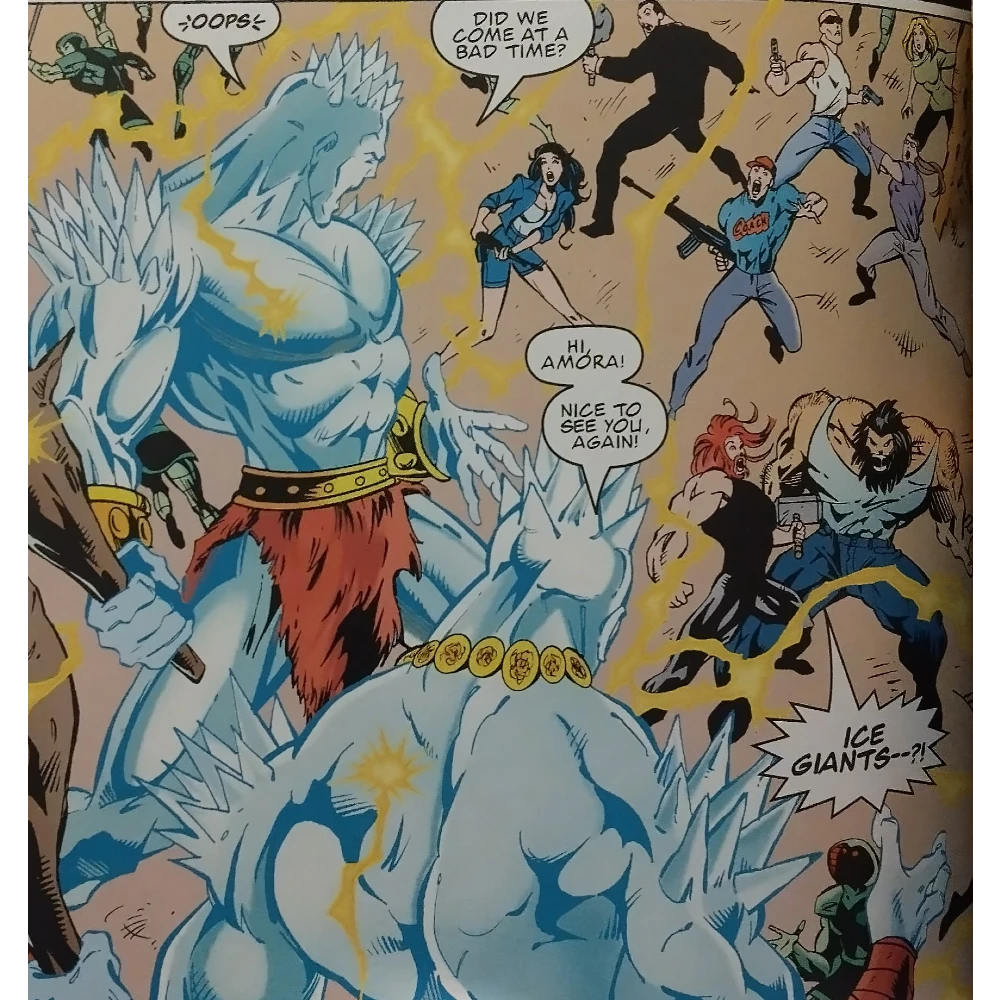
DeFalco takes Ellis' concepts and applies them to these "lost gods," transforming these deities into perfectly normal humans who must re-learn their godly heritage. Though Red kicks off the series' events, DeFalco clears him from the table temporarily, focusing his attention on these mortal folk as they discern their powers and pasts. It's a refreshing take, honing in on the "journey" and "mystery" aspects of the series' title. These mortals must journey together to uncover the mystery of who they are. We're not just watching Thor swing his hammer and pummel Frost Giants; DeFalco's aiming to establish these people and their personalities. It's entertaining to try and determine which person is which god by how they behave or evidence their burgeoning abilities.
There is a sense this mysterious journey serves as a precursor to later narratives which would tell similar stories in a more sophisticated manner, such as J. Michael Straczynski's Thor run and Neil Gaiman's Eternals. In some ways, DeFalco is unable to provide the most thoughtful mystery–you take one look at Ericka Velez, a strong female cop who wields a gun, and you can pretty much nail her godly guise (and it's but a Mjonir-hammered nail in the coffin for that particular bit of intrigue when DeFalco introduces her brother). But for others, DeFalco's a tad better at imbuing characteristics to tease rather than tell. Barry Landers, the art professor who lives with his cat, and Howie Barker, the teenager introduced in a clever visual parallel to one Peter Parker's first appearance, don't necessarily have immediately clear analogues. Hence the mystery. Determining those aspects for yourself is the fun in reading these issues.
Within the burgeoning mystery, DeFalco is also trying to craft sympathetic characters you should care for prior to the grand reveal of their Norse identities, and he struggles to be adept. Most of these people are given one or two character qualities tops, and they're never allowed to grow beyond those traits, be they good or bad. Velez barks orders and wields guns. That's it. Businessman Tso Zhung is a shifty, greedy piece of work who remains shifty and greedy the whole time, his inner monologue constantly trying to make a profit on the group's predicament. And he doesn't stop. There's no personal growth for the guy, even as he helps his newfound friends.
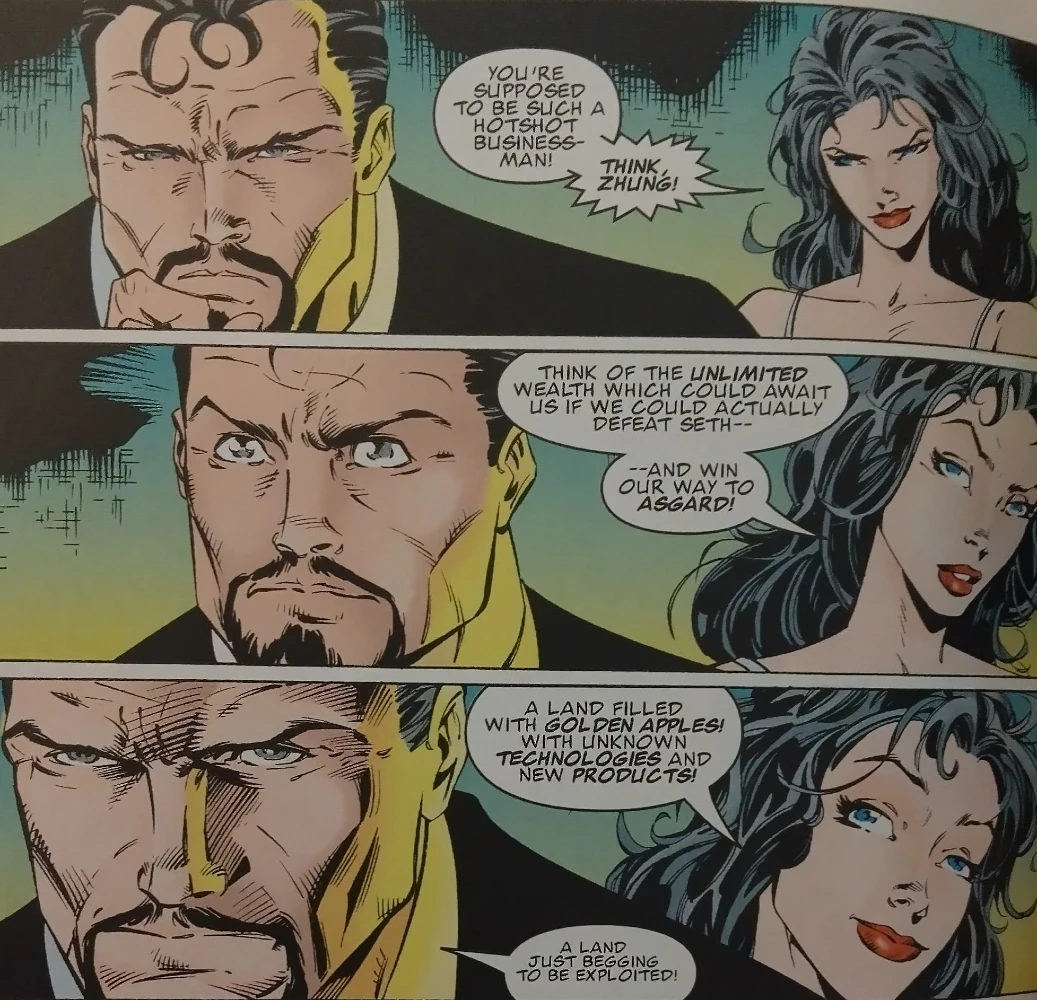
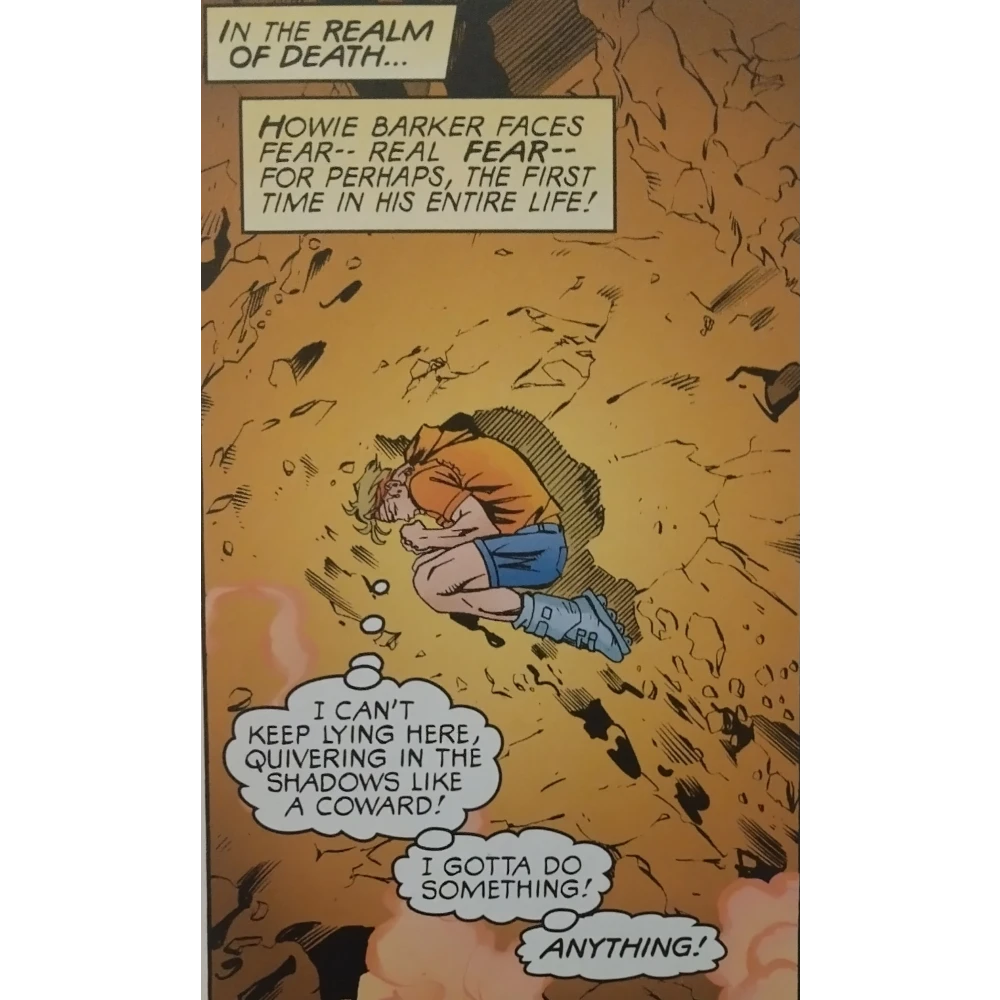
DeFalco endeavors some characterization here and there. His strongest protagonist becomes Howie, who's tasked with taming his own fears when the group is forced into battle against the minions of the narrative's mystery villain. It's somewhat of an internal subplot that works well for the moments it appears, leading to a payoff later in the volume. Howie's a kid, completely unprepared for a world of gods and monsters, even though he technically is one (a god, not a monster). There's a learning curve associated with him I sorely wish was true for DeFalco's other heroes. Most other folks, though offering some doubts when initially approached about their godhood, are quickly and fairly conveniently convinced and then quickly and fairly conveniently pick up suitable weapons to battle the bad guys. They get their wins and their losses, but victories don't necessarily feel earned and setbacks don't necessarily provide emotional heft. One dude who gets blasted by a lethal energy strike is rescued a mere few pages later. Heck, DeFalco even does the whole famous "dead but not really" trope comics are famous for.
The writing is very much of its time, and DeFalco doesn't surprise me by brandishing what I assume was slang for the era. This is a man whose teenage Green Goblin (Phil Urich) couldn't stop talking about "feeling loose and slamming heat!" The slang wouldn't be quite as unbearable if it weren't for how poorly DeFalco selects which characters partake of the parlance. I could see Howie talking like a teenager, but I wasn't expecting Ulik the Rock Troll to go "But noooo!" or DeFalco's centuries-old villain shout "Zap-ooo!" or "I lovvve it!" like he's riffing off a McDonald's commercial. Like with his dialogue choices for Phil, DeFalco is trying to appeal to a certain youthful demographic, but he doesn't quite get the handle on how best to do so.
We're given a mixed-bag of magic across these issues. Weighing in positively is the series' central concept, which is great in theory. The Norse gods, cast into human forms, needing to relearn their purpose and powers. Ellis' arc, given some deeper exploration and greater heft than it was allowed. The pieces are all there, and we get off to a good start. I keep referring to it, but it's DeFalco letting the series live up to its title: our heroes are on a journey, confronting a mystery. Thumbs up from me there. DeFalco's organization of those pieces, however, makes a somewhat disappointing puzzle; the borders look sharp, yet the middle feels misplaced. Stronger characterization could have elevated this arc, along with some more sincere writing unwilling to cater to who DeFalco perceives as his central audience. Unlike his central villain, I'm not shouting "I lovvve it!" "I likkke it!" is a sufficient response from me as we await the rebirth of the Norse God of Thunder.