Random Reviews: Espers
Plotting take priority over characterization in a series which applies suitably realistic stakes to superhuman endeavors
—by Nathan on October 10, 2026—
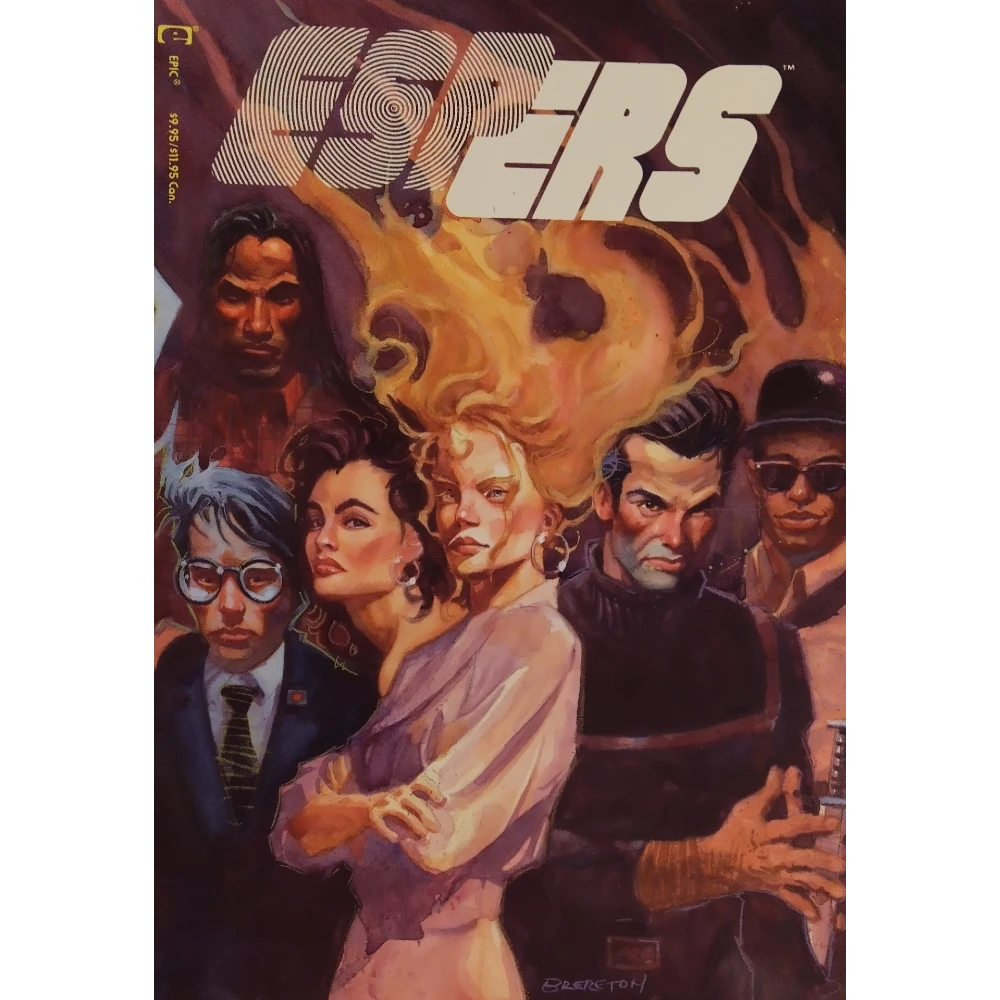
This is another one of those "Hey, this guy wrote a Big Two comic I recently reviewed, so now I'm checking out a series he wrote for a lesser known imprint or independent company" posts, like how I reviewed Mike Grell's Starslayer after examining part of his classic Warlord series. James Hudnall is the writer we're putting back under the microscope today, as I just reviewed his first issues of Strikeforce: Morituri, a Marvel series initially launched by Peter Gillis and Brent Anderson. Realizing Hudnall's name looked familiar, I did a bit of internet sleuthing, and it didn't take more than a few keystrokes to pull up his bibliography and remind me he wrote this series for Eclipse Comics.
David Lloyd, however, to me and presumably most readers of this review, is likely the better known of the creators involved, specifically for illustrating Alan Moore's V for Vendetta. We're not treated to any Guy Fawkes lookalike in this series, but we are provided a vendetta of sorts infused with a healthy dose of political intrigue. "Vendettas" and "intrigue" somewhat define the later issues of Hudnall's Strikeforce: Morituri run, combined with superpowers, as we'll also find here. Yet Espers (sometimes stylized as "ESPers") is a tad more interested in dealing with a grounded approach to superhuman abilities, asking how folks with extrasensory perception would translate to Cold War era conflicts.
Espers
Writer: James Hudnall
Pencilers: David Lloyd and John M. Burns
Inkers: David Lloyd and John M. Burns
Colorists: Dondie Cox and John M. Burns
Letterer: Steve Craddock
Issues: Espers #1-5
Volume Publication Date: August 1990
Issue Publication Dates: July 1986, September 1986, November 1986, February 1987, April 1987
Publishers: Eclipse (original issues); Epic Comics (collected edition)
The application of fictional superhuman powers to real-world circumstances, when done right, can yield a fascinating look at how one might handle our reality were some folks blessed with earth-shaking abilities. Mark Gruenwald's Squadron Supreme is so effective, in part I'd argue, because it wonders what would happen if heroes actually tried solving world hunger, ending gun violence, and eradicating cancer. Likewise, Jim Starlin's Death of Captain Marvel and Paul Dini and Alex Ross' oversized graphic novels for DC posit what could happen when heroes fail to feed the hungry, end violence, cure cancer. Such stories can remind us of our frailties, limits, and injustices, spotlighting evil, offering hope, and providing a level of relatability not always found from slugging alien invaders.
Espers attempts to take a similar track, plucking people with different forms of extrasensory perception and plunking them down into scenarios shaped by Cold War era overtones that could also feel real today. Terrorists demand, CIA agents investigate, nuclear bomb threats loom. Lloyd, whose details in V for Vendetta help create a realistic London, applies the same care to his characters, environments, and vehicles here, drawing you into a world which looks and feels very real.
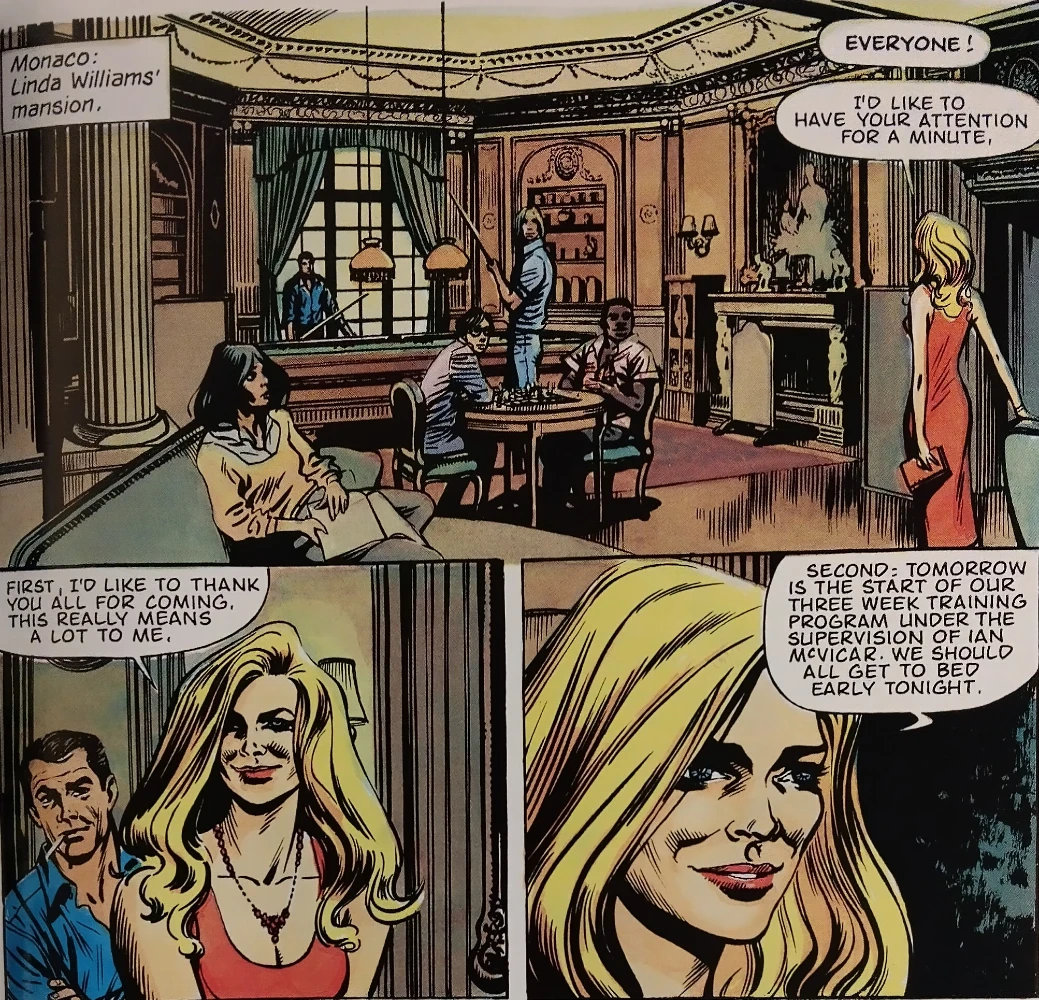
Hudnall applies, perhaps intentionally, brushstrokes which feel inspired by the X-Men, twisting the concept as originally introduced by Stan Lee and Jack Kirby while providing that more realistic sheen. In a review I wrote a handful of years ago, I critiqued the earliest *X-Men( issues, claiming the core concept felt too clean. Professor X recruits a bunch of kids to fight evil mutants, and none of them bat an eye. The consequences aren't elaborated on, nor is the insanity of bringing in kids to battle villainous adults at the threat of persecution, harm, and death ever really discussed. Linda Williams, Hudnall and Lloyd's main protagonist, recruits fellow Espers to run a mission against counterterrorists, and she makes no bones about the stakes. Real bodily harm awaits them, real death, and real consequences to the world should they fail.
The underlying racism angle found in X-Men comics isn't present in Espers, but in a series of text pieces between some issues, Hudnall draws us into a world where, to a certain extent, being an Esper possibly places a target on your back or special interest from military or paramilitary types. It's as if his and Lloyd's world is about to take that next step into superhuman combat, as if it's waking up to the idea of people with heightened abilities. We're not quite there yet, but as even our Espers come into conflict with people possessing both powers and less altruistic intentions, you get the sense we're drifting in that direction. It's a neat idea, teased sufficiently here, perhaps explored in some later series.
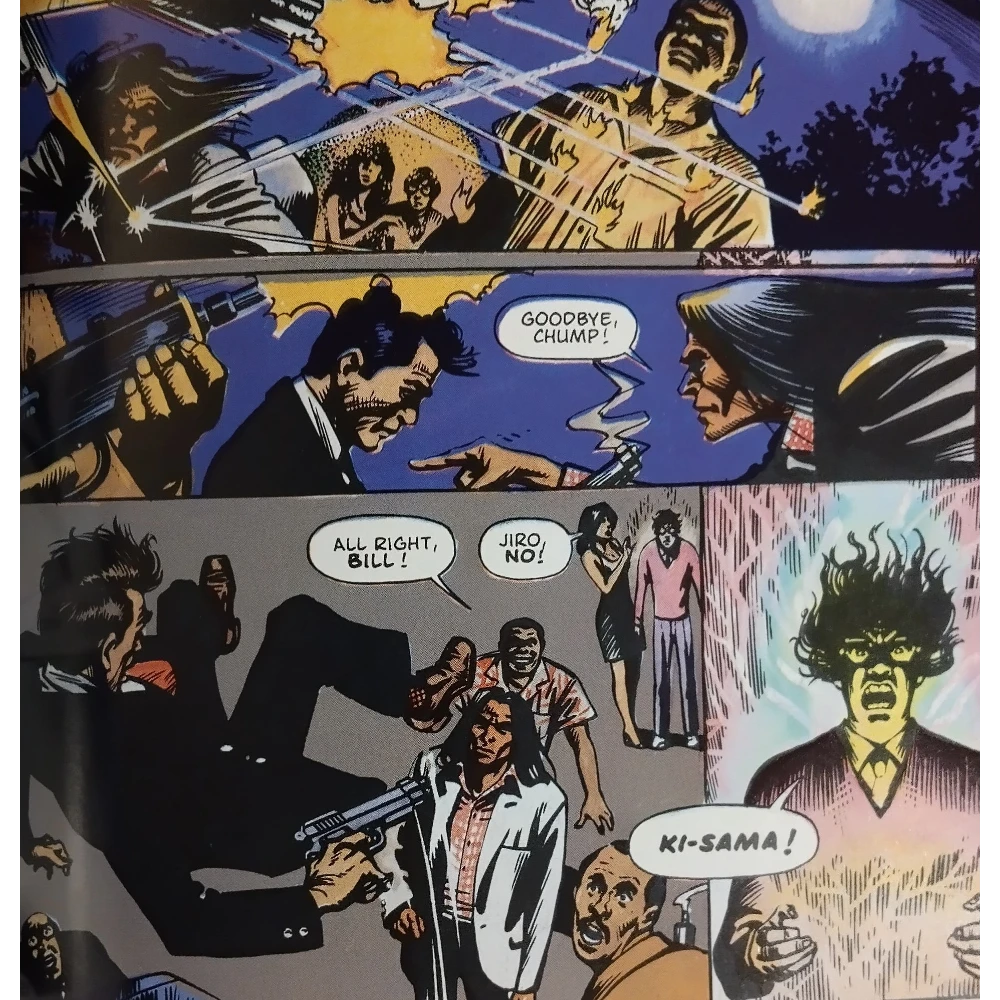
The concept is treated with the proper amount of grounding and realism, meaning Hudnall and Lloyd's world feels more akin to ours than Marvel's Earth-616. Lee and Kirby could deliver some Cold War tension by having Magneto attack a missile base in the X-Men's first-ever appearance; Hudnall and Lloyd toy with a similar idea, our villain's main plot focusing on nuclear arms, but they avoid the colorful costuming and codenames. There's a spy/heist thriller vibe carried across the series and into the opening issue of the next installment which works well. Secret agents or assassins who can levitate or display telekinesis may sound corny, but Hudnall and Lloyd make sure to utilize their characters' abilities as seriously as they can. You have to allow Hudnall some leeway as he applies his characters' powers to real world situations, such as having Linda mentally "hack" the CIA's headquarters, but without many supervillains and no aliens in sight, all uses of power are going to appear fairly grandiose.
Hudnall isn't as proficient with his characters, seeming a little less invested in them as he is in his plotting. Of the five issues presented, four deal with the central story, the fifth introducing a new arc. Our first issue is dedicated to Linda, like Professor X with the second generation X-Men or the New Mutants, assembling a team of like-powered people, meaning Hudnall's central plot is primarily sewn along three issues. This includes attempts at characterization, which are done fairly bluntly. Maria Rivas, an Argentine journalist, falls for fellow member Ian MacVicar, developing some brief tension with Linda as a result. Jiro Yabuki becomes buddies with pyrokinetic Simon Ashley, Hudnall working to imbue their friendship with some of the same easygoing nonchalance you'd find between Wolverine and Nightcrawler or Storm and Kitty Pryde.
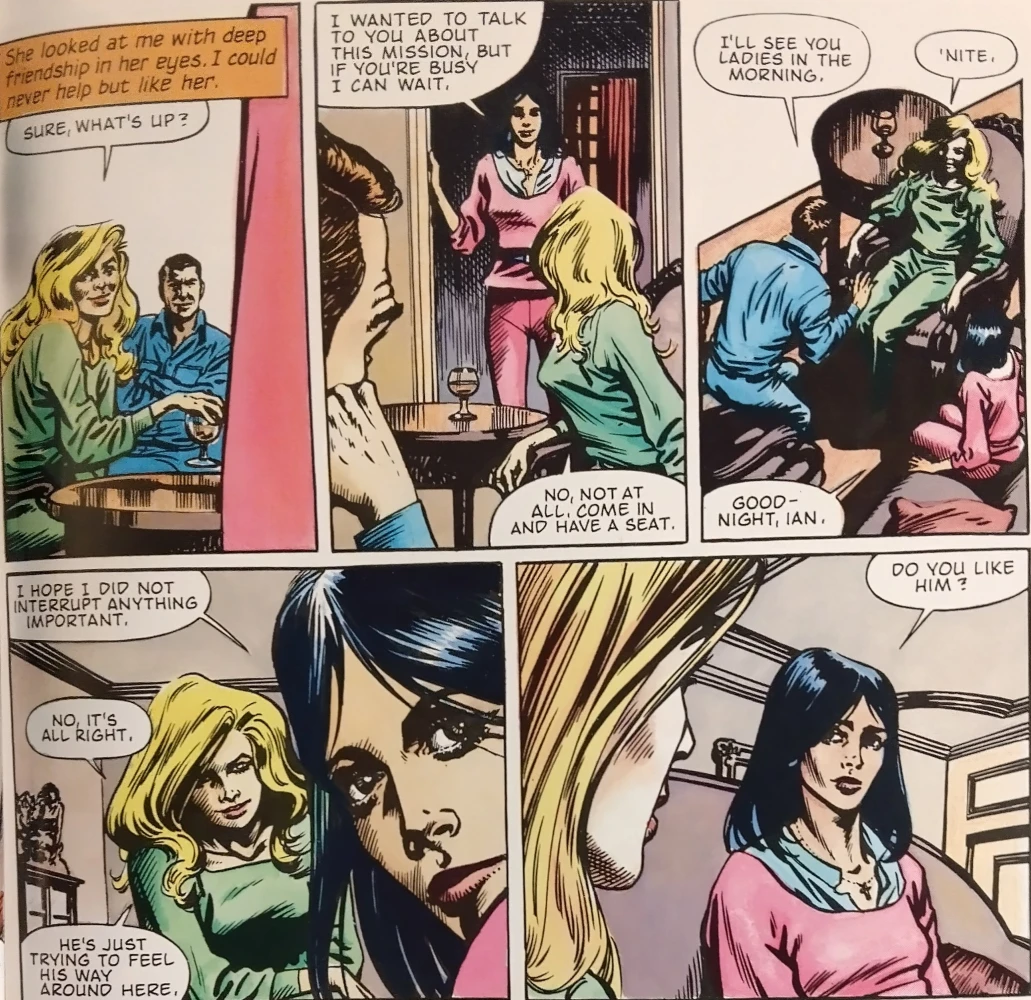
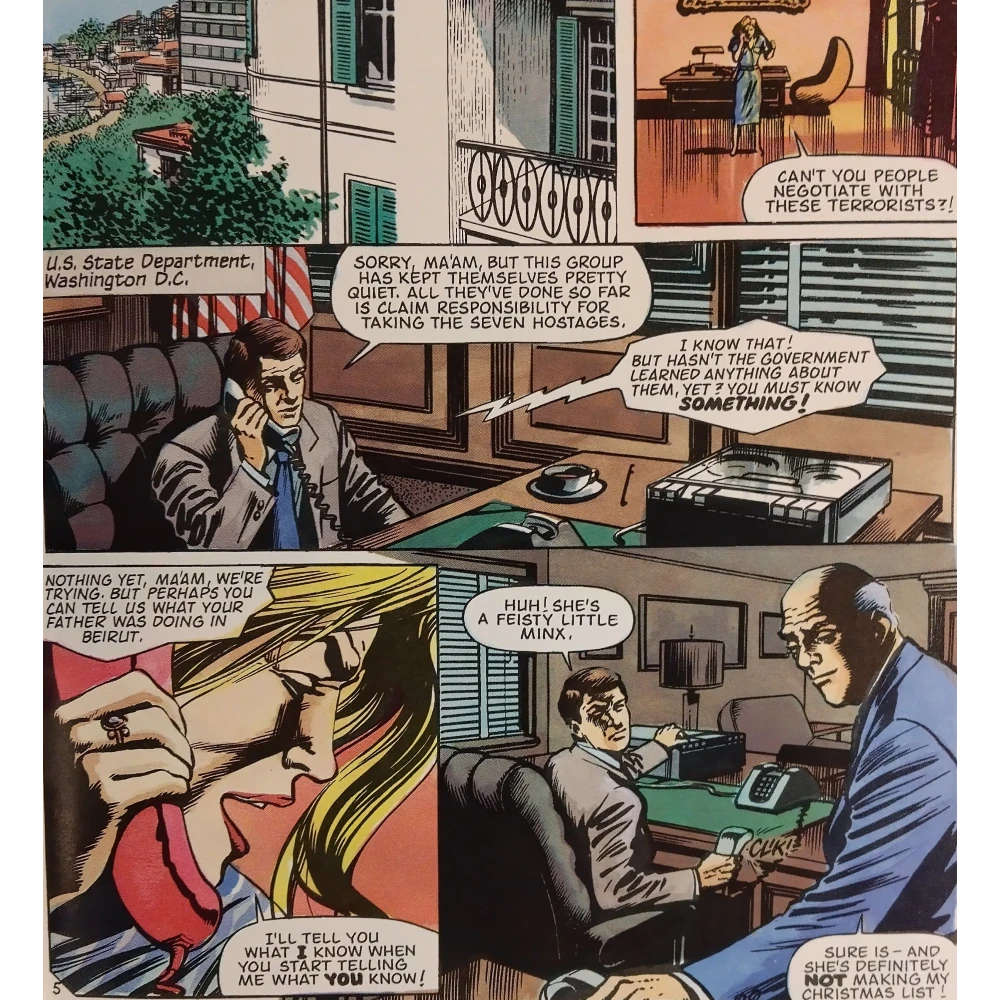
Continuing the X-Men comparisons, Hudnall hits the same wall as Lee did early on: you're introducing characters born with supernatural abilities after they've grown proficient in their powers. There's no origin story, no learning curve, no built-in relatability to the reader. You're asked to accept characters as they are and hope, in the process of reading the narrative, to better understand and appreciate them as human beings. I won't say Hudnall gives us soulless robots–you can recognize and sympathize with, for example, the tension as Linda recruits her team, specifically so she can rescue her father, kidnapped by terrorists–but our group isn't necessarily allowed to feel fully fleshed out.
The interstitial text pieces generate a better sense of characterization for at least some of our heroes. Jiro's story, as he confronts two men who have identified him as an Esper, touches on the weight the young man feels after lethally dispatching both pursuers, as well as his hopes for his current education, a facet of his character the series' first issue clarifies. Maria's piece emphasizes some of the confusion and disorientation associated with her ability, a psychic shield which also allows teleportation. The text pieces read like prequel sequences to the main series, similar to how Marvel eventually gave their mutants origins, introducing some of the horror and disbelief in utilizing these natural powers. Yet not everyone receives their own story–not Simon, not Linda, not the levitating William Silent Bear–meaning you only learn a bit more about half the team.
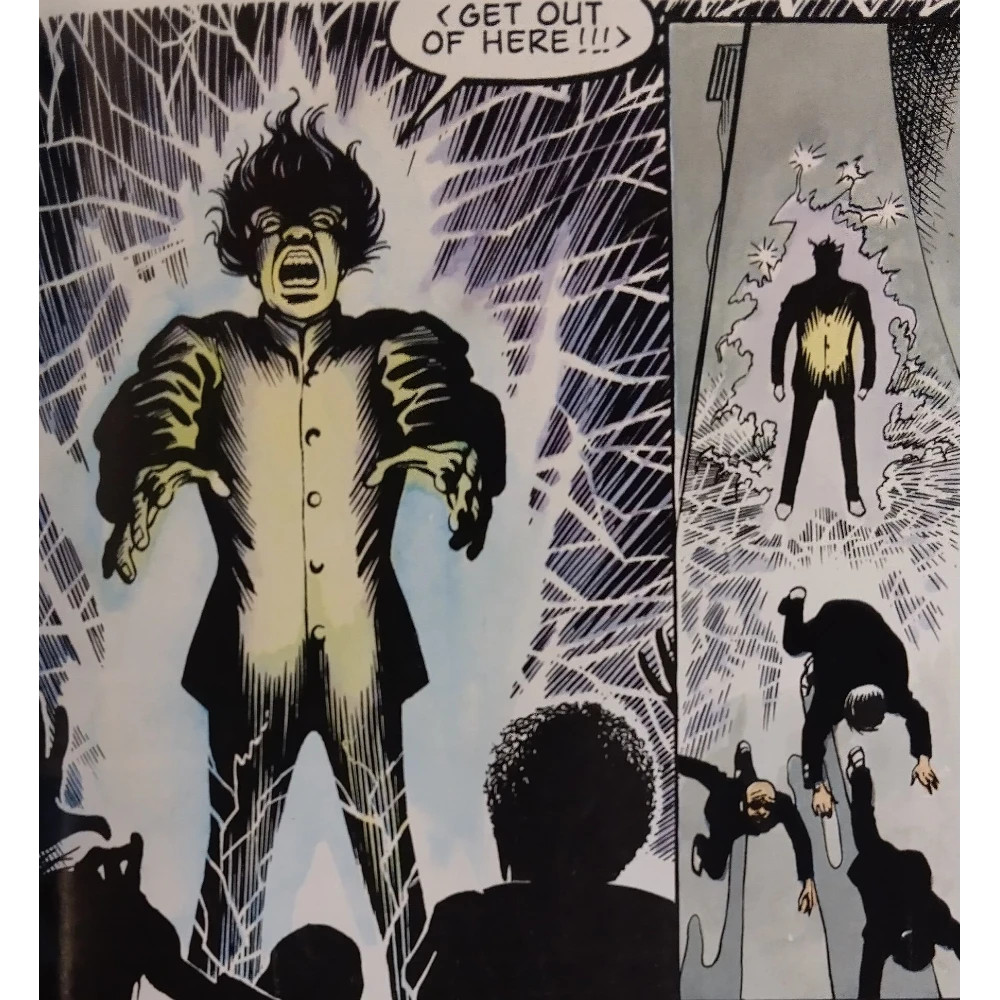
"What if the X-Men were real?" is a question you can ask yourself reading this series, and in terms of concept, Hudnall and Lloyd answer that question decently. They certainly make the best go that they can, especially in the first four issues, to apply superhuman abilities to realistic situations based on the drama of the day in which this series was published. Even in the fifth issue, where John M. Burns replaces Lloyd, you get a sense of how covert assassinations would work if superhumans were hired instead of guys with guns. Multiple action sequences set against detailed backdrops help maintain a fast pace.
Too fast, ultimately. The action is delivered well, the tension palpable, yet it all comes at a cost. Our characters feel neglected in certain cases, Hudnall far more interested in applying their powers to his plot than he is exploring who they are as people. Espers went on to spawn other series, one of which I have picked up and will certainly check out at some point. Maybe there we'll find Hudnall discovered how to handle a crew of wayward superhumans beyond the ascetic of their flashy abilities.